Enhancing Your Results and Comfort with Botox Aftercare
Botox is one of the most popular non-surgical aesthetic treatments worldwide — quick, precise and highly effective when performed correctly. But what you do after your injections is just as important as the treatment itself. Good aftercare helps Botox settle into the intended muscles, reduces the risk of unwanted spread, and supports smooth, natural-looking results.
I’m Dr Suresh Mohan, a GMC-registered medical doctor in Wimbledon, with advanced Level 7 training in aesthetic medicine. I specialising in injectable treatments such as Botox, Profhilo, Polynucleotides and dermal fillers. As an aesthetic doctor, I see every week how small, simple decisions in the first 24–48 hours can make a meaningful difference.
Updated: March 2026 – Botox Aftercare Advice from an Aesthetic Doctor
This regularly updated guide is based on standard Botox aftercare principles, my clinical experience treating patients with botulinum toxin, and the questions that most often arise in the first two weeks after treatment. Where useful, I also link to general patient-safety guidance such as NHS information on cosmetic procedures.
I offer top Botox treatment in Wimbledon, as well as in-person consultations and post-treatment reviews.
If you’re still deciding whether Botox is the right treatment for you, my overview article “Botox, Profhilo, Fillers & Polynucleotides: Find Your Best Fit” is a helpful place to start. It compares the main injectable options I offer and explains how they can work together in a treatment plan.
My Botox aftercare advice in one sentence:
Keep the area clean and untouched, stay upright for 4–6 hours, avoid strenuous exercise and alcohol for 24 hours, avoid heat for 48 hours, and allow 10–14 days for the final result to settle.
Botox Aftercare: the Essentials
- Stay upright for 4–6 hours
- Do not rub or massage treated areas for 24 hours
- Avoid strenuous exercise and alcohol for 24 hours
- Avoid heat, saunas and steam for 48 hours
- Expect early effects from day 3–5 and full results by day 10–14
- Contact the clinic if swelling worsens, asymmetry becomes pronounced, or anything feels unusual
Why Botox Aftercare Matters
Botox works by relaxing specific, carefully selected muscles using a purified neuromodulator. Once injected, the product needs time to bind precisely to the intended muscle receptors.
The small actions you take — especially in the first few hours — help ensure that Botox stays where it should, settles evenly and delivers smooth, natural-looking results.
Good aftercare also helps reduce temporary side effects such as mild swelling, redness or small bumps at the injection sites. These are normal and generally short-lived, but following the correct guidance can make them settle more quickly and comfortably.
Most importantly, thoughtful aftercare supports predictability. Botox placement is highly refined work; avoiding unnecessary heat, pressure or excessive activity helps the treatment perform exactly as intended, giving results that look like you — just refreshed.
Botox Aftercare at a Glance (First 48 Hours)
First 4–6 hours — the upright phase
- Stay upright (sitting or standing) — don’t lie down.
- Avoid bending forwards, yoga inversions or pressure on the face.
- Do not rub, press or massage treated areas.
- Avoid wearing tight hats, headbands or goggles that press on the upper face.
- Keep the skin clean and makeup-free for several hours.
First 24 hours
- Avoid strenuous exercise, running, gym workouts or anything that causes heavy sweating.
- Avoid alcohol, which may increase bruising and flushing.
- Take only gentle showers — avoid very hot water or steam.
- Do not book facials, peels or face massages.
- Try not to sleep face-down or on a heavily compressed pillow.
First 2–3 days
- Expect mild redness or small bumps that normally settle quickly.
- Avoid saunas, steam rooms, hot yoga, sunbeds and strong heat exposure.
- Continue gentle skincare; avoid exfoliants or scrubbing tools.
- Protect your skin with SPF 30+, especially if redness or bruising is present.
Results timeline
- Early softening may begin from day 3–5.
- Results typically peak at 10–14 days.
- Duration is usually 3–4 months, depending on dose and individual metabolism.
Key goal
To allow Botox to remain in the intended muscles and settle evenly — meaning better precision, better comfort, and better results.
If you would like a more detailed explanation of what happens during those first two weeks, read my day-by-day guide to when Botox starts working.

Good Botox technique gives the product its potential; good aftercare helps secure the results.
Botox Aftercare Timeline: What to Expect Hour-by-Hour
Botox treatment doesn’t work instantly — it settles gradually over two weeks. During this time, a few simple steps help the treatment stay precise, minimise discomfort and support smooth, natural-looking results. Below is your clear, doctor-written timeline so you know exactly what to do and what to avoid at each stage.
⏱ First 4–6 Hours: The Upright Phase (Most Important)
The first few hours after treatment are the most crucial. Botox is still in the process of binding to the intended muscles.
What to Do:
- Stay upright (sitting or standing). This reduces the chance of unintended diffusion.
- Use light facial expressions — frown, raise your eyebrows, smile gently if recommended.
- Keep the skin clean and free of makeup.
- Take normal, gentle walks or return to desk work.
What to Avoid:
- Lying down, bending forwards or yoga inversions.
- Touching, rubbing or pressing the treated areas.
- Wearing tight hats, goggles or headbands that apply pressure.
This is the highest-impact window for aftercare. Small actions here support the accuracy of your final results.
First 24 Hours: Protect the Treated Area
You can return to most daily activities, but avoid anything that increases heat, pressure or blood flow to the face.
What to Do:
- Take lukewarm showers (not hot).
- Continue gentle facial movements if comfortable.
- Stay hydrated and keep skin protected.
- Use a clean pillowcase at night.
What to Avoid
- Strenuous exercise — running, gym workouts, hot yoga, HIIT.
- Alcohol, which increases flushing and may worsen bruising.
- Heavy sweating of any kind.
- Makeup application for 6–12 hours (apply very gently if you do).
- Facials, facial massage, or exfoliation tools.
First 2–3 Days: Keep Heat and Pressure Low
By this stage, most people feel completely normal. However, heat and strong mechanical pressure can still affect settling.
Typical Experiences:
- Mild swelling or redness may appear or continue.
- Tiny bumps at injection points usually resolve within 24–48 hours.
- Some people notice their skin feels lightly “tight” or “firm” — this is normal.
What to Do:
- Use SPF 30+ outdoors.
- Maintain gentle skincare.
- Resume light exercise (walking, gentle stretching).
What to Avoid:
- Saunas, steam rooms, hot tubs.
- Sunbeds or strong heat exposure.
- Intense facial treatments (microneedling, deep massage, peels).
- Sleeping face-down if you notice sensitivity.
Days 3–7: Early Changes Begin
Botox begins to show its first effects around day 3–5, although this varies person to person
You may notice:
- Softer lines when frowning, squinting or raising eyebrows
- Reduced movement in the treated muscles
- A “lighter” or more relaxed feeling in the forehead or crow’s feet area
This is still early — the full result takes longer.
Days 10–14: Final Results Settle In
Botox reaches its peak effect between days 10 and 14.
By this time, your final outcome should be visible:
- Lines significantly softened
- Expression appearing fresher and smoother
- Natural facial movement preserved where intentionally left untreated
- Balance and symmetry improved
If needed, a review appointment is typically offered at 2 weeks.
Contact the Clinic to book Botox review appointment.

Botox settles gradually over 10–14 days — this timeline shows what to do at each stage.
Botox results usually last 3–4 months, though duration varies depending on muscle strength, lifestyle and treatment area.
Botox Aftercare Timeline
| Timeframe | What to do | What to avoid |
|---|---|---|
| First 4 hours | Stay upright, gentle facial movements (if advised) | Lying flat, bending forwards, rubbing treated areas |
| First 24 hours | Light activities, lukewarm shower | Strenuous exercise, alcohol, saunas, hot baths |
| First 2–3 days | Gentle skincare, SPF | Facials, deep massage, sunbeds, steam rooms |
| Up to 2 weeks | Normal activities, attend review | New injectables in same area without review |
Botox Area-Specific Aftercare
Different muscles behave differently, and you may have slightly different experiences depending on the treatment area.
Forehead & Frown Lines
- Avoid tight hats or anything that presses on the forehead for 24 hours.
- Early mild headache or “heavy” feeling is common and usually temporary.
Crow’s Feet
- Be gentle when removing eye makeup.
- Avoid goggles or tight sleep masks for the first 24 hours.
Masseter (Jawline / TMJ)
- You may feel mild chewing fatigue — this is normal.
- Avoid strong jaw massage or teeth-grinding splints for 24 hours.
Underarms (Hyperhidrosis)
- Avoid deodorants containing alcohol for 24 hours.
- Avoid intense cardio for 24 hours to minimise sweating.
Bunny Lines, Lip Flip or Chin
- Avoid pursing lips excessively for the first few hours.
- Drink through a glass rather than a straw.
Botox Aftercare Do’s & Don’ts (Doctor-Written Guidance)
Following correct aftercare helps Botox settle into the intended muscles and supports smooth, predictable results. Below is a clear breakdown of the most important Do’s and Don’ts, based on medical best practice and thousands of patient treatments.
The Botox Do’s — What You Should Do After Treatment
- Stay upright for the first 4–6 hours
This helps prevent unintended product movement and supports even settling. - Use gentle facial expressions
Lightly raising your eyebrows, smiling or frowning is fine if comfortable.
It can help Botox begin binding to its target receptors. - Keep the treated areas clean
Avoid makeup for several hours and cleanse gently.
Good hygiene reduces irritation and supports healing. - Apply cool compresses if needed
A light cool pack (wrapped in a cloth) can help with small bruises or swelling.
Avoid direct ice on the skin. - Drink plenty of water
Hydration supports circulation and overall skin health. - Use SPF 30+ if outdoors
Skin may be slightly more sensitive immediately after treatment.
Sun protection also helps maintain skin quality long-term. - Sleep on a clean pillowcase
Helps avoid irritation and unnecessary pressure during the first night.

In the first 4–6 hours, stay upright and keep things gentle — hydration helps you feel your best as Botox begins to settle.
The Botox Don’ts — What to Avoid (And Why It Matters)
- Don’t touch, press or massage the area
Avoid rubbing or applying pressure for at least 24 hours.
This is the number one way to prevent unintended diffusion. - Don’t lie down in the first 4–6 hours
Lying flat too soon may increase the risk of product movement. - Avoid strenuous exercise for 24 hours
High-intensity workouts raise blood flow and body heat, which may affect settling. - Steer clear of alcohol for 24 hours
Alcohol dilates blood vessels and increases bruising risk.
It may also make the skin feel flushed or warm. - Avoid saunas, steam rooms and hot yoga for 48 hours
Heat can increase swelling and circulation, potentially impacting results. - Avoid hot showers or baths initially
Opt for lukewarm water to prevent flushing or mild swelling. - Don’t wear tight hats, helmets or goggles
Pressure on the forehead or around the eyes can affect product distribution. - Avoid facials, facial massage and exfoliating treatments
For at least 1–2 weeks, avoid anything that applies deep pressure or increases circulation to the treated area. - Don’t schedule other injectables in the same area too soon
Allow time for Botox to settle fully before considering additional treatments.

Most important rule: hands off — avoid rubbing, pressing or massaging treated areas for 24 hours.
Why These Do’s & Don’ts Matter (Short Clinical Explanation)
Botox is injected into specific muscles with a high degree of precision. In the first hours after treatment, the neuromodulator begins to bind to nerve endings that control muscle contraction.
Actions that increase heat, pressure, or vigorous movement may theoretically influence product spread or contribute to temporary side effects.
Good aftercare supports:
- Predictability (Botox stays exactly where placed)
- Comfort (reduced redness or swelling)
- Confidence (smooth, natural results you can trust)
Even small steps make a meaningful difference in how comfortably and evenly your Botox settles.
If you are considering Botox or any other injectable treatment, the NHS offers helpful advice on what to consider before having a cosmetic procedure, together with broader guidance on cosmetic procedures, including safety, practitioner choice and informed decision-making.
Botox Aftercare FAQ (Doctor Answers to the Most Searched Questions)
Navigating the aftercare process post-Botox treatment can often bring up a myriad of questions. To provide clarity and peace of mind, I’ve compiled a list of the most commonly asked queries along with expert answers. From managing skincare routines to understanding the nuances of recovery. Let’s explore these questions and uncover the key insights for maintaining your skin’s health and maximising the benefits of your Botox treatment.
- What should you not do after Botox?
- How long after Botox can I exercise?
- Can you drink alcohol after Botox?
- How long after Botox can you lie down?
- When does Botox start to work?
- What is the 4-hour rule after Botox?
- What should I do if I accidentally lay down after Botox?
- Is it normal to have a headache after Botox?
- Can I shower or wash my face after Botox?
- How long after Botox can I fly?
- Does Botox affect smiling or facial expressions?
- Can Botox cause swelling or bruising?
- How do I know if my Botox has kicked in?
- Can I get facials, microneedling or skin treatments after Botox?
- What happens if Botox doesn’t work for me?
1. What should you not do after Botox?
Avoid rubbing, pressing or massaging the treated areas, and stay upright for the first 4–6 hours. For the next 24 hours, skip strenuous exercise, alcohol, and anything that increases heat or sweating. These steps help Botox settle evenly and reduce the risk of minor side effects.
2. How long after Botox can I exercise?
Avoid strenuous exercise for 24 hours. High-intensity workouts increase heat and blood flow, which may affect how Botox settles. Light walking is fine, but save running, gym sessions and hot yoga for the next day.
If you’d like more detail on gym sessions, running, yoga and heavy lifting, I cover it here: How Soon After Botox Can I Exercise?
3. Can you drink alcohol after Botox?
It’s best to avoid alcohol for 24 hours after treatment. Alcohol dilates blood vessels and can increase bruising or flushing. Once the initial period has passed, normal consumption is fine unless otherwise advised by your practitioner.
For a fuller explanation (including why alcohol can increase bruising, how long to wait, and what else to avoid in the first 24 hours), see my guide: Drinking Alcohol After Botox: What You Need to Know.

To minimise bruising and flushing, it’s best to avoid alcohol for the first 24 hours after Botox.
4. How long after Botox can you lie down?
Stay upright for 4–6 hours after treatment. Lying flat too soon may increase the chance of product movement. After this initial period, you can lie down normally, but avoid sleeping face-down if the area feels tender.
Not sure about the 4–6 hour rule or sleeping positions? See: How Long After Botox Can You Lay Down?.
5. When does Botox start to work?
Early changes may begin around day 3–5, with smoother movement and softening lines. Full results develop gradually and typically peak between days 10 and 14. Review appointments are usually scheduled at the two-week mark.
For a fuller explanation (including the day-by-day timeline, what ‘kicking in’ feels like, and when to assess your final result), see my guide: How Long Does Botox Take to Work?.
6. What is the 4-hour rule after Botox?
The 4-hour rule means remaining upright — no lying down, bending forward or applying pressure to the treated areas. This supports accurate product placement and reduces the chance of unwanted diffusion in the earliest phase of settling.
7. What should I do if I accidentally lay down after Botox?
Don’t panic — a brief moment lying down is unlikely to cause a problem. Simply return to an upright position and avoid pressing or rubbing the area for the rest of the 4–6 hour window. If you notice anything unusual later, contact your practitioner for reassurance.
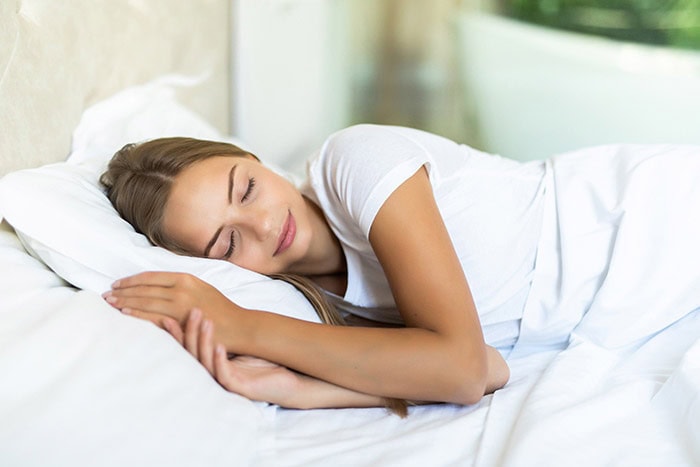
Don’t panic — if you accidentally lay down, simply sit back upright and keep the treated areas hands-off for the rest of the 4–6 hour window.
8. Is it normal to have a headache after Botox?
Yes — mild headaches can occur in the first day or two and usually resolve quickly. They’re typically related to temporary muscle changes rather than the Botox itself. A cool compress, hydration and gentle rest often help. Seek advice if pain is severe or persistent.
For reassurance and practical tips if you get a headache afterwards, see my guide: Can Botox Cause Headaches?.
9. Can I shower or wash my face after Botox?
You can shower and cleanse your face straight away, but keep water lukewarm and avoid scrubbing. Be gentle around the injection sites for the first 24 hours and wait 6–12 hours before applying makeup.
For clear guidance on showering, washing your face and skincare in the first 24 hours, see: Can You Shower After Botox?.
10. How long after Botox can I fly?
Flying is generally safe after 24 hours. Allowing this time helps any mild swelling settle before you’re exposed to cabin pressure. If you’re travelling immediately after treatment, avoid pressing your face against travel pillows or wearing tight sleep masks.
Travelling soon? I cover flying after treatment (timing, swelling, and comfort tips) here: Can You Fly After Botox?.
11. Does Botox affect smiling or facial expressions?
Botox should soften lines without removing your natural expressions when performed correctly. Only specific muscles are treated, allowing normal facial movement elsewhere. You may notice slightly reduced movement in targeted areas, but your overall expression should remain relaxed and natural.
12. Can Botox cause swelling or bruising?
Yes — mild swelling, redness or small bruises can appear after treatment and are usually temporary. These effects tend to settle within a few hours to a couple of days. Cool compresses and avoiding alcohol, heat and vigorous exercise in the first 24 hours can help minimise them.

Cool compresses can help reduce mild swelling or bruising after Botox.
13. How do I know if my Botox has “kicked in”?
You may notice early changes around days 3–5: lines looking softer and certain expressions becoming less active. Full results appear at 10–14 days, when the treated muscles are relaxed and your skin looks smoother. If areas still move strongly at two weeks, a review may be appropriate.
If you’re watching for those first changes, here’s a quick guide to the early signs and timeline: When Does Botox Kick In?.
14. Can I get facials, microneedling or skin treatments after Botox?
Avoid facials, microneedling, peels and any treatment involving pressure for 1–2 weeks after Botox. These procedures increase circulation and involve physical manipulation that may affect settling. Once the two-week period has passed, you can safely resume your usual skincare treatments.
15. What happens if Botox doesn’t work for me?
Most people respond well, but individual results vary based on muscle strength, metabolism and dose. If you see little or no change at two weeks, your practitioner can assess the treated areas and recommend an adjustment. Occasionally, stronger muscles require a slightly higher dose for optimal effect.
For further clarity on Botox and to address any lingering inquiries, delve into my ‘Everything You Need to Know About Botox for a Natural Look‘ article.
Results, Side Effects, What’s Normal & When to Seek Advice
Botox is generally very well tolerated, and most people return to normal activities straight away. In the first few days, it’s completely normal to be more aware of how the treated area feels and looks.
You may notice mild, short-lived effects as Botox begins to settle. Common, normal reactions include:
- Tiny bumps at injection points
- Mild redness or light swelling
- Small pinpoint bruises
- A gentle feeling of “tightness” or heaviness in the treated area
- Mild headache in the first 24–48 hours
- Slight temporary unevenness as different muscles settle
These usually improve within a few hours to a few days. Bruises can take up to a week to fade, especially in delicate skin. Read more in Can Botox Cause Headaches?
Botox itself works gradually. Most people start to see early softening between day 3–5, clearer results by day 7–10, and full results at around day 14. If you feel “nothing is happening” in the first few days, that is entirely normal — the neuromodulator is still binding and activating. Occasionally, stronger muscles or first-time treatments simply need a small adjustment at the two-week review.
Although after-effects are usually mild, you should contact your practitioner if anything worsens rather than improves — for example, pronounced or increasing swelling, severe or persistent headache, or noticeable asymmetry after day 7. Serious reactions are extremely rare, but if you ever experience difficulty breathing, swallowing or speaking, seek urgent medical help.
If you’re ever unsure, it’s always better to ask. A quick message or call can provide reassurance and, if needed, arrange a review.

Normal settling is gradual — if you’re unsure about anything, your practitioner can advise.
Area-Specific Botox Aftercare (Tailored Guidance for Each Treatment Area)
Different facial and body areas respond slightly differently to Botox because the muscles vary in size, strength, and function.
Below is precise, doctor-written guidance for the most common treatment areas, covering what you may feel and how to optimise your results.
Forehead (Frontalis Muscle)
Botox in the forehead targets the muscle responsible for lifting the eyebrows.
Because this muscle is constantly active, you may notice temporary changes in sensation during the settling phase.
What’s normal:
- A mild feeling of tightness or heaviness for a few days
- Early softening of horizontal lines
- Slight differences in movement from day to day
What to avoid:
- Tight hats or headbands for 24 hours
- Pressing your forehead when cleansing or applying creams
- Sleeping face-down if the area feels tender
Helps with:
Forehead lines, smoothing the upper face while maintaining natural movement.
Frown Lines (Glabella: 11 Lines)
The glabella is a strong group of muscles between the eyebrows — often responsible for the “tired” or “angry” expression.
What’s normal:
- Mild headache or sinus-like pressure
- Slight asymmetry before day 14
- A relaxed expression as muscles soften
What to avoid:
- Rubbing between the eyebrows
- Wearing heavy glasses that press on the bridge of the nose in the first hours
- Deep tissue massage or brows threading for 24 hours
Helps with:
Forehead lines, smoothing the upper face while maintaining natural movement.
Crow’s Feet (Eye Area)
This delicate area has thin skin and small muscles, so reactions can be more noticeable initially.
What’s normal:
- Small red dots
- Slight swelling for a few hours
- Mild dryness for 1–2 days
What to avoid:
- Rubbing when removing eye makeup
- Tight sleep masks, swim goggles, or VR headsets
- Very hot showers aimed directly at the face
Helps with:
Softening wrinkles around the eyes for a brighter, rested look.
Masseter (Jawline Slimming / Teeth Grinding / TMJ)
Masseter Botox works on a large muscle used for chewing, so sensations differ slightly from facial injections.
What’s normal:
- Feeling of chewing fatigue
- Slight change in bite sensation (temporary)
- Jawline may appear subtly slimmer over weeks, not days
What to avoid:
- Intense gum chewing
- Strong jaw massage
- Night guards that apply pressure for the first day (light use is fine if needed)
Helps with:
Teeth grinding, jaw tension, headaches, and creating a more tapered lower face.

Masseter Botox can help jaw tension and teeth grinding — results develop over weeks.
Bunny Lines (Nasal Area)
These muscles are small but expressive — and close to glasses frames.
What’s normal:
- Slight scrunching asymmetry while settling
- Mild swelling on the nose bridge
What to avoid:
- Pressing glasses too tightly in the first hours
- Scrubbing or squeezing the nose when washing
Helps with:
Softening nose wrinkles when smiling or squinting.
Lip Flip (Upper Lip)
This treatment uses very small doses, so aftercare is simple but important.
What’s normal:
- Slight difficulty with strong lip movements (straws, whistling)
- A light sensation of tension when smiling
What to avoid:
- Drinking through straws for 24 hours
- Hyper-exaggerated lip expressions
- Hot drinks pressed directly onto the lips
Helps with:
A more defined upper lip and subtle improvement in lip shape.
Chin (Mentalis Muscle)
The chin muscle can be overactive, causing dimpling or pebbling.
What’s normal:
- Light tension when talking
- Small bumps at injection sites
What to avoid:
- Resting your chin on your hand (common habit!)
- Rubbing the area during skincare
Helps with:
Smoother chin texture and more balanced lower-face movement.
Neck Bands (Platysmal Botox)
Neck muscles are large and vertical, so aftercare focuses on posture.
What’s normal:
- Mild tightness when turning the head
- Sensitivity when looking up or down
What to avoid:
- Strenuous neck stretches
- Heavy lifting that strains the neck
- Wearing tight turtlenecks on day 1
Helps with:
Reducing neck bands and improving contour.
Underarms (Hyperhidrosis)
This is a medical, not cosmetic, treatment — but aftercare still matters.
What’s normal:
- Tiny bumps
- Mild itchiness
- Dryness as sweating reduces over time
What to avoid:
- Deodorants containing alcohol for 24 hours
- Heavy gym workouts for 24 hours
- Shaving the area on the same day
Helps with:
Reducing sweating for 4–9 months depending on individual response.

Underarm Botox is a medical treatment for hyperhidrosis — aftercare is simple, but avoiding alcohol-based deodorants and intense workouts for 24 hours can help.
Botox Aftercare Instructions – Quick Reference Card
If you prefer to keep everything in one simple place, I’ve created a Botox aftercare card you can save on your phone or print at home. It highlights the key do’s and don’ts from this guide so you have them to hand in the first few days after treatment. Please still read the full aftercare advice on this page, especially the section on what is normal and when to contact the clinic.
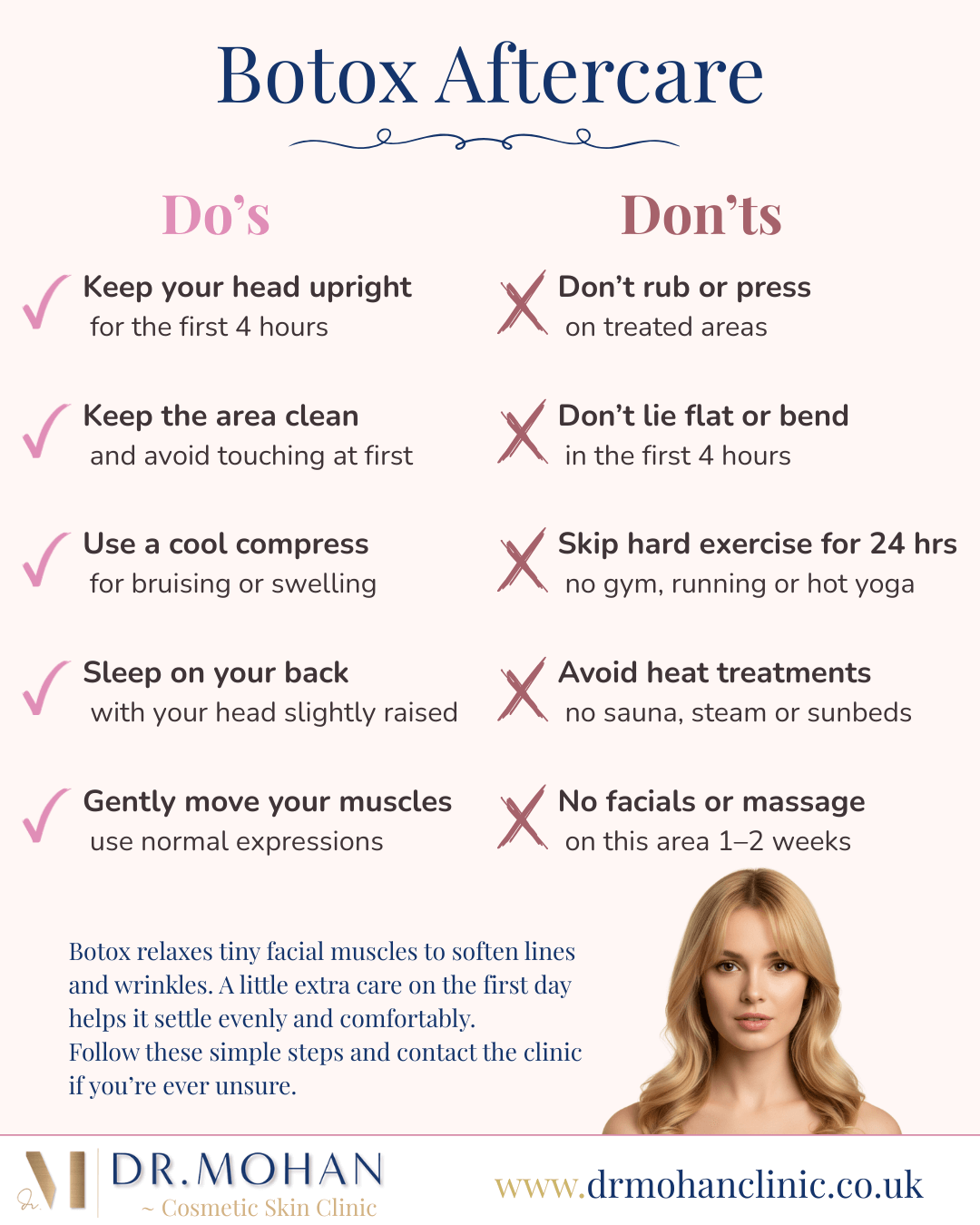
Botox aftercare instructions infographic with key do’s and don’ts from Dr Mohan Clinic in Wimbledon
You’re welcome to save or share this Botox aftercare instructions card for personal use or with friends and family who have had Botox – please keep the clinic logo visible so they know where to find more detailed information.
Download the full Botox aftercare PDF
For a more detailed, printable version with step-by-step instructions, you can download my complete Botox aftercare guide: Botox Aftercare Guide: Do’s and Don’ts for Best Results.
Conclusion: Perfecting Your Botox Results with Expert Aftercare
At my Wimbledon Botox clinic, my commitment to your treatment doesn’t end when your injections are finished. I provide clear, practical aftercare guidance that helps your Botox settle smoothly and deliver the natural, balanced results you’re aiming for.
Botox is a precise treatment, and understanding the key aftercare steps — especially in the first 24–48 hours — can make a real difference to comfort, predictability, and final outcome. By following the advice in this guide, you help the product remain where it was placed, reduce the likelihood of avoidable side effects, and support the best possible result as it develops over the following two weeks.
Whether you’re considering Botox for the first time or looking to maintain results you already love, I’m here to offer honest advice and a calm, medical approach tailored to your goals. At my Wimbledon aesthetic clinic, I value the relationship I build with my patients — it’s grounded in trust, safety, and subtle results that still look like you.
If you’d like to discuss Botox, expected results, or any aspect of aftercare, please book a free consultation with me. You’ll receive personalised guidance and a treatment plan designed around your face, your lifestyle, and the outcome you want.
Book your free consultation here →
Or call me directly: 07702 389 636
Warm regards,
Dr Suresh Mohan
Contact Dr Suresh Mohan
Need reassurance after treatment?
Call / message the clinic if you have a question about swelling, bruising, headache or settling.
Thinking about Botox for the first time?
Book a free consultation to discuss whether Botox is the right option for you.
By clicking ‘Send enquiry‘ you agree to Dr Mohan Clinic’s Privacy Notice.