
When Your Mouth Looks Unhappy But You Feel Fine
“Why do the corners of my mouth look as though I’m unhappy, even when I feel perfectly fine?” If you have caught yourself asking that question, you are not alone. Perhaps the corners of your lips seem to point downwards, or you have noticed two new folds running from your mouth towards your chin.
These changes are often described as downturned mouth corners and marionette lines. They can appear together, but they are not the same thing. And the answer is not always to fill a wrinkle or try to lift the mouth.
At my West Wimbledon clinic, I prefer to start by understanding what has changed, why it has changed and what you would actually like to improve. In this guide, I will walk you through the differences, the home-care options, what professional treatments may or may not achieve and the questions worth asking before making a decision.
The quick answer
Marionette lines are creases or shadows below the corners of the mouth.
Downturned mouth corners describe the direction the lips themselves rest in.
Changes in muscle movement, skin, facial support and natural anatomy may all contribute.
Skincare can help with fine surface lines. A deeper fold may call for a different discussion, and significant jowling has its own limitations. Start with the cause, not the name of a treatment.
I’m Dr Suresh Mohan, a GMC-registered medical doctor offering aesthetic consultations at The Garden Room in West Wimbledon. My aim with this article is to help you recognise what you are seeing and understand your options without feeling that normal facial ageing automatically needs correcting.

Fine lines and changes around the mouth are a natural part of facial ageing. Their appearance varies from person to person.
Marionette Lines vs Downturned Mouth Corners: What Is the Difference?
Marionette lines are folds below the mouth; downturned corners describe the position of the lips. Both can affect your expression, but you may notice one much more than the other.
For example, one person may have almost no fold beneath the lips but still have naturally downward-pointing corners. Another person may have fairly level lip corners but a deeper groove towards the chin. Their concerns can look similar in a photograph, yet the underlying reasons are different.

Marionette lines – educational illustration, not a patient result.
Marionette lines
The marks shown by the dotted guide are the folds or shadows below the mouth corners. They can travel towards the chin and may look deeper as skin elasticity and facial support change.
When I assess them, I look at the whole lower face, not just the line you can see in a photograph.

Downturned mouth corners – educational illustration, not a patient result.
Downturned mouth corners
Here, the focus is the resting direction of the lip corners themselves. Some people naturally have a slight downward angle without a prominent crease beneath the mouth.
Lip position and the surrounding folds are related, but they are not the same. That is why an individual assessment matters.
| What you notice | Marionette lines | Downturned mouth corners |
|---|---|---|
| Location | Folds below the mouth towards the chin | The outer corners of the lips |
| Main appearance | A crease, groove or shadow | A downward resting angle |
| Possible influences | Skin, volume, facial support and tissue position | Natural lip anatomy, muscle balance and nearby support |
| What I assess | The fold and the surrounding lower face | The position of the lips at rest and in movement |
And what about nasolabial folds or jowls?
Nasolabial folds run from the sides of the nose towards the mouth. Marionette lines continue below the mouth towards the chin. Jowls describe changes in the contour of the jawline. These features can overlap, but I would not treat them as interchangeable.
Sometimes the shadow created by a jowl makes a marionette fold look deeper. Sometimes a patient is mostly concerned about the lip corners rather than the crease. Naming the feature correctly is useful because it helps us have a more realistic conversation about what could change.

Marionette lines – educational illustration, not a patient result.
1. Marionette lines
These are the folds or shadows that descend from the mouth corners towards the chin. They may appear as fine lines, deeper creases or a change in the surrounding contour.
What I look at: the depth of the fold, nearby volume and whether jowling makes the shadow more obvious.

Downturned mouth corners – educational illustration, not a patient result.
2. Downturned mouth corners
The corners of the lips may sit slightly lower at rest, even without a deep fold. This can be a natural facial feature or become more noticeable over time.
What I look at: the natural lip shape, movement of the mouth and support from the surrounding tissues.

Nasolabial folds – educational illustration, not a patient result.
3. Nasolabial folds
These run from the sides of the nose towards the mouth. They are part of normal facial anatomy and often become more visible when we smile.
What I look at: where the fold begins and how its appearance changes with expression.

Jowls and jawline changes – educational illustration, not a patient result.
4. Jowls and jawline changes
Jowls describe changes in the lower-cheek and jawline contour, rather than a crease beneath the lips. They can deepen a nearby shadow and make marionette folds look more prominent.
What I look at: the jawline contour, tissue position and whether a skin-focused approach would be too limited.
Why Do the Corners of My Mouth Turn Down?
The lower face is not held up by one muscle or one pocket of fat. It is a moving combination of skin, facial muscles, soft tissues and bone. Some of these features are inherited; others change gradually with time.
I find it more helpful to think about several contributing factors than to look for a single culprit. Here are the main ones I would consider.
The muscles around your mouth
The depressor anguli oris (DAO) muscle helps pull the corners of the mouth down during expression. Its action is normal and useful. In some faces, the balance between muscles that lift and lower the mouth contributes to a downturned appearance at rest.
The DAO muscle does not explain every marionette line. I would look at the mouth both relaxed and moving before deciding whether muscle action is relevant.
Gradual changes in facial volume and support
As we age, changes in facial fat, connective tissues and the shape of the underlying skeleton can affect how the lower face is supported. This may leave a fold, depression or shadow beside the mouth more visible.
It is one reason I would assess the cheeks, chin and jawline as well as the crease itself. Simply adding volume to the deepest-looking part of a fold does not always make the whole area look better.
Skin elasticity, sun exposure and jowling
Skin becomes less elastic over time, particularly with accumulated sun exposure. A shallow line that used to disappear when your face relaxed may start to remain visible. Dryness can make fine surface creases look sharper still.
With more pronounced lower-face laxity, the tissue along the jaw may form a jowl and change the shadow beside the chin. This is a different problem from a small, isolated line.
Your natural anatomy and your age
Some people have downturned corners in their twenties or thirties. Others do not notice them until later. Genetics, lip shape, muscle arrangement and facial proportions all play a part, so there is no age at which this change “should” begin.
There is also no reason to assume that a neutral or downturned mouth is a flaw. It becomes a cosmetic concern only if it is something you want to discuss.


A simple guide to the different features I consider. It is not a self-diagnosis tool.
My approach: look at the face, not just the line
If two people both say “my mouth looks sad”, they may be describing completely different features. I would rather identify one or two changes that matter to you than promise that a single procedure can transform the whole lower face.
We also need to be honest when the likely benefit is subtle or uncertain. Sometimes the most useful outcome of a consultation is knowing that no procedure is necessary.
What Can Actually Help Marionette Lines or Downturned Corners?
The answer depends on what is causing the appearance. There are several approaches worth understanding, but not every option is offered at every clinic and not every procedure is suitable for every face.
Here is how I separate the different possibilities. I will keep this practical rather than turn it into a catalogue of treatments.
1. Dermal fillers for selected deeper folds or loss of support
Hyaluronic acid dermal filler can add volume and support in a carefully chosen area. For some people, this can soften an established marionette groove or the shadow beside the mouth. The location of the treatment matters: sometimes the fold itself is considered, while in other cases surrounding structures deserve more attention.
More filler is not automatically better. Poor placement or too much volume can make the lower face feel or look heavy, uneven or unnatural. Equally, direct filler into a marionette fold is not always wrong. I would assess the anatomy, likely benefit and risks before discussing whether it makes sense. You can read more in my dermal fillers guide.
2. Muscle-related downturn: a separate medical discussion
If the corners of the lips themselves angle down because of muscle movement, the assessment is different from one focused on a deep fold. The DAO muscle is part of that discussion, but its role must be judged alongside the other muscles that affect speaking, smiling and lip position.
Prescription-only muscle-relaxing treatments are sometimes discussed for selected lower-face concerns, but they are not a routine fix for marionette lines, and use around the mouth may be outside a product’s licensed indications. Unwanted weakness or smile asymmetry can occur. I would explain any medical option individually after assessing suitability; it is not something to choose from a search result.
3. Skin-quality options for fine texture, not structural lifting
If the main concern is fine creasing or rough, sun-affected skin around the mouth, sensible skincare may make a worthwhile difference. Some professionally delivered resurfacing or skin-quality procedures can also improve selected surface changes.
However, smoothing skin texture does not reliably reposition a mouth corner or remove a deep structural fold. I would discuss the likely scale of improvement and whether any specialist referral is more appropriate.
4. Significant jowling or laxity: be realistic about limits
When tissues have moved substantially along the jawline, a small injectable treatment may not provide the lift someone imagines. In those circumstances, it is better to discuss the limitation clearly than keep adding treatment to an area unlikely to respond well.
Some people seek a specialist surgical opinion for significant lower-face laxity. That is a separate decision with its own risks and recovery. Others prefer to leave their face as it is, which is every bit as valid.
What Is the Best Treatment? Start With the Concern, Not the Product
Patients often ask me what works “best”. I understand why: you want to know whether something is worth the cost and effort. There is no single best treatment for marionette lines. A crease, a downward lip angle and a jowl are different concerns, so the right discussion starts with what you actually see.
This short table is a useful way to organise your questions before a consultation, not to choose a treatment for yourself.
| What bothers you most? | What I would explore first | Important limitation |
|---|---|---|
| Fine, dry surface lines | Gentle skincare and skin condition | Cannot replace deeper support |
| Deep crease below the mouth | Fold, volume and surrounding anatomy | Extra filler is not automatically better |
| The lip corners point down | Resting position and muscle movement | Not the same as filling a crease |
| Jowls and lower-face looseness | Tissue position and degree of laxity | Non-surgical improvement may be limited |
Can I Lift My Mouth Corners Naturally?
If you would rather begin at home, that is a sensible place to start, especially if the change is mild. I would focus on skin health and comfort rather than on promises of “lifting” the entire lower face.
The key is to know what a home routine can do. It may improve dryness and fine surface texture. Skincare cannot reliably restore lost facial support or lift downturned mouth corners.
A simple, realistic skincare routine
- Every morning: apply broad-spectrum SPF 30 or higher and use a moisturiser that suits your skin.
- Every evening: cleanse gently and moisturise if your skin feels dry.
- If fine lines bother you: a carefully chosen retinoid may help some photoageing-related texture over time, but it can irritate and is not suitable during pregnancy or when trying to conceive.
- Keep it comfortable: smoking cessation, sun protection and avoiding harsh rubbing help general skin health.
I would not recommend buying several strong products at once. Irritated skin can look more creased, and a cream that promises to “erase” a deep marionette line is unlikely to deliver what the label suggests.
Do facial yoga, smiling or massage help?
Facial exercises and massage are popular because they feel accessible and non-invasive. Some small studies have reported changes in aspects of facial appearance, but the research is too limited and varied to show that these methods can reliably reverse marionette folds or lift downturned mouth corners.
If you enjoy gentle massage as a relaxing ritual, that is different from treating a structural problem. I would be cautious about forceful stretching, repeated pulling or anyone promising a dramatic or permanent change. Smiling naturally is wonderful, but you do not need to force smiles to prevent wrinkles.
A useful way to judge an online claim
Ask: Does this promise to improve the skin’s surface – or to move deeper tissues? Moisturising can make fine lines look softer. A video promising that two minutes of massage will permanently lift the corners of your mouth is making a very different claim.
I would much rather you spend less on products that are unlikely to help and more time understanding your own skin and anatomy.
What Results Are Realistic and How Long Might They Last?
A good result is not always a perfectly smooth lower face. It may be a softer shadow, a less noticeable crease in everyday light or simply understanding that a natural expression does not need changing.
Skincare can sometimes improve dryness-related lines fairly quickly, whereas skin-remodelling changes take longer and are usually more modest. With filler, you may see an immediate difference, but swelling can temporarily exaggerate or distort the early appearance.
How long does filler take to settle?
Mild swelling, tenderness or bruising can occur after dermal filler. Often the area looks more settled over the following one to two weeks, although the appropriate review point depends on the product, area and individual response.
I would not judge a fresh result from a photograph taken immediately after an injection. It is better to allow the recommended settling period and follow the specific aftercare advice you were given.
How long does marionette-line filler last?
Hyaluronic acid filler is temporary, but its visible duration varies with the product, amount, location and individual tissue characteristics. General ranges often quoted online are not promises for your own result.
The question I prefer is whether the likely improvement would be worthwhile for you, including the possibility of repeat treatment in the future. There is no obligation to keep maintaining a cosmetic change.
What Are the Risks and What Can Go Wrong?
I would never describe an injectable treatment as completely risk-free. With dermal fillers, common short-term effects can include bruising, tenderness and swelling. Other problems include lumps, asymmetry, infection or an appearance that does not match your expectations.
Rarely, filler can interfere with blood flow and cause serious injury, including skin damage and, exceptionally, visual loss. Severe or increasing pain, unusual pale or mottled skin, or visual symptoms after filler require urgent medical assessment. Your practitioner should explain how complications are recognised and managed before treatment.
Procedures affecting the muscles around the lips have different risks, including unwanted changes in smile symmetry or lip movement. Those risks are particularly relevant in this small, expressive area of the face.
How Much Does Marionette-Line Filler Cost in Wimbledon?
For a patient considering dermal filler, cost matters – and I believe it should be clear before any decision is made. My clinic’s published lower-face deep-line filler prices are shown below. These are price-list categories, not the amount that any particular marionette line requires.
Some people may need no filler; for others, the relevant area or approach may be different from what they expected. I would confirm suitability, the treatment plan and the exact fee during consultation.
| Lower-Face Deep-Line Filler Prices | |
| Published filler price categories | Book consultation |
| Lower-face deep-line filler, 1.2ml | £350 |
| Lower-face deep-line filler, 2.4ml | £700 |
These figures were checked against the clinic’s published price list in November 2026. Always check the live list for any changes. The price is not a recommendation for a specific quantity.
What Happens at My Wimbledon Consultation?
You do not need to arrive knowing whether you want filler, another procedure or nothing at all. Tell me what you have noticed, when it became apparent and how much it actually bothers you. I will look at the area at rest and when you talk or smile, then consider the surrounding cheeks, chin and jawline.
We will also go through your health and previous treatment history, realistic options, what is unlikely to help, potential risks, any recovery and the cost. My initial consultations are free and there is no obligation to proceed. You can read more about what happens at your first aesthetic consultation.
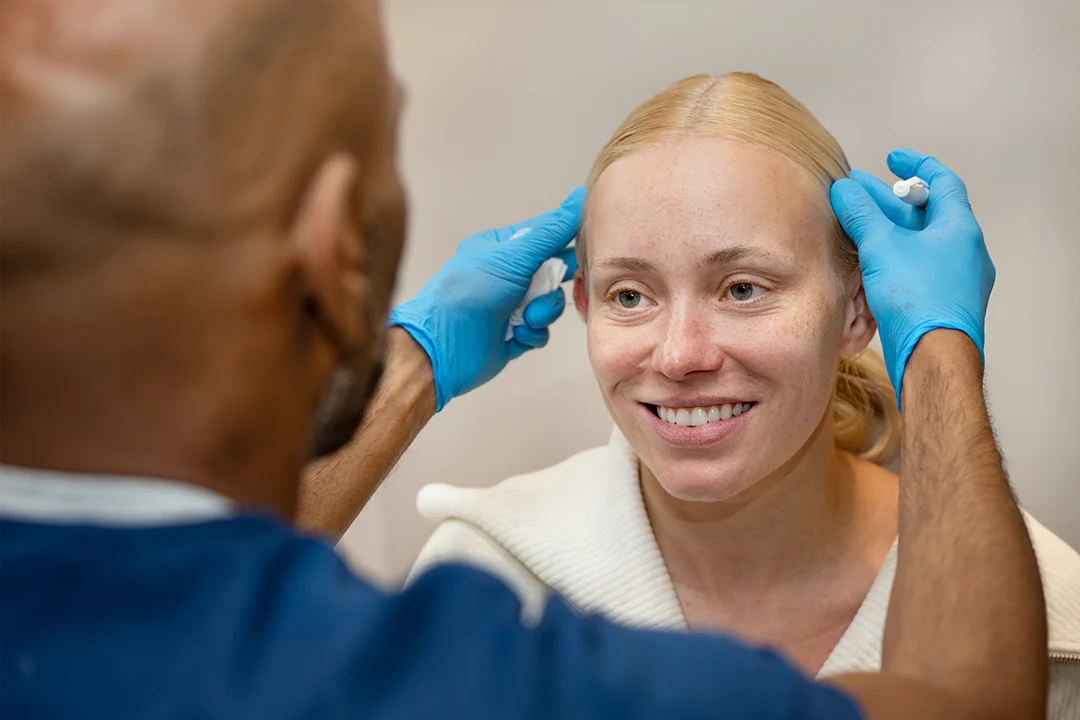
A face-to-face consultation with Dr Suresh Mohan at his West Wimbledon clinic.
If you would prefer to speak to me before arranging a visit, call 07702 389 636. You can also contact my clinic with a general question.
“I’m so glad I went to Dr Mohan. He is highly professional, and at the same time warm and caring.”
Claire G
Read more patient reviews from people who have visited my clinic.
What I want you to leave knowing
Whether the concern is a fold, a downturned lip corner or something else; whether any treatment is genuinely suitable; and what a realistic change could look like.
If the likely improvement is small or the risks outweigh it, I would rather explain that clearly than encourage an unnecessary procedure.
Frequently Asked Questions
These are seven questions worth exploring if you have noticed changes around your mouth. I have added links where a related subject deserves a more detailed explanation.
At what age do marionette lines start?
There is no fixed age. Some people notice faint lower-face folds in their twenties or thirties, while others see a more pronounced change later on. Natural anatomy, inherited skin characteristics, sun exposure and changes in facial support all play a part.
I would not use age alone to decide whether a change needs attention. If you are unsure what you are seeing, my first aesthetic consultation guide explains how I assess facial changes without assuming that treatment is needed.
Are marionette lines the same as jowls?
No. Marionette lines are folds or shadows below the mouth corners, while jowls affect the outline of the lower jaw. You may have either one or both, and a jowl can make a nearby fold look deeper.
This matters if you are considering dermal fillers. A small crease, a broader area of volume loss and noticeable jowling may call for different discussions, so I would examine the surrounding lower face before suggesting an approach.
Does smiling, facial yoga or massage help?
Smiling naturally changes the shape of your lips and cheeks, so a fold may look softer while you smile. But smiling repeatedly is not a reliable way to remove a crease that stays visible when the face is relaxed. You certainly do not need to change your expressions to avoid wrinkles.
Gentle massage can be relaxing, and facial exercises have been studied, but there is not strong evidence that they reliably lift downturned lip corners or reverse established marionette folds. I would focus first on comfortable skincare. Be cautious of dramatic “natural facelift” promises.
Should filler be placed directly into marionette lines?
Sometimes direct placement is appropriate. In other faces, the chin, area beside the jowl or other surrounding contours may need closer assessment. The internet often presents this as a choice between “always” and “never”, but neither is a helpful rule for an individual patient.
The most useful question is why that particular placement is being suggested and how much improvement is realistic. My dermal filler guide explains the general treatment category, while an individual consultation allows us to discuss specific risks and limitations.
How many syringes of filler might I need?
There is no standard number for marionette lines. Two people with similarly visible folds can have different anatomy, skin conditions and goals. The amount must come from an assessment, not a generic online estimate or a quantity on a price list.
My current price list shows published filler categories, but that is not a recommendation to use a particular volume. I would explain the possible plan, full cost and alternatives before you decide whether any treatment is worthwhile.
Is Botox or dermal filler better for marionette lines?
They work differently. Hyaluronic acid filler adds volume or support in selected areas. Botox is a prescription-only botulinum toxin medicine that affects muscle activity; it does not fill an established groove. This is why I distinguish a downturned lip corner from a deeper fold.
Neither category is universally better. Lower-face muscle treatments require particular care because unwanted changes in smile or lip movement can occur, and some uses fall outside product licences. My fillers versus Botox guide explains the difference in more detail. Any prescription-only option is a private prescribing discussion, not a general recommendation here.
Can microneedling or skincare remove marionette lines?
Moisturiser, sun protection and suitable skincare can help dryness and certain fine surface lines. Professional microneedling may help selected superficial skin-texture concerns, but it does not reliably reposition a lip corner or remove a deep fold caused by changes in underlying support.
When you read a treatment claim, ask what it is intended to change: the skin surface, a shadow, a fold or the resting position of the mouth. I can help you distinguish these at a free consultation in Wimbledon, including when leaving the area alone may be the best option.
A Final Thought: You Do Not Need to Treat Every Line
Downturned mouth corners and marionette lines can affect how we think our face looks to other people. But the appearance of being “sad” in a photograph does not define how you feel, and there is no single procedure that is right for every face.
My approach is to work out what is creating the change, explain what may realistically help and leave you comfortable deciding whether to do anything at all. You deserve straightforward answers, not pressure to chase a perfect result.
Talk to Me About Marionette Lines in Wimbledon
If you would like an individual assessment, I offer free, no-obligation consultations at The Garden Room, 51 Spencer Road, West Wimbledon, London SW20 0QN, close to Raynes Park.
We can look at the concern together, talk through the likely causes and discuss whether any treatment is appropriate. You can also read about my Wimbledon clinic before you decide. There is no need to choose a procedure in advance.
Warm regards,
Dr Suresh Mohan

If you would like to ask a question first, please call 07702 389 636 or email info@drmohanclinic.co.uk. I am happy to explain how to arrange an appointment.
Ask Dr Mohan a Question
Tell me what you have noticed around your mouth and what you would like to understand. You can ask about arranging an individual assessment without deciding on a treatment in advance.
Please avoid including sensitive medical details in this general website form; we can discuss relevant information privately.
By clicking Send enquiry you agree to Dr Mohan Clinic’s Privacy Notice.
Evidence and Further Reading
This guide is written to explain the choices in plain English. For readers who would like to explore the medical guidance behind it, these are useful starting points:
- Cleveland Clinic: marionette lines, causes and treatment options
- Anatomical perspectives on the development of marionette lines
- Clinical research on hyaluronic acid filler for marionette lines
- Systematic review: facial exercise and massage evidence
- NHS: choosing a cosmetic procedure practitioner
- GMC guidance for cosmetic interventions
Medical note: This article provides general educational information. It does not replace an individual examination or advice about personal suitability, treatment risks, alternatives or aftercare.