What Happens at Your First Aesthetic Consultation?
Booking an aesthetic consultation can feel like a much bigger step than booking an ordinary appointment. You may have been thinking about one concern for months, reading about several treatments, or simply noticing that you look more tired than you feel and not knowing what—if anything—would help.
You do not need to arrive knowing the name of a treatment. You do not need a perfectly prepared explanation, and you certainly do not need to agree to anything on the day.
A good consultation should give you clarity. We should talk about what is bothering you, why it matters to you, your health and previous treatment history, what I can see on examination, what may realistically help, what will not help, and what the risks, recovery and costs would be.
The aim is not to find something to sell you. It is to decide whether treatment is appropriate at all—and, if it is, which option is most likely to give you a result you would actually value.
This guide explains what happens at my clinic in West Wimbledon, what to bring, which questions are worth asking and how to recognise a consultation that feels thoughtful rather than sales-led.
Medically reviewed and updated by Dr Suresh Mohan — August 2026
I’m Dr Suresh Mohan, a GMC-registered medical doctor with advanced Level 7 training in non-surgical facial aesthetics. I personally carry out consultations and treatments at my private clinic in West Wimbledon, so there is no hand-off between a sales team, a prescriber and a separate injector.
My approach is simple: listen first, assess properly, explain the realistic options—including doing nothing—and give you space to decide.
Your first consultation at a glance
You can expect the appointment to cover six things:
- Your concern and your goal — what you have noticed and what you hope might improve.
- Your health and treatment history — medicines, allergies, previous procedures and anything that may affect suitability.
- A proper assessment — your face or skin at rest and, where relevant, in movement.
- Realistic options — including alternatives, limitations and situations where no treatment may be the better choice.
- Risks, recovery and cost — enough information to make a genuinely informed decision.
- Time to decide — a consultation is not a commitment to treatment.
You should leave understanding your options more clearly than when you arrived—not feeling more insecure or pressured.
A Consultation Should Start With You, Not a Treatment
One of the most common things I hear from new patients is: “I don’t really know what I need.” That is completely fine.
Someone may arrive asking about filler when the real concern is tired-looking under-eyes. Another person may have read about an anti-wrinkle treatment when what bothers them most is skin texture or a feeling that the lower face has changed. Sometimes the best answer is a different treatment. Sometimes it is skincare, time, referral to another professional—or no treatment at all.
That is why I begin with the concern rather than the product. I may ask when you first noticed the change, whether it is present all the time or only in certain expressions or lighting, what result you are hoping for, and what you definitely do not want.
You can describe this in ordinary language. You can point to a mirror, show me a photograph or simply say, “I look more tired than I used to.” You do not need to diagnose yourself.
A consultation is also your opportunity to assess me. You should feel able to ask why I am recommending something, what the alternatives are, what could go wrong and what would happen if you chose to do nothing. The GMC’s guidance for cosmetic interventions is very clear that a patient’s decision should be voluntary and informed, and that the practitioner should consider the outcome the patient actually hopes to achieve.
That two-way decision matters. I need to be satisfied that an option is appropriate and likely to benefit you; you need to understand the plan and feel comfortable with it. Either of us should be able to say, “I don’t think this is the right treatment,” without embarrassment.
What Actually Happens During the Appointment?
Every first consultation is slightly different, because every patient arrives with a different history, concern and level of experience. The structure, however, should feel logical rather than like a sales script.
We begin with what has brought you in
I want to understand the change that matters to you and why you are considering treatment now. We may talk about how long you have noticed it, whether anyone else has influenced your decision, how subtle or noticeable you want the result to be, and what would make you unhappy.
The last point is particularly useful. Some patients are far more worried about looking “done”, losing expression or needing frequent maintenance than they are about achieving the biggest possible visible change. Knowing those boundaries helps me judge whether a treatment fits the person—not just the anatomy.

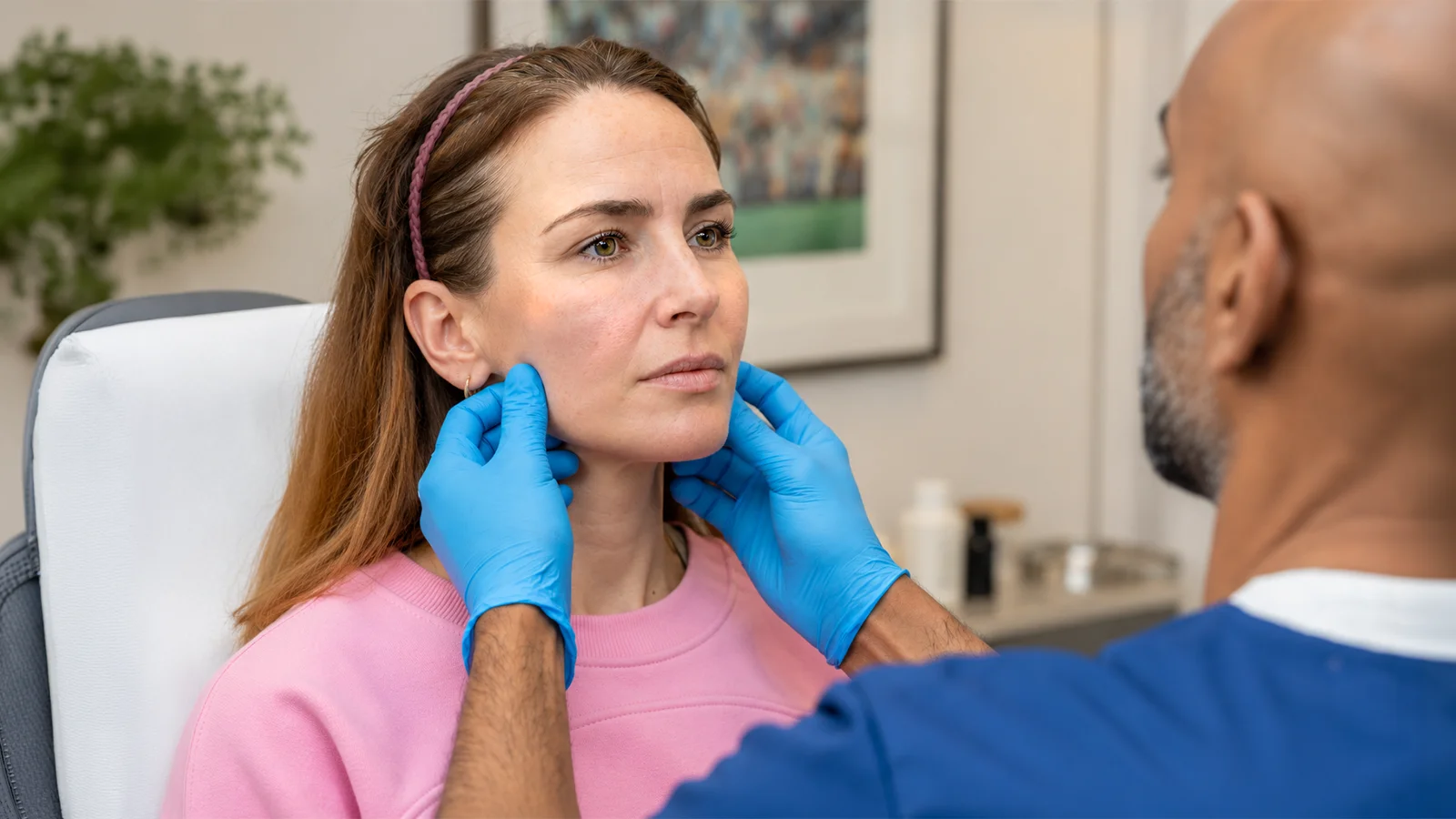
The consultation begins with what is bothering you and what you hope might improve.
We review your health and previous treatment history
Aesthetic treatment is still medical treatment, so your health matters. I will ask about relevant medical conditions, allergies, medicines and supplements, previous procedures, reactions to treatment and anything else that may affect suitability, bruising, healing or timing.
If you have had filler, skin boosters, polynucleotides, anti-wrinkle treatment or surgery elsewhere, tell me what you know. Dates, treatment areas and products are useful, but do not worry if you cannot remember every detail. Never guess about a product you are unsure of.
Please also tell me about important travel, dental work, weddings, professional photographs or other dates in your diary. Even treatments with relatively little downtime can occasionally cause bruising or swelling, and sometimes the sensible plan is simply to wait.
I assess your face or skin properly
The assessment depends on the concern. I may look at skin quality, hydration, facial proportions, natural asymmetry, areas of support or volume, muscle movement and how your expression changes when you smile, frown or raise your eyebrows.
Faces are not symmetrical. One brow may sit a little higher, one side of a smile may move more strongly, and lines change with movement, lighting and age. These are normal human features, not a list of defects that need correcting.
Clinical photographs may be taken where they are useful for your record and follow-up. They should document your starting point consistently. Being photographed for your medical record is not the same as giving permission for your image to be used on a website or social media; promotional use should be discussed separately and consented to appropriately.
We discuss what may help—and what may not
Only after I understand the concern and have assessed you does it make sense to discuss options. Depending on what you are hoping to improve, that discussion might include skincare, Botox treatment, dermal filler, Profhilo, Profhilo Structura, polynucleotides, LED treatment, a staged approach, referral, waiting or no treatment.
I will explain what I think could improve, how noticeable that improvement is likely to be, how long it may take, what the treatment cannot correct and whether maintenance is likely. General treatment information can explain what a product is designed to do; it cannot promise exactly what it will do for your face.
If you are unsure how the main injectable options differ, my guide to Botox, Profhilo, fillers and polynucleotides gives a useful overview. The consultation is where we decide whether any of those categories actually match your concern.

Only after I understand the concern and have assessed you does it make sense to discuss options.
Risks, recovery and total cost should be clear
Every procedure has disadvantages as well as potential benefits. The exact discussion depends on the treatment, but you should understand the common side effects, the less common but important risks, what normal recovery may look like, what would make me want you to contact the clinic and what aftercare or follow-up is available.
Cost matters too. A sensible conversation is not only about the price of one appointment. It should include whether a course is commonly used, whether maintenance is optional or expected, what reviews are included and whether a simpler or less expensive approach could still meet your goal.
You can see the clinic’s current aesthetic treatment price list before you come, but the actual plan should only be confirmed after assessment.
Then you decide what happens next
You may feel ready to book an appropriate treatment appointment. You may want to go home and think. You may seek another opinion. You may decide that the likely improvement is too subtle, the timing is inconvenient or the treatment simply is not for you.
All of those are valid outcomes.
The NHS advises patients not to feel rushed into cosmetic procedures and to take time to decide. I agree. A good consultation does not have to end with a sale; it should end with you understanding the decision more clearly.
What Should You Bring to Your First Consultation?
You do not need to prepare extensively. A few practical details can make the appointment more useful:
- Your medicines and allergies. A list on your phone is perfectly fine, including relevant non-prescription supplements.
- Anything you know about previous aesthetic treatment. Dates, areas treated, products if known, and whether you liked the result or had a reaction.
- Photographs if they genuinely explain the concern. They can help when puffiness, expression or lighting makes the issue look different at different times.
- Your diary. Mention important events, travel and dental appointments so timing can be planned sensibly.
- Your questions. Write them down if you are likely to forget them once the conversation starts.
Do not stop prescribed medication simply to prepare for an aesthetic appointment unless the clinician responsible for that medication has specifically advised you to do so.

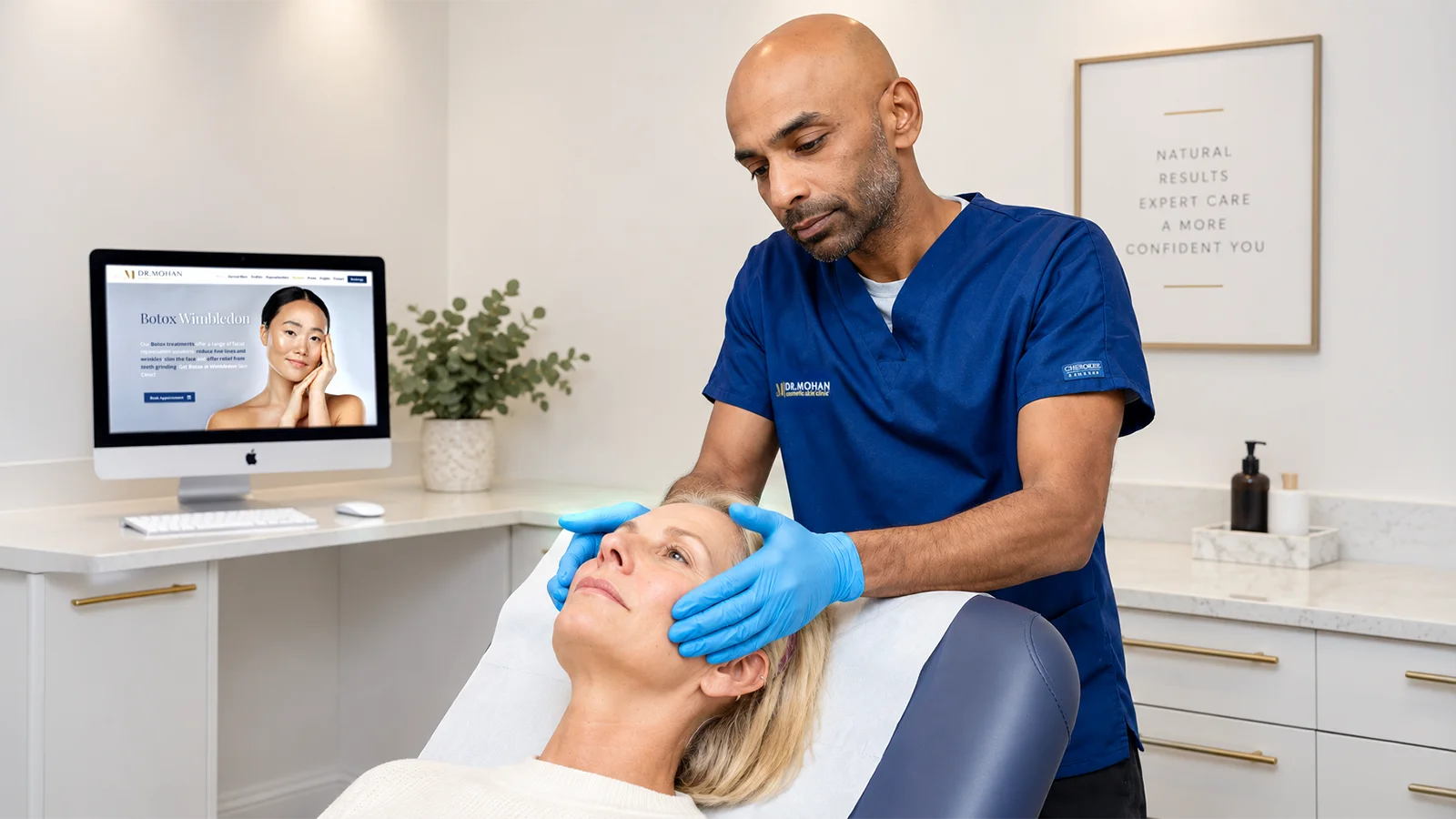
A proper assessment looks at your starting point, natural asymmetry, skin or facial movement and the result you actually want.
Seven Questions Worth Asking Before You Decide
You do not need to interrogate your practitioner or work through a 15-point checklist. These seven questions cover most of what matters:
- Why are you recommending this option for me? The answer should connect directly to your concern, anatomy and goal.
- Are there other options—including doing nothing—could I consider? A balanced consultation should not pretend there is only one route.
- What result is realistic, and what will this not improve? Limitations are part of informed consent.
- What are the common side effects and the less common serious risks? “Nothing can go wrong” is not a reassuring answer.
- Who will actually carry out the procedure, and what product would you use? You should know who is responsible for your care.
- What recovery, aftercare and follow-up should I expect? You should know who to contact if you are worried afterwards.
- What is the complete likely cost and maintenance commitment? Think beyond one appointment.
A careful practitioner should welcome these questions. If asking them makes the conversation uncomfortable, that itself tells you something useful.
How Can You Tell Whether a Consultation Is Good?
A good consultation often feels calmer as it goes on. You understand why questions are being asked, you know what the practitioner has noticed, and you can see how the recommendation connects to the concern you actually brought in.
Green flags
Reassuring signs include meeting the person who will actually treat you, having your medical history reviewed, being assessed in person rather than from a photograph, hearing both benefits and limitations, discussing alternatives, receiving a clear explanation of risk and cost, and being given time to decide.
It is also a good sign when the practitioner is willing to recommend less treatment than you expected—or no treatment. That suggests the decision is being made around your likely benefit rather than the clinic’s sales target.
Warning signs that should make you pause
Be cautious if treatment is recommended before anyone has properly discussed your concern or medical history; if new “flaws” are pointed out that you did not ask about; if you are pushed towards several areas, a package or a time-limited discount; if risks are minimised; or if you cannot establish who will perform the treatment and who will look after you afterwards.
Pressure is particularly important. You do not owe a clinic a booking because they have given you their time. If you feel less confident, more insecure or rushed to pay before you have had time to think, it is reasonable to walk away.
Dr Mo’s Approach: Sometimes the Best Plan Is No Treatment
I do not think an aesthetic consultation should be a shopping list of everything that could be changed about your face.
Most people have natural asymmetry, expression lines, family features and normal changes with age. Those are not automatically problems. If you ask me for a broader assessment, I can explain what I see, but I do not believe in creating insecurities that were not there when you arrived.
If a treatment is unlikely to address your concern, the likely improvement is too small to justify the cost, your timing or medical history makes it unsuitable, or I simply do not think you will benefit, I will say so and explain why.
That may be disappointing if you have spent weeks researching a particular procedure, but recommending something I do not believe will help would not be good care.

Visiting The Garden Room at Dr Mohan Clinic in West Wimbledon near Raynes Park
Visiting Dr Mohan Clinic in West Wimbledon
My clinic is based at The Garden Room, 51 Spencer Road, West Wimbledon, London SW20 0QN, close to Raynes Park.
I chose a quiet, private setting because I wanted appointments to feel personal rather than like a production line. Consultations and treatments are pre-booked, and I personally look after you throughout the process.
If you are driving, free off-street parking is available on the drive. Access to The Garden Room is via the side entrance and along the garden path. If you are travelling by public transport, Raynes Park is the nearest main station and Wimbledon is also straightforward for onward travel.
The practical arrival information is kept up to date on the clinic’s What happens after you book page. You can also read more about the doctor-led aesthetic clinic in Wimbledon or the clinic’s Raynes Park access and local information.
“I’m so glad I went to Dr Mohan. He is highly professional, and at the same time warm and caring.”
— Claire G
That is how I want a first visit to feel: professional and medically careful, but still human.

Dr Mohan Clinic is based at The Garden Room, 51 Spencer Road, West Wimbledon, with free off-street parking.
Frequently Asked Questions About a First Aesthetic Consultation
Do I need to know which treatment I want?
No. It is often more useful to arrive with a goal than a product name. Tell me what has changed or what bothers you, and we can work out whether skincare, an injectable treatment, another approach or no treatment makes sense.
Is the first consultation free?
Yes. Dr Mohan Clinic currently offers a free, no-obligation initial consultation. If the clinic’s policy ever changes, the current booking information will take priority over this article.
How long does a first aesthetic consultation take?
The time needed depends on your concern, medical history and how many options need to be discussed. Your booking confirmation will show the appointment arranged for you; contact the clinic if you are unsure how much time has been allocated.
Can I have treatment on the same day?
Do not assume that a consultation automatically includes treatment. Whether same-day treatment is appropriate depends on the treatment being considered, your assessment, medical history and any prescribing or consent requirements. If you hope to have treatment on the same visit, mention this when booking so the clinic can advise you.
Should I arrive without make-up?
You do not necessarily need to arrive completely make-up free, but some make-up may need to be removed so the skin and treatment area can be assessed properly or photographed consistently.
Will clinical photographs be taken?
They may be recommended where they help document your starting point and assess change fairly. Clinical images form part of your confidential record. Public or promotional use should be discussed separately and requires appropriate consent.
Can I change my mind after the consultation?
Yes. You can take time to think, seek another opinion or decide not to proceed. You can also change your mind later. If you have already booked an appointment, contact the clinic as soon as possible; the current cancellation policy asks for at least 24 hours’ notice for cancellations or rescheduling.
Can Dr Mohan refuse to treat me?
Yes. A responsible practitioner may decline treatment if it is medically unsuitable, unlikely to help, poorly timed or based on an outcome that cannot realistically be achieved. The reason should be explained respectfully, and you remain free to seek another opinion.
Is the consultation confidential?
Yes. Your medical information, concerns, treatment records and clinical photographs should be handled confidentially and stored appropriately. Ask the clinic if you have any questions about how your information is used or stored.
A Final Word From Dr Mohan
You do not need to arrive confident, perfectly prepared or certain that you want treatment.
You only need to be honest about what has brought you in and what you hope might improve. From there, my job is to listen, assess carefully and explain what I think is realistic.
Sometimes that conversation leads to treatment. Sometimes it leads to a gentler or simpler plan than the patient expected. And sometimes we decide that no treatment is needed.
All three can represent a good consultation.
My aim is that you leave understanding your face, skin and options more clearly—and feeling that the final decision remains yours.
Book a First Aesthetic Consultation in Wimbledon
If you are considering aesthetic treatment but do not know where to begin, you are welcome to arrange a free, no-obligation consultation with me at The Garden Room in West Wimbledon.
We can discuss the concern that brought you in, your health and previous treatments, realistic options, risks, likely recovery and cost. If I think another approach—or no treatment—would suit you better, I will tell you.
There is no pressure to decide on the spot.
You can learn more about my aesthetic clinic in Wimbledon, read patient reviews of Dr Mohan Clinic, or book below.
Prefer to speak first? Call 07702 389 636 or use the enquiry form below.
Warm regards,
Dr Suresh Mohan

Ask Dr Mohan a Question
If you are unsure whether a consultation is worthwhile, send a short message. Please do not include sensitive medical information in the website form; relevant details can be discussed privately.
By clicking ‘Send enquiry‘ you agree to Dr Mohan Clinic’s Privacy Notice.
Evidence and Further Reading
A careful consultation should support an informed, voluntary decision and give you enough information about realistic outcomes, alternatives, risks, aftercare and cost. Useful UK sources include:
- NHS: before you have a cosmetic procedure
- NHS: choosing who will do your cosmetic procedure
- UK NHS: is a cosmetic procedure right for me?
- GMC: cosmetic interventions—communication, partnership and consent
- GMC patient guide: cosmetic procedures—what do I need to consider?
- Dr Suresh Mohan – GMC register
Medical note: This article provides general educational information and cannot determine whether a cosmetic procedure is suitable for an individual patient. Suitability, risks, consent, treatment choice and timing require an appropriate consultation and clinical assessment.