
When Your Jawline Starts to Look Different
“Why is my jawline beginning to look softer, even though I still feel like myself?” You might have noticed a little fullness on either side of your chin, a less defined line beneath your cheeks, or a change that seems more obvious when you catch your reflection from the side.
These changes are commonly called jowls. They are a normal part of facial ageing, although people notice them at different ages and in different ways. And they do not always mean that your skin has simply become loose.
At my Wimbledon aesthetic clinic, I prefer to begin with a conversation rather than a particular treatment. The first step is understanding what has changed around your jawline and what you would like to improve.
I’ll explain how to recognise the different changes, what you can sensibly try at home, and which professional approaches may be worth considering. You can then decide whether you would like to explore things further during a free consultation.
The quick answer
Jowls are changes in the contour of the lower cheeks and jawline. They can be influenced by skin elasticity, facial volume, tissue position and natural anatomy. That is why two people with similar-looking jowls may benefit from very different advice.
Daily skincare can help maintain skin health. For selected people, dermal fillers may improve the contour beside the jowl, while Profhilo Structura may be relevant to certain changes in facial support. The best option depends on whether your main concern is skin quality, facial support or the jawline contour.
I’m Dr Suresh Mohan, a GMC-registered medical doctor. At my Wimbledon aesthetic clinic, I personally look after patients from the first consultation through treatment and follow-up. My aim with this guide is to help you understand the changes you are seeing, explore suitable options and feel confident making your own decision, with no pressure to proceed.

The shape of the lower face varies naturally from person to person.
What Are Jowls, and Why Do They Appear?
A jowl is the fullness or sagging that interrupts the outline of the lower jaw, usually just to either side of the chin. Sometimes you may notice a small bulge, and sometimes it is the shadow or dip immediately in front of it that catches your eye.
The shape of your lower face depends on the relationship between skin, fat, muscles, connective tissue and bone. Over time, the skin may become less elastic, areas of facial fat may change, and the tissues beneath the skin may sit differently.
These gradual changes can make your jawline look softer. They are not a sign that anything is wrong. But if the difference concerns you, understanding its cause is useful before considering a treatment.
Jowls, Double Chin, Marionette Lines or Loose Neck Skin?
It is easy to group all these features together as a “sagging lower face”. In reality, they describe different changes, and the distinction is important if you are wondering what might help.
Here are four common patterns. You may recognise just one, or you may have a combination of them.

Jowls are changes in contour on either side of the chin.
1. Jowls along the jawline
Jowls are usually noticed along the lower cheeks, where the outline of the jaw becomes less even. A small depression in front of a jowl can sometimes make the fullness seem more prominent.
When I assess this area, I look at the surrounding cheek and chin rather than just the bulge itself.

A double chin involves fullness beneath the chin rather than along the jawline.
2. Fullness beneath the chin
A double chin usually refers to fullness under the chin. It may be influenced by fat distribution, skin laxity or natural anatomy.
Someone can have a double chin without significant jowls. It is worth knowing which area is actually responsible for the change you notice.

Marionette lines are folds or shadows below the corners of the mouth.
3. Marionette lines beside the mouth
Marionette lines run downwards from the mouth corners towards the chin. They may look deeper when nearby jawline changes create additional shadows.
I explain the distinction more fully in my marionette lines and downturned mouth corners guide.

Loose neck skin may change the outline beneath the jaw and along the neck.
4. Loose skin beneath the jaw
Loose skin under the jaw or along the neck is another concern altogether. It can appear alongside jowls, but improving one small jawline depression will not tighten a larger area of loose neck skin.
This is one of the reasons I prefer to assess the whole lower face before suggesting what may be worthwhile.
Why Does My Jawline Look Softer Now?
There is rarely just one explanation. Your natural facial structure, inherited skin characteristics, sun exposure and changes in facial volume may all play a part.
As the years pass, some tissues become less firm while others lose or redistribute volume. Changes in the underlying jaw can also influence how the skin and soft tissue sit. A deeper shadow beside a jowl can make the jawline look less defined, even when the jowl itself has changed very little.
You may begin to notice these features in your thirties or forties, or much later. I would never decide what someone needs based on their age alone. What matters is the individual pattern and whether it is something they would like to discuss.
Can You Get Rid of Jowls Naturally?
This is one of the most understandable questions. When a change is still fairly subtle, it makes sense to wonder whether a few adjustments at home might help.
There are useful things you can do for your skin, but it helps to separate caring for the surface from changing the structure beneath it. Good skincare supports your skin, but it cannot reliably lift established jowls.
Skincare worth keeping simple
Daily broad-spectrum SPF 30 or higher, a suitable moisturiser and gentle cleansing are worthwhile foundations. Some people also benefit from an appropriate retinoid for fine lines and texture, although these products can irritate sensitive skin and are not suitable in pregnancy.
These steps may improve skin condition over time. They cannot restore lost facial support or move the tissues of your jaw back into an earlier position.
Face yoga, gua sha and massage
You may have seen exercises promising to tighten jowls in a matter of weeks. A little gentle massage can feel relaxing, and temporary changes in puffiness may make your face look different for a short while.
However, research has not established that facial exercises or massage reliably reverse structural jowling. There is no need to stop enjoying a gentle routine, but I would be cautious about promises of a dramatic lift.
Will losing weight make jowls disappear?
Weight loss can change facial fullness, especially beneath the chin, but it does not necessarily tighten skin. In fact, losing facial volume may make an existing fold or jowl more noticeable for some people.
If you are already at a healthy weight, I would not suggest losing weight simply to sharpen the jawline. A changing face is not necessarily a reason to change your body.
What about results in one week?
A new skincare routine might make your skin feel more comfortable, or you may notice less temporary puffiness. But no cream, facial exercise or massage routine can be relied upon to lift established jowls in seven days.
The realistic goal at home is healthier-looking skin, not an instant change to the underlying structure of the jawline.
Can Jowls Be Improved Without Surgery?
Sometimes, yes. A non-surgical approach can make a visible difference in suitable people, particularly when a dip beside the jowl, changes in facial volume or skin quality are part of the concern.
The crucial distinction is between improving the appearance of a contour and physically lifting substantial loose tissue. Those are not the same treatment goal.
At my Wimbledon cosmetic skin clinic, I may discuss dermal fillers for selected contour changes or Profhilo Structura for particular changes in facial support. When skin hydration and texture are the main concerns, standard Profhilo may be more relevant. I’ll also explain when a different professional approach might suit the concern better.
| Approach | What it may realistically help |
|---|---|
| Dermal fillers | May improve selected dips and facial contours alongside mild jowling, creating a smoother-looking jawline in suitable patients. |
| Profhilo Structura | May be considered for selected age-related changes in the cheek fat compartments and surrounding facial support. |
| Profhilo | May improve hydration and skin quality when dryness, fine texture or reduced elasticity are the main concerns. |
| Radiofrequency or focused ultrasound | May offer modest tightening for selected skin-laxity concerns, depending on the device and individual. Not a service promoted as available at my clinic. |
| Surgical assessment | May be worth considering when significant loose skin or tissue descent requires more substantial repositioning. |
The purpose of this comparison is not to choose a procedure for yourself. The best option is the one that matches your concern and has a realistic chance of giving you a result you would value.
When Might Dermal Filler Help the Jawline?
One of the services I offer at my Wimbledon clinic is hyaluronic acid dermal filler treatment for selected facial contour and volume concerns.
Sometimes a small depression just in front of a jowl can make the nearby fullness stand out. In a suitable face, carefully planned filler placement may soften that transition or improve balance around the chin and jawline.
But I would not automatically put filler into the jowl itself. Adding more volume is not always the way to achieve a more defined jawline. If a lower face already looks heavy, too much filler can make that concern worse rather than better.
Will dermal filler make my face look fuller?
Not necessarily in an obvious way, but it is important to remember that filler does add volume. The location and amount matter just as much as the name of the treatment.
My aim would be a subtle, balanced result that still looks like you. If I think the likely benefit is too small, or the additional volume would not suit your features, I would rather explain that than recommend more filler.

A careful assessment considers the whole lower face, not just the visible jowl.
Could Profhilo Structura Help With My Changing Jawline?
Profhilo Structura is another option I offer, and it works differently from a conventional contouring filler. It is intended for selected changes involving facial fat compartments, particularly in the cheeks.
For someone whose lower face is changing partly because of reduced support in the midface, it may be worth discussing whether this type of treatment is relevant. Improvements, where they occur, are expected to be subtle rather than a dramatic change in shape.
What interests me about this approach is the possibility of subtle improvement in facial support for carefully selected patients. Profhilo Structura is designed for selected changes in facial support and contour. Where there is significant loose skin or tissue descent, I would explain that a surgical assessment may offer a more appropriate way to address that particular concern.
How is it different from filler or standard Profhilo?
Traditional dermal filler can be used to add definition or volume to a carefully selected area. Profhilo Structura is intended for a different type of tissue and is not designed to produce exactly the same immediate contouring effect.
Standard Profhilo is primarily discussed for skin hydration and quality. Someone hoping to improve skin texture may have a different conversation from someone hoping to restore jawline definition. My Profhilo versus Profhilo Structura guide explores the distinction further.

Different treatment approaches address different features of the lower face.
What If Loose Skin Is the Main Concern?
When the main concern is more pronounced loose skin or tissue sagging, it is helpful to discuss treatments that are specifically designed for those changes. I would explain what a non-surgical approach might achieve and whether a different assessment could be more useful.
Some clinics offer radiofrequency or focused ultrasound treatments for selected skin-laxity concerns, and surgery may be considered when repositioning more descended tissue is the main aim. These are different approaches with different results, recovery and limitations.
I am always happy to explain these distinctions. A thoughtful consultation should help you choose an approach that matches the change you want to address. Sometimes that means deciding to leave things exactly as they are.
What Could a Natural-Looking Improvement Actually Mean?
A good result is not necessarily a completely straight, sharply defined jawline. For one person, a small improvement in the shadow beside the chin may be enough. For another, the main wish may be healthier-looking skin rather than any change in facial shape.
If dermal filler is suitable, changes in contour may be visible fairly quickly, although early swelling can influence the initial appearance. With treatments intended to support tissue or improve skin quality, any changes may be more gradual.
I also encourage people to be cautious about before-and-after photographs online. Lighting, facial expression, head position and camera angle can make a large difference. I would much rather discuss a realistic result for your face than promise you will look like somebody else.
What happens after treatment?
Before a procedure, I explain what to expect afterwards, give clear aftercare instructions and make sure you know how to contact me if you have questions. If appropriate, we can also arrange a follow-up appointment to see how things are settling.
Injectable treatments can cause temporary swelling, bruising or tenderness, and there are less common risks that I will discuss before you decide. My aim is for you to feel informed and looked after, both at the appointment and afterwards.
No pressure to decide
You can come to see me simply to understand what is happening to your jawline. My initial consultations are free and there is no obligation to go ahead with treatment.
Sometimes the most helpful outcome is a clear explanation and the reassurance that you do not need to do anything right now.
How Much Does Jowl Treatment Cost in Wimbledon?
The price depends on what we are actually considering, how much treatment is appropriate and whether a course of appointments would be involved. A published price should not be interpreted as an amount of product that you need.
These are some of the relevant prices currently listed by my clinic. They are general treatment categories, not fixed jowl-treatment packages.
| Jawline & Skin Treatment Prices | |
| Cheek, Jaw & Chin Contouring Filler | Book consultation |
| 1.2ml | £350 |
| 2.4ml | £700 |
| 3.6ml | £950 |
| Profhilo Structura | Book consultation |
| One area, per session | £380 |
| Profhilo | Book consultation |
| One area, per session | £330 |
Profhilo and Profhilo Structura are commonly planned as an initial course rather than a single isolated session, so the total likely cost is important. We can discuss that during the consultation, along with alternatives and whether any treatment is worth considering.
You can explore all published treatment prices on my Wimbledon aesthetic clinic price list. During your free consultation, I’ll explain the cost of any plan we discuss before you decide.
What Happens at My Wimbledon Consultation?
You do not need to arrive knowing whether you want filler, Profhilo Structura, skincare advice or no treatment at all. Tell me what you have noticed and what you would like to understand.
I will look at the jawline, cheeks, chin and skin, and take time to understand your medical history and expectations. We can talk about options that may help, what the likely difference would be, and when I think a treatment would not be worthwhile.
My initial consultations are free, and the decision to have treatment is always yours. If you do choose to proceed, I carry out your treatment personally and explain the aftercare and follow-up arrangements clearly.
My first aesthetic consultation guide and patient journey explain the process in more detail.
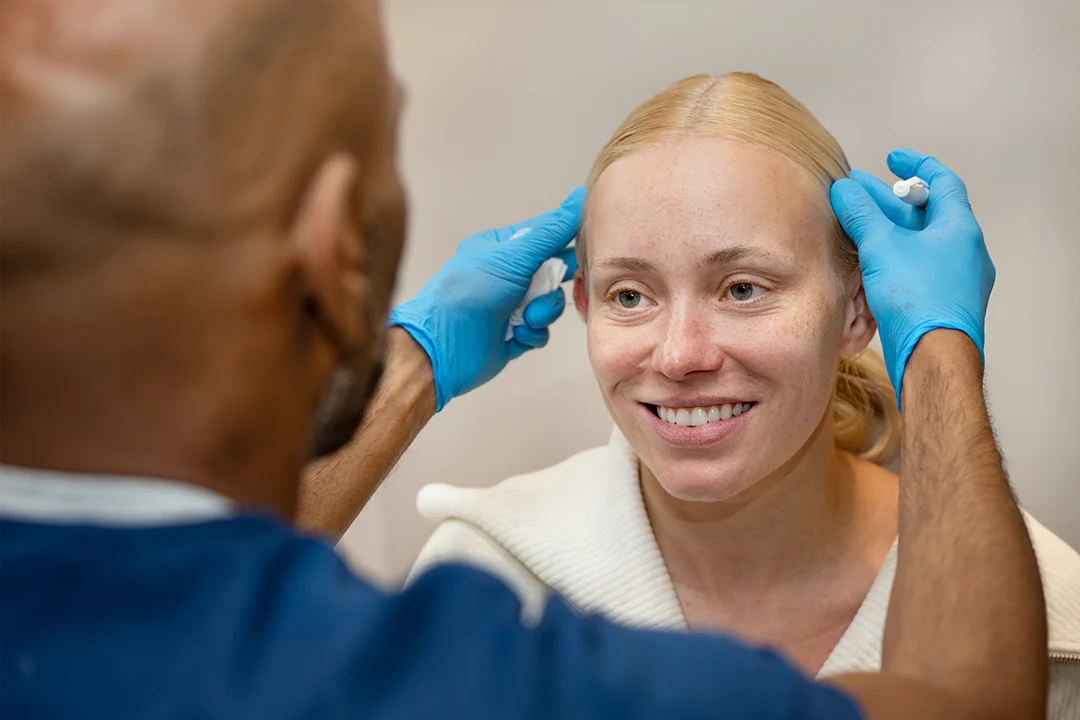
A personal consultation with me at my Wimbledon aesthetic clinic.
You can also call 07702 389 636 or email info@drmohanclinic.co.uk if you would prefer to ask a question before arranging a visit. I see patients at my Wimbledon aesthetic clinic, 51 Spencer Road, West Wimbledon, London SW20 0QN, close to Raynes Park.
“I’m so glad I went to Dr Mohan. He is highly professional, and at the same time warm and caring.”
Claire G
You can read more patient reviews on my website.
Frequently Asked Questions About Jowls
Here are seven questions I am often asked about changing jawlines and the options people read about online. Each is worth understanding before deciding whether treatment is right for you.
At what age do jowls normally start?
There is no set age. Some people notice a subtle change to the lower face in their thirties or forties, while others maintain a straighter jawline for much longer. Facial structure, skin characteristics and normal ageing all contribute.
I would not assume that a person in their forties needs to prevent or correct anything. If you would like to understand what is changing, you can visit my Wimbledon cosmetic skin clinic for a free aesthetic consultation, without committing to treatment.
Can you get rid of jowls naturally or with facial exercises?
A good skincare routine can support your skin, and gentle massage may temporarily make puffiness less obvious. These things can be worthwhile for comfort and skin health.
However, there is not reliable evidence that creams, facial yoga or gua sha can lift established jowls. I would be cautious about dramatic before-and-after claims from short home routines.
Will losing weight help a sagging jawline?
It depends on the cause. If fullness beneath the chin is mainly related to body fat, weight change may affect its appearance. But jowls and a double chin are different features.
Losing weight cannot be relied upon to tighten loose skin, and a reduction in facial volume may sometimes make folds look more noticeable. I would not recommend weight loss solely to change an otherwise healthy face.
Can dermal fillers help jowls without making my face look bigger?
For suitable patients, strategically placed filler may soften a dip or improve the balance of the jawline. The objective is not necessarily a fuller face, and a small, carefully selected change may be all that is appropriate.
Filler still adds volume, so in a heavier or more lax lower face it may not be the right choice. My dermal filler guide explains what treatment involves, and I can assess your individual anatomy during consultation.
Could Profhilo Structura lift my jowls?
Profhilo Structura is designed for selected changes involving facial fat compartments and support. It may be relevant when the cheeks and surrounding tissues have changed with age, particularly if subtle improvement in midface support is one of your goals.
For more pronounced sagging, we would discuss which approaches are designed to address a greater degree of tissue descent. My Profhilo versus Profhilo Structura comparison explains the differences, while my Profhilo treatment page covers skin hydration and quality if those are your main concerns.
How long do non-surgical jowl treatments last?
That depends on the approach and the individual. Dermal fillers may produce visible contour changes relatively quickly, while Profhilo Structura and skin-quality treatments have a different timetable. Results are individual and temporary.
I will explain the expected result, any initial course and likely maintenance before you decide. I also provide clear aftercare and follow-up information so you know what to expect after an appointment.
How do I know which treatment, if any, is right for me?
Start with what you have actually noticed: a small dip beside the jowl, reduced support around the cheeks, fullness beneath the chin, or skin that feels less firm. Those observations may lead to very different conversations.
You do not need to choose a treatment in advance. During my free initial consultation, I will explain what might help, what may not be worthwhile, and why leaving things as they are is also a perfectly valid option.
A Softer Jawline Does Not Mean You Need Treatment
A changing jawline can take a little getting used to, particularly when you notice it in a photograph or a mirror unexpectedly. But a softer lower face is simply one of the ways we change with age, and there is no single ideal shape everyone should aim for.
If skincare and time are enough for you, that is completely reasonable. If you would like to consider an aesthetic treatment, my role is to listen, assess carefully and explain the possibilities honestly, including the limits.
You should leave a consultation feeling more informed, not under pressure to change your face. Whether you decide on treatment, a different approach or no treatment at all, the choice is yours.
Talk to Me About Your Jawline in Wimbledon
If you have noticed a change in your jawline and would like to understand what may help, I offer free, no-obligation consultations at my Wimbledon aesthetic clinic, 51 Spencer Road, West Wimbledon, London SW20 0QN, near Raynes Park.
We can look at your concerns together, explore the approaches that may suit your face and talk through what a natural-looking improvement could mean for you. You are welcome to ask questions, take time to think and decide whether to proceed. You can also read about your first aesthetic consultation in Wimbledon before visiting.
Warm regards,
Dr Suresh Mohan
If you would prefer to ask a question first, please call 07702 389 636 or email info@drmohanclinic.co.uk. I am always happy to explain how to arrange an appointment.
Ask Dr Mohan a Question
Tell me what you have noticed about your jawline and what you would like to understand. You can ask about arranging an individual assessment without deciding on a treatment in advance.
Please avoid including sensitive medical details in this general website form; we can discuss relevant information privately.
By clicking Send enquiry you agree to Dr Mohan Clinic’s Privacy Notice.
Evidence and Further Reading
This article is written to make the choices easier to understand. If you would like to explore the medical information in more detail, these are useful places to start: