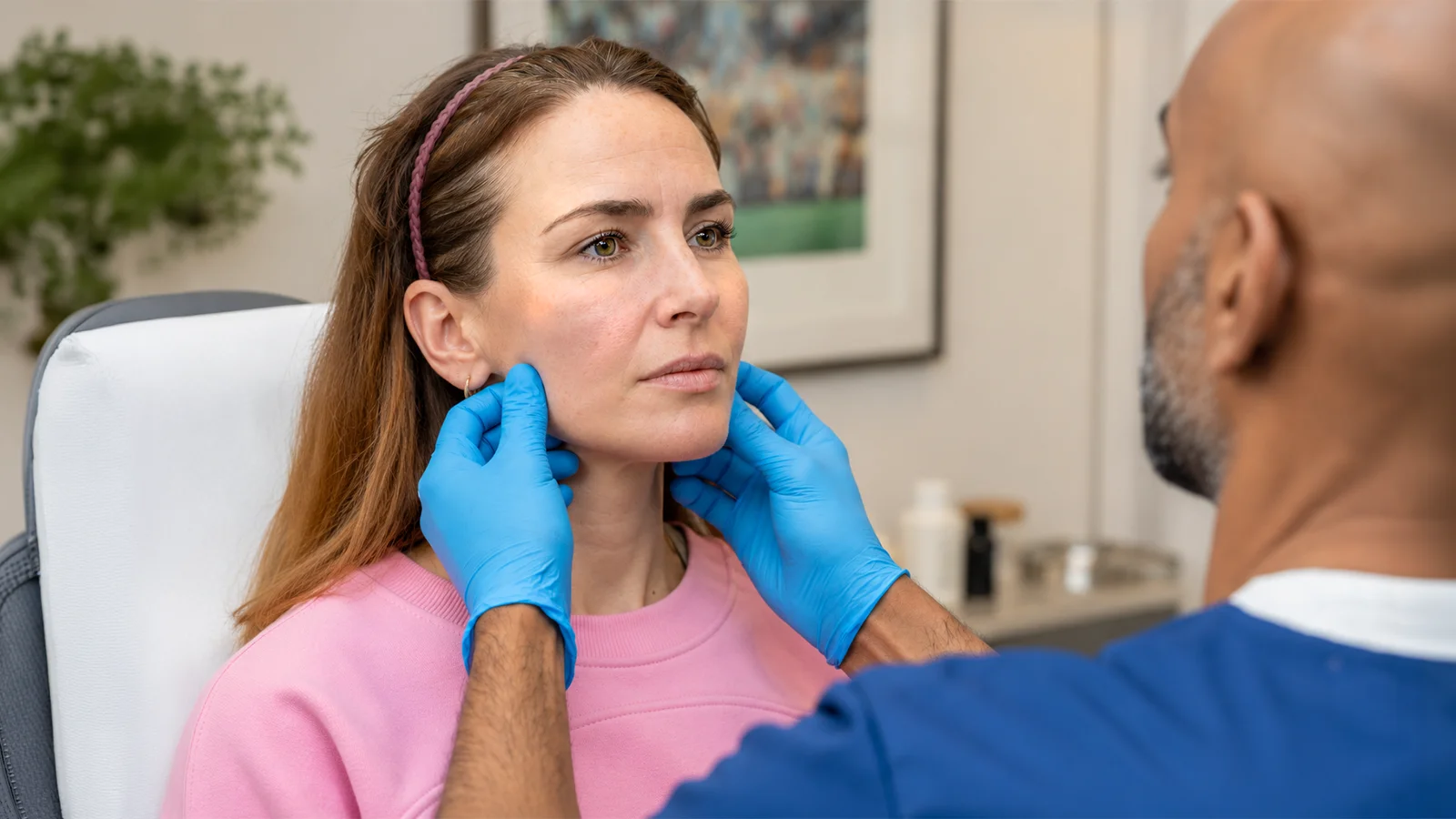
“Why does the skin under my eyes look crinkled, even when the rest of my face looks fine?”
Under-eye wrinkles and crepey skin can have different causes. Dryness can make fine lines more noticeable. Other changes involve skin elasticity, facial movement or the shape beneath the eyes.
At my clinic in West Wimbledon, I start by understanding what concerns you, rather than choosing a treatment. A fine surface line, loose skin and an under-eye hollow may need very different approaches.
If you’re wondering how to get rid of under-eye wrinkles, this guide will help you understand what may work. I’ll explain what skincare can improve, when treatment is worth discussing and what results are realistic.
Quick answer: What helps crepey skin under the eyes?
Start with daily sun protection, gentle moisturising and avoiding irritating products. These steps can make dehydration-related lines look softer and help reduce further sun damage. An eye-area retinoid may gradually improve some fine lines. However, the delicate skin around the eyes can become irritated.
When crepiness comes mainly from deeper age-related changes, skincare alone has limits. For some people, a professionally assessed skin-quality or resurfacing treatment may help. Others need a different approach. The best option depends on the cause of the lines, not how many products you have tried.
I’m Dr Suresh Mohan, a GMC-registered medical doctor offering aesthetic consultations at The Garden Room in West Wimbledon, close to Raynes Park. I will explain the options as I would during a consultation. I want you to understand what may help, without promises that one treatment suits everyone.

Under-eye fine lines are normal. What matters is recognising the difference between temporary dryness, skin texture, movement and changes in the tissues beneath the eye.
First, Which Kind of Under-Eye Line Are You Seeing?
Look in a mirror with your face relaxed, then smile naturally. Notice whether lines stay in place or appear mainly when you smile. Look for a fine crinkled texture across the lower lid, too. Lighting matters too: a strong overhead light can exaggerate shadows and make normal folds look deeper.
These are common patterns, rather than diagnoses:

Dryness can emphasise fine creases.
Fine, dry-looking lines
Small shallow creases can look sharper when the surface is dry or irritated. A comfortable moisturiser may soften their appearance; that is not the same as reversing deeper skin ageing.

Many fine folds create a crepey texture.
Crepey, paper-like texture
Several tiny folds create a crinkled surface, sometimes with reduced elasticity. Ageing and cumulative sun exposure can contribute, while dryness makes it more noticeable.

Some lines appear only with expression.
Lines when you smile
The lower lid changes shape when you smile, and some folds appear only with movement. Crow’s feet usually extend from the outer corners; normal smile lines under the eye are not necessarily the same thing.

A hollow can create a shadow.
A hollow or dark shadow
A tear-trough hollow creates a shadow that can resemble a crease. Pigment and visible vessels can also alter the colour of the area. A skin-smoothing treatment may not change that shadow.

Eye bags change the shape, not just texture.
Puffiness or excess skin
Fluid retention, prominent lower-lid fat pads or excess skin can create folds. These need a different assessment, and eye cream cannot remove a prominent anatomical bag.
These descriptions are clues, not diagnoses. You may recognise more than one. A shadow or puffiness can look like a wrinkle in some lighting. That is why I start by identifying the concern, rather than choosing a treatment.
Why Does Skin Under the Eyes Become Thin, Wrinkled or Crepey?
The skin around the eyes is naturally delicate. Blinking and facial expression move this skin throughout the day. Over time, sun exposure and changes in collagen, elastin and moisture retention can make fine lines more noticeable.
Ageing and genetics
As skin matures, it generally becomes less elastic and more prone to forming lines that remain visible at rest. Some people notice this earlier because of their natural anatomy and inherited skin characteristics. Seeing fine creases under the eyes does not, by itself, mean anything is medically wrong.
Sun exposure
Ultraviolet light contributes to the breakdown of the supporting fibres that keep skin resilient. Years of exposure can affect the skin, even without a memorable sunburn. That is why protection still matters after fine lines appear.
Dryness and irritation
Dry skin reflects light differently, feels tight and can make fine creases look sharper. Harsh cleansers, repeated rubbing, allergy-related itching or an overenthusiastic skincare routine can add irritation. In that situation, stronger anti-ageing products may make the area look worse rather than better.
Movement and changes in facial support
Smiling, squinting and blinking are entirely normal. Their repeated movement influences where lines form. The tissues beneath the eyes also change with age. They can create hollows, folds or excess skin that a cream cannot simply tighten away.
My clinical approach
Before discussing treatment, I look at the skin, its movement and the shape beneath the eye. Two patients may both say “my under-eyes look wrinkled”, yet benefit from quite different advice. A good consultation separates those causes before deciding what – if anything – needs treatment.
Why Do My Under-Eye Wrinkles Show More When I Smile?
A natural smile raises the cheeks and changes the position of the lower eyelid. Fine folds can appear even in relatively young, healthy skin. That is not necessarily the same as crepiness that remains visible when your face is relaxed. Compare your face at rest with a natural smile in the same light. Harsher light can make either pattern look worse.
Lines that fan out from the outer corners are usually described as crow’s feet. They overlap visually with under-eye lines, but they are not identical concerns. If you want to soften a line while keeping your eyes expressive, I assess these areas separately. One approach may not address both concerns.
Why Have My Under-Eyes Suddenly Become More Wrinkled?
Age-related structural changes usually develop gradually. If crepiness appears over a few days, I first look for a recent change. Dryness, rubbing, new products or a skin condition may be involved.
Redness, itching, burning and flaking may point to dermatitis rather than ordinary wrinkles. In that situation, stop experimenting with strong active skincare and seek suitable medical advice. Sudden marked swelling, eye pain or any change in vision deserves prompt medical assessment – not an aesthetic treatment.
What Can You Do at Home for Fine Lines Under the Eyes?
I would start with a simple routine that the delicate eye area can tolerate. More expensive does not always mean more effective. Several strong products used together may cause irritation and make lines more noticeable.
In the morning: protect and moisturise
- Cleanse gently. Avoid scrubbing or pulling at the lower eyelid.
- Use a comfortable moisturiser. Ingredients such as glycerin, hyaluronic acid and ceramides can help the skin hold moisture and make superficial fine lines appear softer.
- Protect exposed skin from the sun. Choose broad-spectrum SPF 30 or higher, applied carefully according to the product instructions and kept out of the eyes. Sunglasses and a brimmed hat add protection.
In the evening: support the skin barrier
Remove makeup without vigorous rubbing, then moisturise if the area feels dry. If the skin is already sore or inflamed, the sensible priority is to calm it, not introduce a new anti-ageing treatment.
What about retinol eye creams?
Retinol and related skincare ingredients may improve some fine lines over time. The evidence is stronger for photoaged facial skin in general than for individual eye creams. Irritation remains an important limitation. Choose a product made for the eye area and keep it away from the eyes and lash line. Introduce it cautiously. Stop if it causes persistent stinging, redness or peeling. As a precaution, avoid retinoids during pregnancy or while trying to conceive. If breastfeeding, ask your clinician before using an active eye product.

Cleanse gently and avoid rubbing or pulling the delicate skin around your eyes.
A useful starting routine
Gentle cleanser + moisturiser + daily sun protection is a more sensible starting point than five new active ingredients. Give a comfortable routine time to settle, then judge what is still bothering you. For many people, reduced dryness makes fine lines noticeably less conspicuous without any procedure.
Do Eye Creams Really Help Crepey Skin?
They can help, but the kind of improvement matters. A well-tolerated moisturiser can make the surface look smoother by improving hydration. Carefully selected active ingredients may provide a slower, modest improvement in fine lines. Neither is likely to remove a significant skin fold, reverse a deep tear-trough hollow or completely restore lost elasticity.
I would be wary of claims that an eye cream “lifts” a sagging lower eyelid or permanently erases wrinkles. If a product makes the skin sting, peel or become more creased, it may be causing irritation rather than progress.
Do eye patches, home remedies or extra water work?
Hydrating eye patches may make the area feel smoother for a short time, much like a moisturiser. They do not remove established creases or rebuild the tissue beneath the eye. Drinking enough water is sensible for general health, but extra glasses of water will not erase a wrinkle. If you enjoy an eye patch or cool compress, use it for temporary comfort. It will not reverse deeper age-related changes.
Can you rebuild collagen under the eyes?
Some skincare ingredients and professional procedures can encourage gradual skin remodelling. No cream can reliably restore all the collagen, fat and elasticity lost with age. The lower eyelid is sensitive. A procedure that offers a bigger change may also involve more downtime or risk. I prefer to agree which visible change matters to you before talking about a procedure.
When Are Professional Treatments Worth Discussing?
If sensible skincare has not helped enough, we can assess what still bothers you. We then consider whether anything further is worthwhile. Under-eye procedures are not interchangeable, and some carry more risk or recovery time than people expect.
Skin-quality injectables, including polynucleotides
For selected patients with persistent crepey texture, I may discuss polynucleotides as a skin-quality option. This is different from treating a hollow or bag. A 2026 observational study of 42 people reported encouraging changes in periorbital appearance, but it had no untreated comparison group. A separate systematic review found that controlled evidence remains limited. Results are variable, and injections can cause swelling or bruising. This is a separate decision from treating a hollow or a bag. My polynucleotides under-eyes guide explains the product-specific experience, possible short-term swelling and limitations in more detail.
Professional skin resurfacing
Specialist laser resurfacing may be an option for certain persistent surface wrinkles. This is not simply a stronger eye cream. Treatment near the eyes needs specialist technique and suitable eye protection. Downtime, pigment changes, scarring and other risks require careful discussion. If resurfacing seems more appropriate, I may recommend assessment by a dermatologist or another suitably qualified specialist.
Microneedling and selected peels
Professional microneedling or selected peels may help some skin concerns. However, not every technique is suitable for the delicate, mobile lower eyelid. Benefits and risks vary, particularly with skin type and proximity to the eye. I would not recommend experimenting with home microneedling or strong peels in this area.
Hollowing, eye bags or excess skin
These are not primarily surface-texture problems. A structural hollow needs a different discussion. Prominent fat pads or excess lower-lid skin may need an oculoplastic assessment. Filler around the eyes can cause persistent swelling or contour problems and, rarely, serious vascular complications. It is not a default treatment for fine crepey lines.
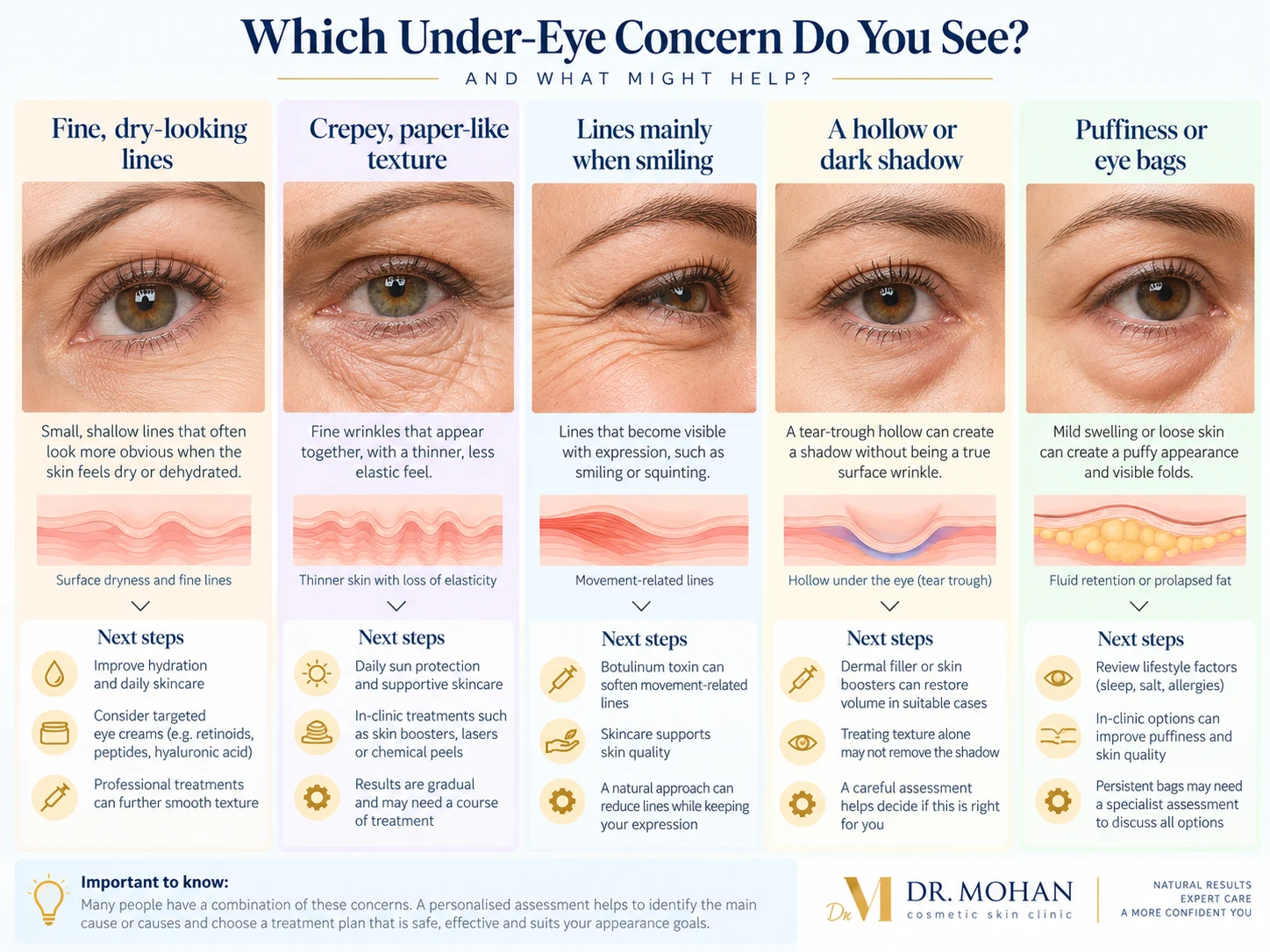
Start with the type of change you notice. Different causes can lead to skincare advice, a treatment discussion, or referral for specialist eye assessment.
The lower eyelid is a specialist area
Do not use DIY injectable treatments, home microneedling devices or strong chemical peels close to the eyes. Procedures here require a qualified practitioner, proper assessment and appropriate eye-safety precautions. I am especially cautious when skin is inflamed or a concern has not been clearly identified. We should also discuss what a treatment can realistically achieve.
What Results Are Realistic – and What Are the Limits?
A good result may be smoother-looking skin in ordinary daylight. Makeup may sit better, or the area may feel less dry. It need not mean a completely wrinkle-free eye area. Smiling and blinking will still create folds, and that is part of an expressive face.
Moisturiser may improve the appearance of surface lines relatively quickly, but that is different from longer-term structural change. Retinoid skincare usually needs consistent use over months to judge fairly. Professional treatments have their own treatment and recovery periods, and some improvements are modest or temporary.
I would rather agree one realistic change we can assess than promise to make the entire eye area look younger.
Who May Need a Different Plan – or No Cosmetic Treatment?
Someone with eczema, contact dermatitis, persistent itching or an irritated skin barrier may need medical skin care before considering an aesthetic procedure. A hollow or prominent under-eye bag may need a structural assessment. A skin-quality injection may not address the main concern. Some people are simply seeing normal lines when they smile, and reassurance or gentler skincare may be all they want.
When appropriate, I may recommend advice from a GP, dermatologist or ophthalmologist. I also want patients to feel comfortable choosing no procedure if the likely improvement is not worth the risks, downtime or expense.
What Happens at an Under-Eye Consultation?
I’ll ask when you noticed the change and whether it appears at rest or when smiling. We’ll also discuss your skincare and what you have tried. We will discuss medical history, allergies, previous procedures and whether any itching, swelling or eye symptoms suggest a different issue.
Then I will assess the skin, movement, lower-eyelid contour and the surrounding cheek. It can help to look at the area in consistent light and compare relaxed and smiling expressions. I will explain whether simple skincare, observation, a suitable treatment or a referral is the sensible next step.
You do not need to arrive having chosen a product, and booking a consultation does not commit you to treatment. If you would like to understand the process in more detail, read what to expect at your first aesthetic consultation.
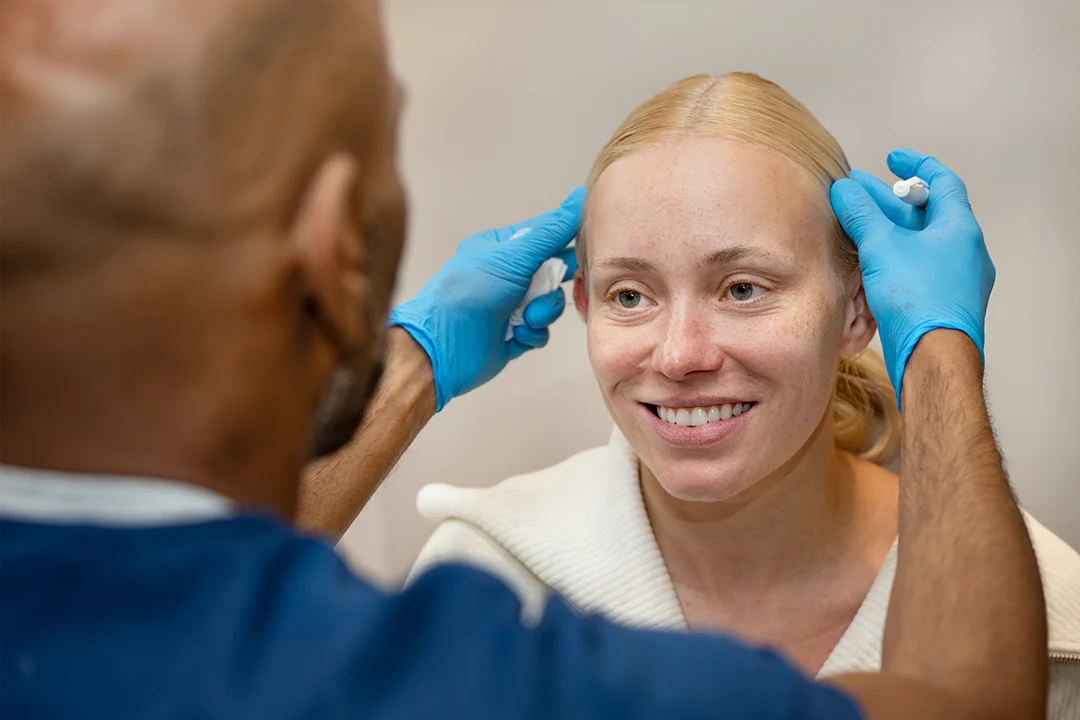
Dr Mohan during a patient consultation at his West Wimbledon clinic. A careful assessment helps guide appropriate aesthetic treatment decisions.
The question I want us to answer
“What bothers you most, and what would you like to change?” That question helps us focus on your face, your preferences and realistic options.
“I never felt at any point pressure to even proceed with the treatment.” – Stephanie S., verified Google review
This patient comment describes the consultation experience at Dr Mohan Clinic, not a result for under-eye wrinkles. You can read more patient reviews and experiences.
Frequently Asked Questions
These are common questions about fine lines and crepey lower-eyelid skin. The right plan still depends on an individual assessment.
Can crepey skin under the eyes be reversed?
It may be possible to improve its appearance, especially when dryness or mild surface texture is contributing. However, creams and procedures do not fully reverse normal ageing or restore every change in elasticity and underlying tissue. A realistic goal is smoother, healthier-looking skin rather than a completely crease-free lower eyelid.
What is the best treatment for crepey skin under the eyes?
There is no single best treatment for everyone. Begin with gentle moisturising, broad-spectrum sun protection and assessment of irritation. If crepiness persists, a qualified clinician can assess whether skin-quality treatment is likely to help. Sometimes skincare is still the better option.
Why do I have under-eye wrinkles in my 20s or 30s?
Natural eyelid anatomy, facial expression, genetics, sun exposure and dryness can all make lines noticeable before later adulthood. Early fine lines are common and do not automatically mean the skin is unhealthy or needs treatment.
Will retinol get rid of under-eye wrinkles?
Carefully chosen retinol products may modestly improve fine lines over time, but they cannot remove significant excess skin or a tear-trough hollow. Because eye-area skin is sensitive, products need to be suitable for that location and introduced cautiously. Avoid use where pregnancy-related or other medical restrictions apply.
Are crepey under-eyes the same as crow’s feet?
No. Crepey under-eye skin refers mainly to fine texture and elasticity beneath the eyes. Crow’s feet are lines that fan out from the outer corners, often becoming more visible when smiling or squinting. They may appear together, but they do not always need the same approach. My crow’s feet guide explains that distinction.
Do polynucleotides help fine lines beneath the eyes?
They may help selected patients with delicate, crepey skin, but the available evidence is still developing, and results vary. They are not a reliable way to remove prominent eye bags, deep hollows or every kind of dark circle.
What is the best product for crepey skin beneath the eyes?
There is no universal winner. If the skin is dry, a fragrance-free moisturiser with barrier-supporting ingredients may help the appearance of fine lines. If sun-related fine wrinkles are the concern, a carefully selected eye-area retinoid may be worth discussing. Products cannot remove pronounced eye bags or hollows, and irritated skin should be calmed before stronger ingredients are introduced.
When should I see a doctor rather than use wrinkle products?
Seek medical advice if you have persistent redness, itching, flaking, a new lesion or recurrent swelling around the eyes. Sudden marked swelling, significant eye pain, new visual symptoms or symptoms after a procedure require prompt medical assessment. These are not ordinary cosmetic wrinkles.
If you prefer to ask a question first, call 07702 389 636 or send a brief enquiry using the form below. Please do not send sensitive medical details through the website form.
The Bottom Line
Under-eye wrinkles and crepey skin often have several causes. Anatomy, facial expression, ageing, sun exposure and dryness can all play a part. Simple skincare can make a useful difference to surface dryness. Other changes need a more careful discussion, and some are best left alone or assessed by another specialist.
I do not think you need to chase every little line. What matters is identifying your main concern and understanding the realistic options. The possible benefit should justify the cost, risk and recovery.
Under-Eye Wrinkles Consultation in Wimbledon and Raynes Park
Reading about crepey skin can help you recognise a pattern, but photographs and online explanations cannot assess your lower eyelid accurately. At The Garden Room, 51 Spencer Road, West Wimbledon, London SW20 0QN, I can assess your skin at rest and when you smile. We will review your medical history and discuss what might realistically help.
My clinic is close to Raynes Park and welcomes patients from Wimbledon, Kingston, Surbiton and nearby South West London. You are welcome to read how a first consultation works before deciding whether you would like an appointment. You do not need to choose a procedure in advance, and there is no pressure to proceed.
Warm regards,
Dr Suresh Mohan
Ask Dr Mohan a Question
Tell me which under-eye change you have noticed and what you would like to understand. I can advise how to arrange an individual assessment.
By clicking ‘Send enquiry‘ you agree to Dr Mohan Clinic’s Privacy Notice.
Evidence and Further Reading
This guide draws on current clinical reviews, peer-reviewed research and independent patient-safety advice. Useful reading includes:
- Clinical assessment, diagnosis and management of infraorbital wrinkles and pigmentation (2023 review)
- Review of the evidence for common eye-cream ingredients (2024)
- Dermocosmetics for periocular ageing: evidence and limitations (2026 narrative review)
- American Academy of Dermatology: selecting anti-ageing skincare
- Randomised clinical trial evidence for polynucleotides and PDRN (2026 systematic review)
- Prospective observational study of polynucleotide injections for periorbital wrinkles (2026)
- GMC: guidance for doctors offering cosmetic interventions
- NHS: when eyelid symptoms need medical assessment
- NHS: choosing who will carry out a cosmetic procedure
Medical note: This article provides general patient information. It does not replace an individual examination, medical advice or discussion of product-specific suitability, risks, alternatives and aftercare.