Crow’s Feet: Understanding Your Eyes, Your Skin and Your Smile
You may first notice them in a photograph: little lines spreading out from the corners of your eyes when you laugh. Perhaps they disappear when your face relaxes. Perhaps they have gradually become more noticeable throughout the day, and you are wondering what would help without changing the way you smile.
Crow’s feet are a normal feature of an expressive face. You do not need to regard them as a problem. If they do bother you, however, it is reasonable to want a clear explanation of your options.
At my clinic in West Wimbledon, I begin with what you have noticed and what you would like to improve. The important distinction is whether we are looking mainly at movement-related lines, changes in skin texture, or a different concern around the eyes. A treatment chosen for one of those may do little for another.
The goal should be an improvement you value, with a realistic understanding of the limitations and risks. It should also respect the expression you want to keep.
This guide explains what causes crow’s feet, how I would assess the concern, which approaches may be relevant and what to discuss before deciding whether to have treatment.
I’m Dr Suresh Mohan, a GMC-registered medical doctor with advanced Level 7 training in non-surgical facial aesthetics. I personally carry out consultations and treatments at my private clinic in West Wimbledon.
My approach is to listen, assess your face and skin, and explain the options in plain English. A consultation may lead to treatment, a different approach or a decision to leave things as they are.
Crow’s feet at a glance
Crow’s feet are lines that radiate from the outer corners of the eyes. They commonly become more visible with smiling or squinting, and some may remain when the face is relaxed.
- Movement matters: lines visible mainly when smiling are different from creases present at rest.
- Skin matters: ageing, sun exposure and dryness can influence their appearance.
- The exact concern matters: crow’s feet, under-eye hollows, dark circles and eye bags need different assessments.
- There is no compulsory treatment: skin care, medical options, referral or doing nothing may each be appropriate in different circumstances.

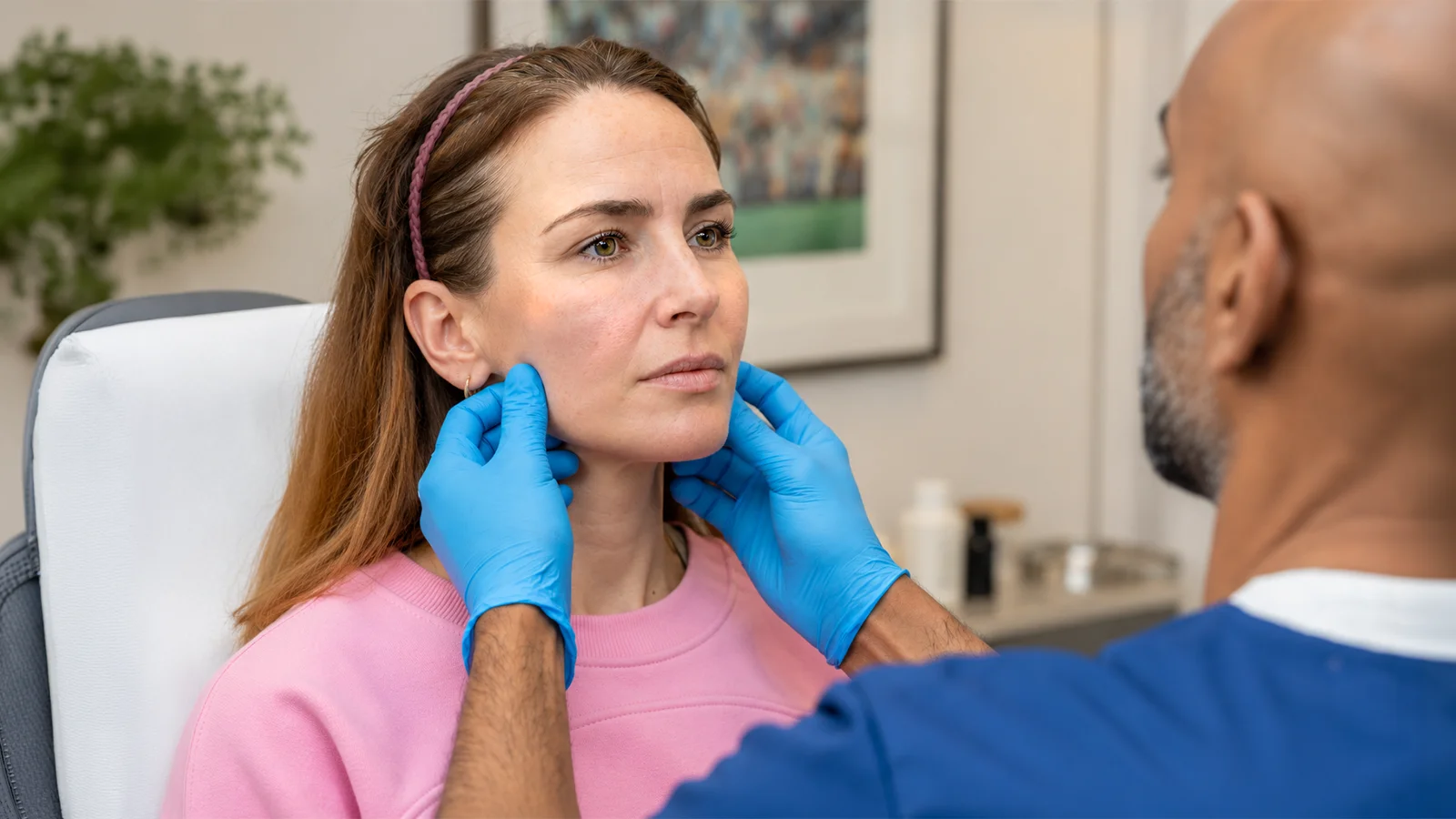
The consultation starts with what you have noticed and what you would like to understand.
In this guide
What Causes Crow’s Feet?
The muscle around the eye, called the orbicularis oculi, helps close the eyelids and contributes to expression. When you smile or squint, the skin beside the eye folds. Those folds are part of normal facial movement.
With time, the skin’s structure and elasticity change, so lines can become more apparent even when the muscle is relaxed. Sun exposure and smoking can contribute to premature skin ageing. Dryness can also make fine lines look more noticeable, although dryness and established wrinkles are not the same thing.
The American Academy of Dermatology’s guidance on wrinkles highlights sun protection and avoiding smoking as useful foundations. These steps are relevant whether or not you ever consider a procedure.
Why do some lines show only when I smile?
Lines that appear mainly with movement are often called dynamic lines. Lines that remain while your face is relaxed are described as static lines. Many people have a mixture.
Imagine two people asking about crow’s feet. One notices lines only during a broad smile; the other is more concerned about fine creasing that remains all day. Their photographs might look similar in one moment, but the treatment discussion should not automatically be the same.
I want to understand the change that bothers you in everyday life, not simply find a line in a close-up photograph. Lighting, expression and camera angle can all affect what a photograph appears to show.

Crow’s feet may appear mainly with smiling or squinting, remain when the face is relaxed, or show a mixture of both.
Are crow’s feet the same as under-eye wrinkles or dark circles?
No. Crow’s feet sit beside the outer eye corners. Fine lines beneath the lower eyelid, a hollow tear trough, dark colouring and puffiness may involve different features.
You can have more than one concern, but that does not mean one treatment will address them all. Tell me whether it is the lines beside your eyes, the texture underneath, shadowing or a feeling of puffiness that you would most like to understand.
If your main interest is the skin beneath the eyes, the clinic’s under-eye polynucleotide guide discusses a separate treatment topic. Reading about it does not establish that it is appropriate for your concern.

Not every eye-area concern is crow’s feet. Outer-eye lines, under-eye texture, dark circles and puffiness can need different assessments.
How I Would Assess Your Crow’s Feet
First, we agree what you want to change
You can explain this in ordinary language. You might want the lines to look softer, feel that your skin looks dry, or be worried that treatment would make your smile look different. Those are useful starting points.
I would also ask what you would prefer to leave alone. Wanting a subtle change is different from expecting every line to disappear, and either expectation needs an honest discussion before a plan is made.
Then I look at the area at rest and in movement
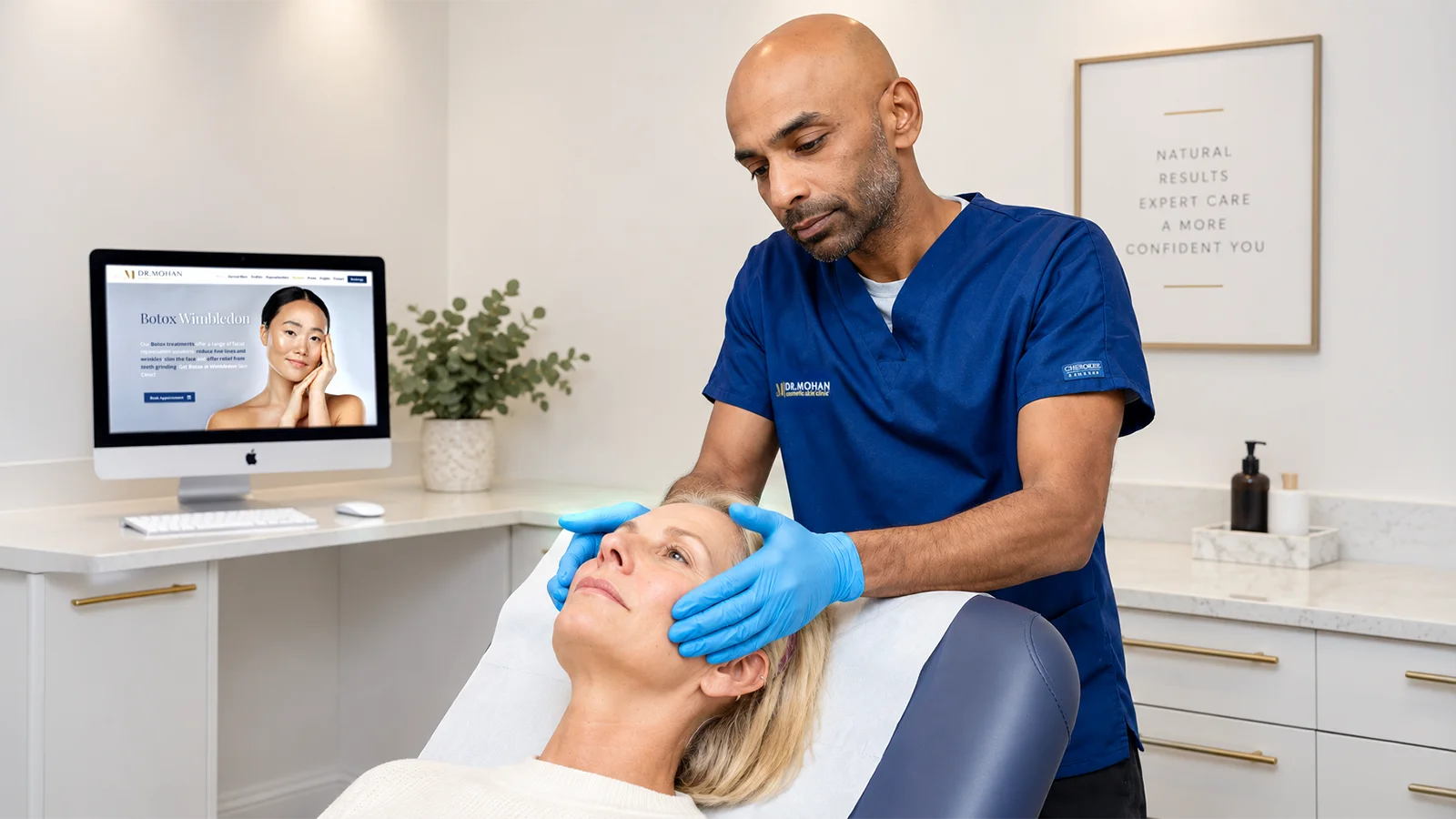
The assessment considers your smile, eyelids, skin texture and natural differences between the two sides. I would look at whether the lines extend towards the cheek and whether another feature is contributing to the concern you describe.
A naturally uneven smile or a slightly different eyelid position is useful baseline information. It should not be mistaken for a new effect after a procedure. Where appropriate, clinical photographs can help us compare the same expression in similar lighting at review.
Your eye health and previous treatment matter
Please tell me about dry eyes, problems closing your eyes, previous eyelid or eye surgery, contact lenses if relevant to your symptoms, and anything you have had injected around the face. Dates and product details are useful if you have them.
We also discuss your medical history, medicines, allergies, pregnancy or breastfeeding and previous reactions. Do not stop prescribed medication to prepare for an appointment unless the clinician responsible for it advises you to do so.
You can read more about what happens at your first aesthetic consultation, including photographs, consent and time to decide.

A useful discussion connects your concern to the assessment, possible options and their limitations.
Dr Mo’s approach: preserving what you like about your face
“I would rather agree on a modest, understandable goal than promise a completely smooth eye area.”
If preserving the character of your smile matters most, that belongs in the conversation from the beginning.
A concern about one area is not an invitation to point out everything else that could be changed. I can explain related findings where they matter, but any recommendation should remain connected to your priorities.
What Are the Treatment Options for Crow’s Feet?
The choice depends on what is contributing to the lines and what improvement would be worthwhile for you. Below are the main categories to understand. This is not a list of procedures that everyone needs, or a claim that all are offered at the clinic.
Start with what you actually notice
| What you notice | What that tells us to assess |
|---|---|
| Lines mainly when smiling or squinting | How much facial movement is contributing, and how much expression you want to preserve. |
| Fine creasing that remains at rest | Skin texture, sun-related change, dryness and whether movement is only part of the picture. |
| Darkness or a hollow beneath the eye | Colour, shadow and underlying anatomy rather than assuming the problem is crow’s feet. |
| Puffiness or eye bags | Whether swelling, eyelid anatomy or another issue needs a separate assessment. |
The same word – “lines” – can describe different problems. That is why the treatment conversation should begin with the cause, not the product name.
Skin care and sun protection
Broad-spectrum SPF 30 or higher, sunglasses and sensible shade are a practical starting point. A moisturiser can make dryness-related fine lines less apparent. Neither should be presented as permanently removing folds created by expression.
Retinol and other retinoids may help with fine lines and skin texture, but they can irritate the skin. The eyelid area needs particular care: do not assume that a strong facial product is suitable close to your eyes. Follow product instructions and seek advice about sensitive skin. Retinoids should not be used during pregnancy. The AAD explains the differences between retinol and other retinoids.
Prescription treatment for movement-related lines
People often search for “Botox for crow’s feet”. Botox is a brand name; botulinum toxin medicines are prescription-only treatments. They temporarily reduce activity in selected muscles and may be considered for certain movement-related lines after an individual medical assessment.
That mechanism is different from adding volume or treating pigmentation. It will not permanently stop skin ageing, and lines visible at rest may remain. Suitability, the particular medicine, consent and the risk discussion must be decided individually. The clinic’s lines and wrinkles consultation page explains the broader assessment process.
Procedures directed at skin texture
Some laser and resurfacing procedures address skin texture and sun-related changes. They have their own recovery requirements and risks, including changes in pigmentation. Work around the eyes needs appropriate expertise and eye protection. These are specialist options to assess, not interchangeable substitutes for changing muscle activity. The AAD provides an overview of conditions treated with lasers.
Polynucleotides and other skin-quality injectables may also come up in a consultation. Their purpose and evidence need to be explained separately. A systematic review of polynucleotides in aesthetic medicine found promising findings but called for better-quality research. That is not a basis for promising that they remove crow’s feet or work like a muscle-relaxing medicine.
What about dermal filler?
Filler is used to address selected volume or contour concerns. It should not be the automatic answer to every crease around the eyes. If someone suggests it, ask what anatomical feature they intend to change, why it is relevant and what the specific risks are.
My first task would be to establish whether the concern is actually an outer-eye expression line, an under-eye hollow or something else. A product name alone cannot answer that question.
What would make me suggest another approach?
If the concern is mainly puffiness, colouring, eyelid position or skin texture, a plan aimed at reducing muscle movement may not address what bothers you. Active irritation, significant eye symptoms or an unexplained change may need medical assessment first.
I would also pause if the expected improvement seems too small to justify the risks or cost, or if the result you want cannot realistically be achieved. Deciding against treatment can be a useful outcome of a consultation.
Five useful questions before you decide
- What is actually causing the appearance I dislike?
- What specific change is this treatment intended to make?
- What will it not change?
- What are the important risks around my eyes and expression?
- How and when will we review whether the result was worthwhile?
A good consultation should leave you able to answer those questions in your own words.
What Happens If We Agree on a Treatment Plan?
Before an appointment
We should have agreed on the concern, the intended change, the alternatives and the risks. You should know who will carry out the procedure, what will be used and how follow-up works. You can ask further questions or take more time.
Tell me about a wedding, holiday or important photographs in your diary. A short appointment does not mean there is no possibility of bruising or swelling. Timing should leave room for recovery rather than assume everything will be invisible immediately.
During the appointment
The details depend on the treatment chosen. If an injectable treatment is appropriate, the area is assessed and cleaned, and treatment is carried out according to the agreed plan. Small injections may cause brief discomfort. You should be able to tell me if you need a pause or feel worried.
There is no useful universal injection map or dose for a reader to copy. Product units are not necessarily interchangeable, and the plan depends on anatomy and medical suitability.
Before you leave
You should understand what may happen over the following days, which activities or products to avoid for the advised period, and how to contact the clinic. Written instructions are helpful when there is a lot to remember.
For patients who have received the relevant prescription treatment, the clinic’s aftercare guide is a supporting resource. Your individual instructions take priority, especially if you have had another procedure as well.
How Soon Might You Notice a Change, and How Long Can It Last?
The timeline should match the treatment we are discussing. Skin care and procedures aimed at skin quality cannot be judged on the same schedule as a treatment that changes muscle movement.
The first days
After injections, visible redness or a small bruise may reflect the procedure rather than the eventual result. Prescription muscle-relaxing effects develop over days; an immediate photograph is too early to judge them.
The following weeks
Some changes continue to develop after the first noticeable effect. The UK prescribing information for one licensed preparation describes crow’s feet improvement beginning within the first six days and a maximum effect observed at day 30. This is a product-specific example, not a promise about your result or a statement of the clinic’s chosen medicine.
We should agree on review timing for your plan. Compare the area at rest and with a similar smile, rather than comparing a strong expression in one photograph with a relaxed face in another.
The following months
Muscle-relaxing effects are temporary. Around three to four months is a general duration discussed in AAD patient information, but people and products differ. Maintenance should follow reassessment, not an assumption that you must repeat treatment on a fixed date.

Changes should be judged at the right time and, where photographs are useful, compared with a similar expression and similar lighting.
Could Treatment Affect My Smile or My Eyes?
This is an important question. The eye area contributes to expression as well as function, so the risk discussion needs to be specific. An intention to preserve a natural look is not a guarantee that unwanted changes cannot happen.
Bruising, swelling and discomfort
Injections can cause local discomfort, redness, swelling or bruising. Ask what is expected for the proposed procedure and how long you should allow before an important event. “No downtime” is too absolute a description.
Dry eyes, eyelid changes or asymmetry
For muscle-relaxing treatment, possible effects include dry eyes, eyelid swelling or drooping and unwanted differences in movement. Your eye history and the product-specific information matter. Tell me if you already have symptoms rather than assuming they are unrelated to an aesthetic appointment.
If something feels wrong after treatment, contact the treating clinic promptly. Do not try to correct an unexpected effect yourself or book more treatment elsewhere before the problem has been assessed.
How Much Does a Crow’s Feet Consultation or Treatment Cost?
The clinic currently offers a free initial consultation. You can use it to discuss your concern and understand whether any treatment would be appropriate; there is no obligation to proceed.
For treatment fees, refer to the clinic’s current price list. I would confirm the actual plan and total cost after assessment. An area label alone does not explain whether an option is right for you.
Ask what the fee includes, how review is arranged and whether future maintenance would be relevant. It is reasonable to decide that a possible improvement is not worth the ongoing commitment. Cost is part of an informed decision, not something you should feel embarrassed to discuss.
Frequently Asked Questions About Crow’s Feet
Are crow’s feet when smiling normal?
Yes. Skin folds as your face moves. Lines beside the eyes during a smile do not, by themselves, mean something is wrong or needs treatment. If you like your expression, there is no reason to change it because of a photograph or someone else’s opinion.
Can I have crow’s feet in my twenties?
People notice lines at different ages. Your age alone does not tell me whether a procedure is appropriate. We would consider the actual concern, skin, health and expectations rather than treating a birthday as a deadline to start.
Can crow’s feet go away completely?
Dryness-related fine lines may look less noticeable with appropriate skin care, and selected treatments may soften other lines. Permanently removing every crease is not a realistic promise. I would explain what might change in your case and what is likely to remain.
Do collagen supplements get rid of crow’s feet?
The evidence does not support a confident promise that they do. A 2023 review reported improvements in hydration and elasticity. A 2025 review found benefits overall, but not in its higher-quality or non-industry-funded subgroups. Neither establishes that a supplement will remove the lines beside your eyes.
What about facial exercises or massage?
Claims often go further than the research. A systematic review of mechanical facial-rejuvenation techniques found limited evidence for firm conclusions. I would not present exercises or massage as a proven way to erase crow’s feet. If you have recently had a procedure, follow its aftercare instructions rather than adding massage from an online routine.
Do men need a different approach?
Men may have the same questions about expression, maintenance and looking like themselves. Assessment should reflect your anatomy and priorities. Neither a “men’s” package nor a “women’s” package can replace an individual plan.
Do I have to treat my forehead or frown lines too?
No. I may explain a related finding if it affects the assessment, but you do not have to agree to several areas because you asked about one. Any proposed wider plan should have a clear reason and your informed agreement.
Will treating crow’s feet also improve my dark circles or eye bags?
That should not be assumed. We need to identify the concern underneath the eyes separately. Ask which feature each proposed treatment addresses and what it will leave unchanged.
What if I am unhappy with a previous treatment?
Contact the treating practitioner and explain what has changed. Keep any product and appointment details. If you seek another opinion, bring that information. More treatment is not automatically the answer, and significant or urgent symptoms should be assessed without waiting for a routine cosmetic review.
Visiting Dr Mohan Clinic in West Wimbledon
My clinic is at The Garden Room, 51 Spencer Road, West Wimbledon, London SW20 0QN, close to Raynes Park. Appointments are pre-booked, and I personally carry out consultations and treatments.
Free off-street parking is available on the drive. Access to The Garden Room is via the side entrance and garden path. Check the arrival information before your visit, or read about the Wimbledon clinic and Raynes Park access.
“I’m so glad I went to Dr Mohan. He is highly professional, and at the same time warm and caring.”
— Claire G
This excerpt is about the experience of care, not a promise about crow’s feet treatment. You can read more patient reviews and learn about my background and approach.

The Garden Room at Dr Mohan Clinic in West Wimbledon, close to Raynes Park.
Would You Like to Understand Your Options?
If the lines around your eyes bother you, you are welcome to arrange a consultation. Tell me what you have noticed, what you would like to improve and what you want to preserve.
We can look at the area together, discuss realistic possibilities and decide whether any next step makes sense. You do not need to arrive knowing the name of a treatment, and you do not need to make a decision on the day.
Prefer to speak first? Call 07702 389 636 or use the enquiry form below.
Warm regards,
Dr Suresh Mohan
Ask Dr Mohan a Question
If you would like help deciding whether a consultation about the lines around your eyes would be useful, send a short message. Please do not include sensitive medical information in this form; relevant details can be discussed privately.
By clicking ‘Send enquiry‘ you agree to Dr Mohan Clinic’s Privacy Notice.
Evidence and Further Reading
The sources below support different parts of this guide. UK medicine information informs product-specific warnings; dermatology guidance explains general skin care; research reviews help identify uncertainty. None can replace your own assessment.
- American Academy of Dermatology: wrinkle remedies
- American Academy of Dermatology: retinoid or retinol?
- Example UK prescribing information for a licensed botulinum toxin preparation
- MHRA: botulinum toxin safety advice
- Systematic review of polynucleotides in aesthetic medicine
- 2025 systematic review of collagen supplements and skin ageing
- NHS: before you have a cosmetic procedure
- GMC: guidance for doctors offering cosmetic interventions
Medical note: This guide provides general educational information. It does not diagnose an eye or skin condition or replace medical advice. Treatment suitability, prescribing, consent, aftercare and follow-up require an individual assessment. Seek prompt medical advice for eye symptoms or an unexplained change.