Forehead Lines: Understanding Your Forehead, Your Brows and Your Expression
You may notice horizontal lines when you raise your eyebrows, look surprised or concentrate. At first they may disappear completely when your face relaxes. Over time, some can remain visible even when the forehead is still.
Forehead lines are a normal feature of an expressive face. You do not need to treat them simply because they are there. If they bother you, however, it is reasonable to want to understand why they have formed and what might realistically help.
The important point is that the forehead does more than create wrinkles. The frontalis muscle raises the eyebrows and contributes to the way we communicate expression. That means a treatment chosen only to smooth a line can affect brow position or expression if the wider balance is ignored.
The goal should not automatically be a completely smooth forehead. It should be an improvement you value while respecting the brow position and expression you want to keep.
This guide explains what causes forehead lines, how I assess them, the treatment categories that may be relevant, what they cannot do, and the questions worth asking before you decide whether to have treatment.
I’m Dr Suresh Mohan, a GMC-registered medical doctor with advanced Level 7 training in non-surgical facial aesthetics. I personally carry out consultations and treatments at my private clinic in West Wimbledon.
My approach is to understand what bothers you, look at how your face actually moves, and explain what a treatment can — and cannot — realistically achieve. A consultation may lead to treatment, a different approach or a decision to leave things as they are.
Forehead lines at a glance
Forehead lines are usually horizontal lines created as the frontalis muscle contracts to raise the eyebrows. Some appear mainly with movement; others remain visible when the face is relaxed.
- Movement matters: lines seen mainly when you raise your eyebrows are different from established creases visible at rest.
- Brow position matters: the frontalis is the main muscle that raises the eyebrows.
- Skin matters: ageing, sun exposure and changes in skin quality can make lines more persistent.
- Asymmetry matters: the two sides of the forehead often move differently before any treatment.
- Treatment is optional: skin care, medical treatment, skin-focused procedures or doing nothing may each be reasonable in different circumstances.

A useful consultation starts with what you have noticed, how your forehead moves and what you want to preserve.
In this guide
- What causes forehead lines?
- Lines with movement and lines at rest
- Why brow position matters
- How I assess the forehead and brows
- Treatment options and their limitations
- The appointment, recovery and review
- When results may appear and how long they can last
- Risks, heaviness and unwanted changes to expression
- Frequently asked questions
- Visiting the clinic in Wimbledon
What Causes Forehead Lines?
The main muscle involved is the frontalis. It is the principal muscle that raises the eyebrows. When it contracts, the brows move upwards and the skin across the forehead folds horizontally. Those folds are part of normal expression.
The frontalis works in balance with muscles that pull the brow downwards or inwards. That balance helps determine eyebrow position and shape. It is one reason the forehead should not be treated as an isolated sheet of skin.
With time, repeated folding combines with changes in the skin itself. Collagen and elasticity change with age, while UV exposure contributes to photoageing. Smoking can also accelerate visible skin ageing. Dryness may make very fine lines look more obvious, although dryness and an established wrinkle are not the same thing.
The American Academy of Dermatology’s guidance on wrinkles highlights sun protection and other skin-care measures as useful foundations whether or not you ever consider a procedure.
Why Do Some Forehead Lines Show Only When I Raise My Eyebrows?
Lines that appear mainly with facial movement are often called dynamic lines. Lines that remain visible while the forehead is relaxed are often described as static lines. Many people have a mixture.
Two people can both say, “I have forehead lines”, but mean something different. One may have a very active forehead with almost no crease at rest. Another may have quieter movement but a line that has become established in the skin.
I want to understand how your forehead behaves in real life, not simply count lines in a close-up photograph. Expression, lighting, camera angle and whether you are lifting the brows can all change what a picture appears to show.

Forehead lines may appear mainly with eyebrow movement, remain visible at rest, or show a mixture of both.
Are forehead lines the same as frown lines?
No. Forehead lines are usually horizontal and become stronger as the eyebrows rise. Frown lines are usually vertical or angled between the brows and become stronger when you frown or concentrate.
Different muscle groups are involved, but they influence one another. That is why I assess the upper face as a whole rather than treating one crease in isolation.
Why Brow Position Matters
This is one of the most important things to understand about forehead lines. The frontalis does not simply create wrinkles — it raises the eyebrows.
Some people naturally have lower brows, heavier upper eyelids or a habit of using the forehead to make the eyes feel more open. One eyebrow may also lift more strongly than the other.
If forehead movement is reduced without considering those features, the brow can feel or look lower than expected. UK prescribing information for one licensed botulinum toxin preparation lists both brow ptosis and eyelid ptosis among recognised adverse effects when treating forehead lines.
The same product information explains that, in its pivotal studies, forehead lines were treated together with glabellar lines to reduce the potential for brow ptosis. That is a product-specific protocol, not a universal instruction for every patient, but it illustrates why upper-face balance matters.

The forehead helps raise the eyebrows, so line-softening decisions should consider brow support and natural expression as well as the wrinkle itself.
Clinical principle: smoother is not automatically better
A completely still forehead is not the only measure of a successful result. For many people, the more useful goal is softer lines while keeping enough movement for the face to remain familiar and expressive.
The plan should begin with your priorities: how much movement you want to keep, how your brows sit naturally and what change would genuinely feel worthwhile.
How I Would Assess Your Forehead Lines
First, we agree what you want to change
You may want horizontal lines to look softer, be bothered by a crease that remains at rest, or be worried about looking frozen or making the eyebrows feel heavy. Those are useful starting points.
I would also ask what you want to leave alone. Wanting a subtle reduction in movement is different from wanting as little movement as possible, and that preference should be discussed before a plan is made.
Then I look at the forehead at rest and in movement
I usually look at the face relaxed, with the eyebrows raised, while frowning and during natural conversation. I assess where the lines form, how strongly the frontalis works, resting brow height, eyebrow shape, upper-eyelid heaviness and whether one side is more active than the other.
Natural asymmetry is useful baseline information. It should not be mistaken for a new treatment effect afterwards. Where appropriate, clinical photographs can help compare similar expressions in similar lighting at review.
Your medical and treatment history matters
Please tell me about previous botulinum toxin treatment, previous eyelid or brow surgery, a history of eyelid drooping, facial weakness, neurological conditions, medicines, allergies and previous reactions. Pregnancy or breastfeeding, upcoming events and recent or planned procedures may also affect timing or suitability.
You can read more about what happens at your first aesthetic consultation in Wimbledon, including photographs, consent and time to decide.

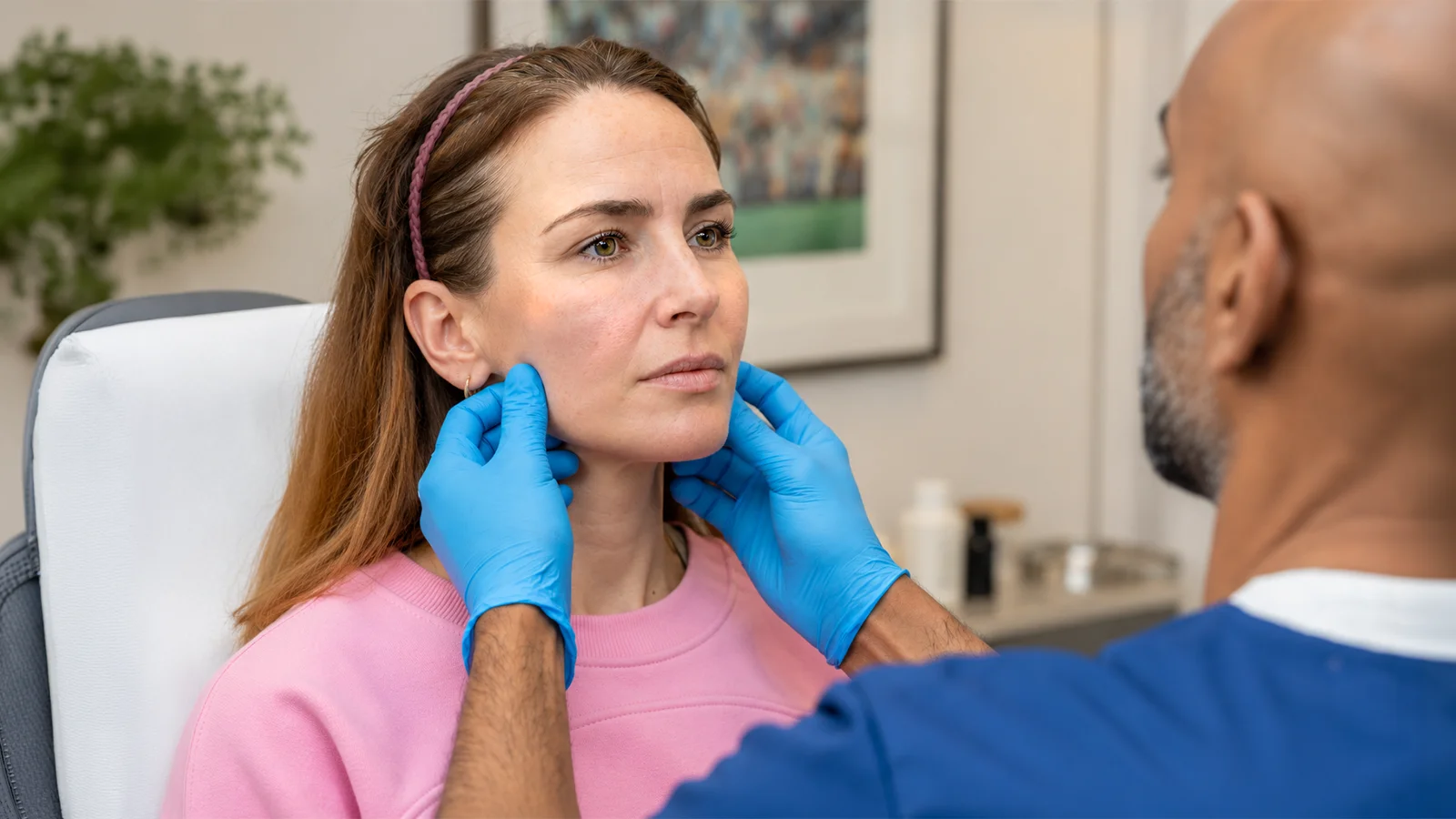
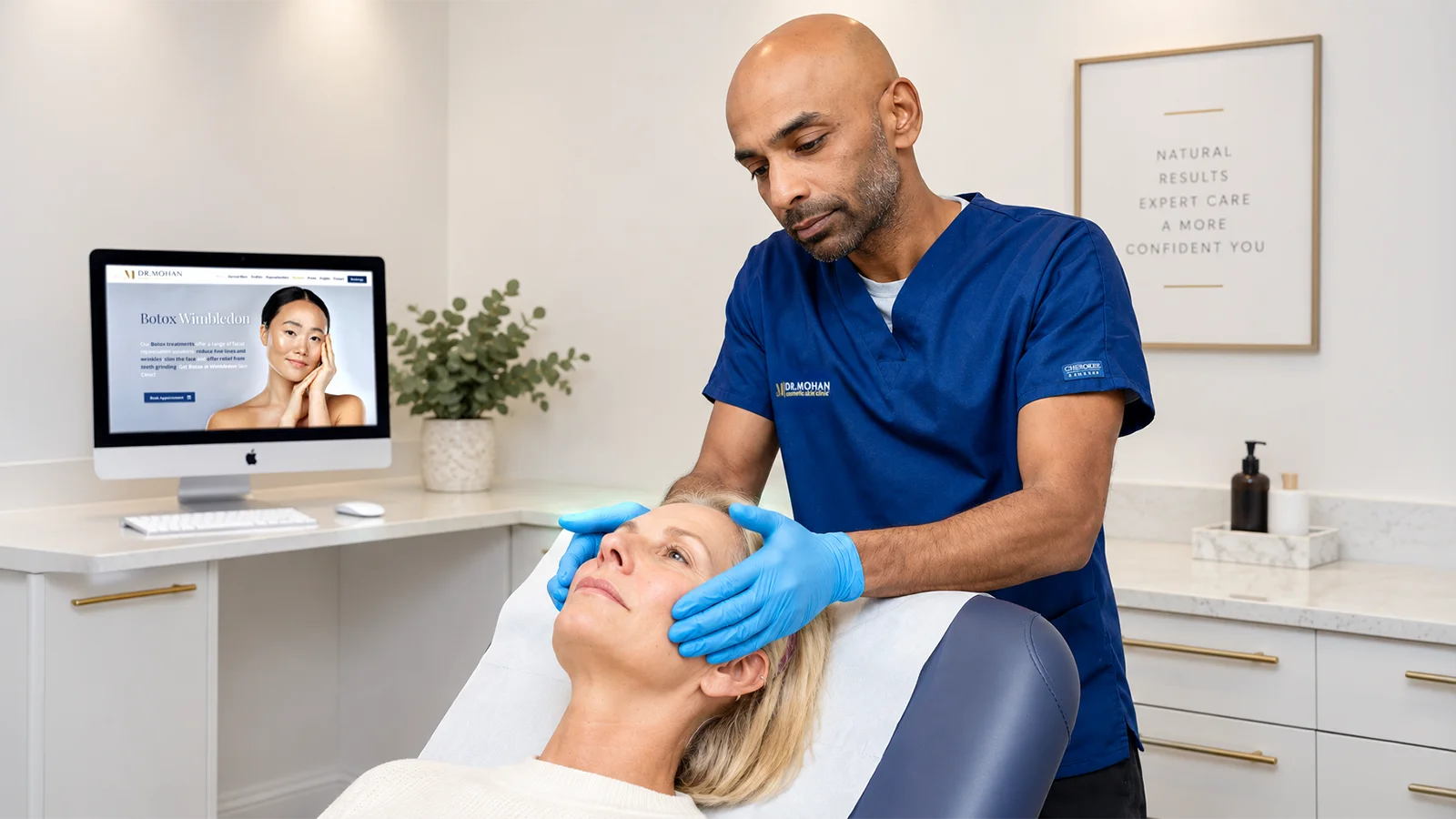
Assessment includes the forehead at rest and in movement, together with brow position, eyelids and natural asymmetry.
What Are the Treatment Options for Forehead Lines?
The choice depends on what is creating the appearance you dislike and what improvement would be worthwhile for you. This is not a list of procedures that everyone needs, or a claim that all options are suitable for every person.
Start with what you actually notice
| What you notice | What that tells us to assess |
|---|---|
| Lines mainly when raising the eyebrows | How strongly the frontalis is working and how much movement you want to keep. |
| Fine creasing that remains at rest | Skin quality, sun-related change and whether movement is only part of the picture. |
| Low or heavy brows | Whether reducing frontalis activity may affect brow position or how open the eyes feel. |
| One side moves differently | Natural muscular asymmetry and baseline eyebrow shape. |
| Very fine superficial lines | Whether skin care or a skin-focused approach may matter more than stronger muscle reduction. |
The same word — “wrinkle” — can describe different problems. The treatment conversation should begin with the cause and the desired result, not the product name.
Skin care and sun protection
Broad-spectrum SPF 30 or higher, sensible shade and moisturiser are useful foundations. A moisturiser can make dehydration-related fine lines less apparent, while sun protection helps reduce further photoageing. Neither stops the frontalis muscle from moving.
Retinol and other retinoids may help some people with fine lines and skin texture over time, but they can irritate the skin and are not suitable for everyone. Follow product instructions and seek appropriate advice if your skin is sensitive. The AAD explains the differences between retinol and other retinoids.
Prescription treatment for movement-related lines
People often search for “forehead Botox”. Botox is a brand name; botulinum toxin medicines are prescription-only treatments. They temporarily reduce activity in selected muscles and may be considered for certain movement-related forehead lines after an individual medical assessment.
One UK-licensed preparation includes moderate to severe forehead lines seen at maximum eyebrow elevation among its aesthetic indications. Its prescribing information also makes clear that product units are not interchangeable between different botulinum toxin medicines.
The mechanism is different from adding volume or treating pigmentation. It will not permanently stop skin ageing, and a line already visible at rest may remain even if movement is reduced.
Because this is a prescription-only medicine, suitability, the medicine used, consent and the risk discussion must be decided individually. The clinic’s broader lines and wrinkles consultation information explains the current assessment pathway.
Procedures directed at skin quality
If lines remain strongly visible at rest, skin quality may be part of the picture. Depending on the skin and the concern, dermatological options can include retinoids, selected peels or resurfacing procedures such as laser treatment. These approaches have different purposes, recovery requirements and risks from a muscle-relaxing medicine.
A resurfacing procedure does not reduce frontalis movement. Likewise, reducing muscle activity does not reverse every aspect of sun-damaged skin. Sometimes more than one contributor exists, but that does not mean several procedures need to be done at once.
What about dermal filler?
I would not regard filler as the routine first answer to ordinary horizontal forehead lines. If someone recommends it, ask what anatomical feature they intend to change, why filler is relevant and what the specific risks are. A visible crease alone does not tell us which treatment category is appropriate.
Can you soften forehead lines without injections?
Sometimes. Sun protection, moisturiser and appropriate retinoid skin care can improve the appearance of fine lines and help the skin age more slowly. Selected resurfacing treatments may also be relevant for skin texture.
However, no cream, massage or so-called “natural Botox” switches off the frontalis muscle in the same way as a prescription muscle-relaxing medicine. If movement is the main cause, a skin-only approach has a different job.
That does not make one route better overall. It means the best option depends on whether your priority is movement, skin quality, brow position or simply accepting the lines as part of your expression.
What would make me suggest another approach — or no treatment?
I would pause if you already have very low or heavy brows, significant eyelid symptoms, unexplained facial weakness, active skin problems or a goal that cannot realistically be achieved without changing expression more than you would want.
I would also pause if the likely improvement seems too small to justify the risks, maintenance or cost. Deciding against treatment can be a useful outcome of a consultation.
Five useful questions before you decide
- Are my lines mainly caused by movement, skin changes or both?
- How much forehead movement do I want to keep?
- What is my normal brow position, and am I using my forehead to lift it?
- What is the realistic improvement — and what is likely to remain?
- How and when will we review whether the result was worthwhile?
A good consultation should leave you able to answer those questions in your own words.
What Happens If We Agree on a Treatment Plan?
Before the appointment
We should have agreed on the concern, the intended change, the alternatives, the important risks and how follow-up works. You should know who will carry out the procedure and what kind of medicine or treatment is being proposed.
Tell me about a wedding, holiday, work event or important photographs in your diary. A short appointment does not mean there is no possibility of bruising, swelling or an unexpected change in expression.
During the appointment
The details depend on the treatment chosen. If an injectable prescription treatment is appropriate, the area is assessed and cleaned and small injections are placed according to the individual plan. There is no useful universal injection map or dose for a reader to copy: anatomy varies, products differ and units are not interchangeable.
Before you leave
You should understand what may happen over the following days, which activities or products to avoid for the advised period, and how to contact the clinic if you are concerned.
For patients who have received the relevant prescription treatment, the clinic’s anti-wrinkle treatment aftercare guide is a supporting resource. Your individual instructions take priority.
How Soon Might You Notice a Change, and How Long Can It Last?
The timeline depends on the medicine, treatment area and individual response. Prescription muscle-relaxing effects develop over days rather than immediately, so a photograph taken straight after treatment cannot show the settled result.
The first days
Small injection marks, redness or a bruise may reflect the procedure rather than the eventual effect. Some patients notice movement beginning to change within several days, but an early result is not the same as the final review.
The following weeks
Around two weeks is often a useful clinical checkpoint for facial anti-wrinkle treatment, but the exact timing depends on the plan. The clinic’s guide to when anti-wrinkle treatment starts to work explains the timing question in more detail.
A line already etched into the skin at rest may remain visible even when the muscle beneath it is moving less. That is not automatically a treatment failure.
The following months
The effect of botulinum toxin medicines is temporary. Many patient resources discuss a typical duration of around three to four months, but people, products and treatment plans vary. Maintenance should follow reassessment rather than an assumption that everybody needs treatment on a fixed calendar.
If you are wondering what happens when treatment is not repeated, see what happens if you stop anti-wrinkle treatment.

A useful result is judged in movement as well as at rest. Some forehead expression may be deliberately preserved.
What if you can still move at review?
Some movement does not automatically mean the treatment has failed. It may be part of a deliberately natural result. The question is whether movement has changed in the way you and your practitioner intended.
Complete immobility is not the only measure of success. If there has been very little change, or the movement looks uneven, the area should be assessed before assuming that more treatment is the answer.
Could Treatment Make My Forehead or Brows Feel Heavy?
Yes. Because the frontalis helps raise the eyebrows, reducing its activity can change how the brow position feels or looks. This is one reason pre-treatment assessment matters, especially if you naturally have low brows or use the forehead strongly to open the eye area.
Bruising, swelling and discomfort
Injections can cause local discomfort, redness, swelling or bruising. Headache is also listed as a common adverse effect for some licensed botulinum toxin treatments of the upper face. If headache is a particular concern, the clinic has a separate guide to headaches after anti-wrinkle treatment.
Brow or eyelid drooping
Brow ptosis and eyelid ptosis are recognised adverse effects in UK prescribing information for forehead treatment with one licensed preparation. Good assessment and appropriate technique reduce avoidable risk, but no injectable treatment is risk-free.
Asymmetry or an unfamiliar eyebrow shape
If one part of the frontalis remains more active than another, the eyebrows can move differently from what you expected. Baseline asymmetry also matters: most faces are not perfectly symmetrical before treatment.
Too little movement for your preference
A result can be technically effective and still feel too strong for somebody who wanted visible expression. That is why your preferred degree of movement belongs in the consultation before treatment, not only in the review afterwards.
How Much Does a Forehead-Lines Consultation or Treatment Cost?
The clinic currently offers a free initial consultation. You can use it to discuss the lines, your expression and whether any treatment would be appropriate; there is no obligation to proceed.
For current fees, use the clinic’s price information.
Ask what the fee includes, how review is arranged and whether future maintenance would be relevant. It is reasonable to decide that a possible improvement is not worth the ongoing commitment.
Frequently Asked Questions About Forehead Lines
Are forehead lines normal?
Yes. Horizontal forehead lines form as the frontalis muscle raises the eyebrows. Seeing them during expression is normal and does not mean anything is wrong or needs treatment.
Why do I have forehead lines even when my face is relaxed?
A line can gradually become visible at rest as repeated folding combines with changes in skin structure, elasticity and sun exposure. Reducing movement may soften one contributor, but an established skin crease may not disappear completely.
At what age should I start treating forehead lines?
There is no correct age and no medical requirement to start preventative treatment. The useful questions are what bothers you, what is causing it, what result you want and whether the likely benefit justifies the risks and maintenance.
Can forehead lines go away completely?
Some movement-related lines can soften significantly. Established lines visible at rest may remain because skin changes are also involved. I would not promise complete removal of every crease.
Can I get rid of forehead lines without Botox or injections?
Skin care, sun protection, moisturiser, retinoids and selected resurfacing treatments may improve fine lines and skin quality. They do not stop the frontalis muscle from contracting. So-called “natural Botox” products should not be assumed to reproduce the effect of a prescription botulinum toxin medicine.
Can forehead treatment look natural?
It can, but “natural” means different things to different people. Some movement may be deliberately preserved. The important thing is to agree before treatment how much softening and movement you would prefer.
Will forehead treatment make me look frozen?
It can reduce movement more than somebody wants if the treatment effect is stronger than their preferred result. Complete immobility is not the only definition of success, so your expression goals should be discussed first.
Can treatment make my eyebrows or eyelids feel heavier?
Yes. The frontalis helps raise the brows, so reducing its activity can affect brow position. This matters particularly if you naturally have low brows, heavier upper eyelids or rely on the forehead to make the eyes feel more open.
Can I have only my forehead treated?
That requires an individual assessment. The forehead works in balance with muscles around the brows and glabella. Product-specific prescribing information for one licensed preparation treated forehead and glabellar lines together in pivotal studies to reduce the potential for brow ptosis. That does not create a universal plan for every patient, but it shows why the upper face should be assessed as a system.
Why does one eyebrow or one side of my forehead move more?
Natural facial asymmetry is common. Muscle activity, brow shape and anatomy can differ from side to side before any treatment. Baseline photographs and examination help distinguish pre-existing asymmetry from a new treatment effect.
Can forehead treatment cause headaches?
Headache is listed among recognised adverse effects for some upper-face botulinum toxin treatments. Most headaches have many possible causes, so persistent, severe or unusual symptoms should be assessed rather than automatically blamed on a cosmetic procedure.
What should I do after treatment to the forehead?
Follow the personalised aftercare advice given by your practitioner. Follow the personalised aftercare advice given by your practitioner. Practical questions such as washing your hair and what to do after forehead treatment are covered in the clinic’s dedicated anti-wrinkle treatment aftercare guide, rather than duplicating a long checklist here.
When does a forehead muscle-relaxing treatment start working?
The effect develops over days rather than immediately, and review timing depends on the plan. For a fuller timeline, read when anti-wrinkle treatment starts to work.
What if I am unhappy with a previous forehead treatment?
Contact the treating practitioner and explain what has changed. If you seek another opinion, bring the treatment date, product information if known and photographs from before treatment. More treatment is not automatically the answer, and urgent symptoms should be assessed promptly.
Visiting Dr Mohan Clinic in West Wimbledon
My clinic is at The Garden Room, 51 Spencer Road, West Wimbledon, London SW20 0QN, close to Raynes Park. Appointments are pre-booked, and I personally carry out consultations and treatments.
Free off-street parking is available on the drive. Access to The Garden Room is via the side entrance and garden path. Check the arrival information before your visit, or read about the Wimbledon clinic and Raynes Park access.
“I’m so glad I went to Dr Mohan. He is highly professional, and at the same time warm and caring.”
— Claire G
This excerpt is about the experience of care, not a promise about forehead-lines treatment. You can read more patient reviews and learn about my background and approach.

The Garden Room at Dr Mohan Clinic in West Wimbledon, close to Raynes Park.
Would You Like to Understand Your Options?
If your forehead lines bother you, you are welcome to arrange a consultation. Tell me what you have noticed, what you would like to soften, how much movement you want to keep and anything you are worried treatment might change.
We can assess the forehead and brow together, discuss realistic possibilities and decide whether any next step makes sense. You do not need to arrive knowing the name of a treatment, and you do not need to make a decision on the day.
Prefer to speak first? Call 07702 389 636 or use the enquiry form below.Warm regards,
Dr Suresh Mohan

Ask Dr Mohan a Question
If you would like help deciding whether a consultation about your forehead lines would be useful, send a short message. Please do not include sensitive medical information in this form; relevant details can be discussed privately.
By clicking ‘Send enquiry‘ you agree to Dr Mohan Clinic’s Privacy Notice.
Evidence and Further Reading
The sources below support different parts of this guide. UK medicine information informs product-specific indications and warnings; anatomy references explain the role of the frontalis; dermatology guidance covers skin care; professional guidance supports informed cosmetic decision-making. None can replace an individual assessment.
- NCBI / StatPearls: Frontalis muscle anatomy and function
- Anatomy of the frontalis muscle revisited
- UK prescribing information for one licensed botulinum toxin preparation
- MHRA: updated botulinum toxin safety warning, July 2026
- American Academy of Dermatology: wrinkle remedies
- American Academy of Dermatology: retinoid or retinol?
- NHS: before you have a cosmetic procedure
- GMC: guidance for doctors offering cosmetic interventions
- ASA/CAP: advertising guidance for botulinum toxin products
Medical note: This guide provides general educational information. It does not diagnose a skin, eye or neurological condition or replace medical advice. Treatment suitability, prescribing, consent, aftercare and follow-up require an individual assessment. Seek prompt medical advice for significant or unexplained symptoms.