Why Do My Eyes Look Tired When I Feel Fine?
“I sleep well, so why do I still have dark circles under my eyes?” I often hear this question from people who feel well rested but notice shadows beneath their eyes, particularly in photographs. If you are wondering how to remove dark circles under your eyes, the first step is understanding what creates the darkness.
Dark circles can mean different things: natural pigmentation, thin skin through which underlying colour shows, puffiness, or hollows that cast a shadow. Different causes of dark circles call for different approaches. For example, an eye cream that helps the skin’s surface cannot replace lost volume beneath the eye.
At my Wimbledon aesthetic clinic, I will help you understand what you are seeing, what you can try at home and whether treatments such as polynucleotides for selected under-eye skin concerns or tear-trough dermal fillers for suitable hollows might be worth considering. My initial consultations are free, and there is no obligation to proceed.
The quick answer
Dark circles are not always caused by a lack of sleep. They can arise from pigmentation, thin skin and visible blood vessels, hollows that cast shadows, puffiness, or a combination of these features. Your genetics, skin tone, age and everyday habits can also affect their appearance.
If you want to reduce dark circles under your eyes, a suitable skincare routine may help with pigmentation, dryness or temporary puffiness. For selected patients, professional treatments may improve certain skin-quality concerns or hollows that create shadows. The right option depends on whether the darkness comes mainly from colour, skin quality or shadow.
I’m Dr Suresh Mohan, a GMC-registered medical doctor. At my Wimbledon cosmetic skin clinic, I personally see patients for consultation, treatment and follow-up. My aim with this guide is to help you understand your under-eye concerns, explore realistic options and feel comfortable making your own decision, with no pressure to proceed.

Under-eye shadows vary naturally between individuals and can be visible even when you feel well rested.
What Actually Causes Dark Circles Under the Eyes?
The skin around our eyes is delicate, but the appearance of dark circles involves much more than skin alone. The shape of the bones and soft tissues around the eye, natural pigmentation, visible vessels and localised puffiness can all influence what we see.
Two people might describe the same “tired-looking eyes” while having completely different concerns. A brown area of pigmentation, a blue-toned under-eye and a hollow shadow are not the same change.
Some people have had darker under-eyes since childhood because of their natural colouring or facial structure. Others notice new changes over time. Neither pattern automatically means there is a health problem or that treatment is necessary.
Four Types of Under-Eye Darkness That Can Look Similar
These four examples are a useful way to understand the differences. They are not a test you need to perform on yourself, and more than one pattern can appear at the same time.
I look at the area in natural light, at rest and from different angles, because the source of darkness matters more than the label we give it.

Pigmentation is colour within the skin, not necessarily a shadow.
1. Brown or greyish pigmentation
Pigmentation can be part of your natural skin colour or become more noticeable with sun exposure, inflammation or repeated rubbing. In some skin tones it appears brown or grey rather than the blue-purple shade often shown in skincare adverts.
If pigmentation is the main concern, treatment discussions usually begin with gentle skincare, sun protection and understanding whether irritation or another skin condition is contributing.

Thin, translucent skin can reveal underlying colour.
2. Blue, purple or reddish tones
For some people, the skin beneath the eyes allows more of the colour of underlying vessels and tissue to show through. The effect can be particularly visible when the skin is naturally thin or has become more delicate with age.
Improving the quality of the skin may be one part of the conversation. However, a skin-quality treatment should not be presented as a way to erase visible vessels in every case.

A hollow can look dark because of the way light falls across it.
3. Hollows and tear-trough shadows
A dip beneath the lower eyelid can cast a shadow, particularly in overhead light. This can look like dark pigmentation even when the skin colour is relatively even.
The distinction matters because brightening creams cannot replace lost volume. In carefully selected patients, assessment of the hollow itself may lead to a different treatment conversation.

Fullness beneath the eye may create a darker-looking area below it.
4. Puffiness and eye bags
Puffiness can be temporary, for example after a restless night or during allergy season. Some people have more persistent lower-eyelid fullness because of their anatomy and age-related tissue changes.
When eye bags are the main concern, the most relevant question is why the fullness is there. Adding filler or a skin-quality injectable is not automatically the right answer.
Why Do I Have Dark Circles Even When I Get Enough Sleep?
A good night’s sleep can make you feel better and may reduce the tired or puffy appearance that sometimes develops after a poor night. But if your dark circles come mainly from pigmentation, inherited anatomy, thin skin or a tear-trough hollow, sleeping longer may make very little difference to how they look.
You might also notice the darkness more in certain lighting. A bathroom light directly overhead can emphasise a hollow that looks softer beside a window. That is one reason I would not judge an under-eye concern from a single photograph.
Rest is valuable for your wellbeing, but persistent dark circles do not mean you have failed to get enough sleep.
Do Genetics, Skin Tone and Age Make a Difference?
Yes. Your natural facial structure and the amount and distribution of pigment in your skin help explain why some people have always had noticeable under-eye darkness. It affects people of all backgrounds, and the pattern can look different on lighter and darker skin tones.
With age, the area may develop finer texture, changes in facial volume or more obvious hollows. However, younger adults can also have pronounced dark circles because of their inherited anatomy or pigmentation.
At a multicultural clinic in London, it is especially important to understand different skin tones rather than assume that everyone has the same kind of dark circle or will respond to the same approach.
Can Allergies, Eye Rubbing or Everyday Habits Make Dark Circles Worse?
Allergies and irritation can influence the area around the eyes. Itching may lead to frequent rubbing, while inflammation and changes in local puffiness can make pigmentation or shadowing more noticeable. If you regularly wake with itchy, watery eyes, dealing with that underlying irritation may be more helpful than buying a stronger eye cream.
Sun exposure can also contribute to pigmentation over time. Dryness may make the surface look less smooth, and temporary dehydration or a short night can change the appearance of the area without being the underlying cause of persistent dark circles.
In most cases, the starting point is not a complicated routine. It is identifying and gently managing the factors that actually apply to you.
How Can I Reduce Dark Circles Under My Eyes at Home?
There are several sensible steps you can try to reduce the appearance of dark circles before considering professional treatment. What works best depends on whether the main issue is skin condition, pigmentation, temporary puffiness or a shadow created by anatomy.
I would begin with a consistent routine rather than introducing lots of new products at once. The skin around the eyes is delicate, so simple and comfortable often works better than aggressive.
Sun protection and moisturising
Daily broad-spectrum SPF 30 or higher, worn appropriately around the eye area, can help protect against further sun-related pigmentation. Sunglasses are useful too. A gentle, fragrance-free moisturiser can make dry skin feel more comfortable and reduce the appearance of some fine surface lines.
Neither measure is designed to fill an under-eye hollow. Their role is to care for your skin, and that is worthwhile whether or not you eventually choose professional treatment.
Vitamin C, niacinamide and other brightening ingredients
Some ingredients can be helpful for selected pigmentation-related concerns, but the eye area needs specially suitable formulations. Pigmentation may take time to change, and improvement is rarely instant.
It is sensible to avoid applying strong acids or unfamiliar products too close to the eyes without appropriate guidance. If your skin becomes irritated, the product may be making the situation less comfortable rather than helping.
Caffeine eye creams and cool compresses
Caffeine products and a cool compress may temporarily improve the appearance of puffiness for some people. They are easy to understand because the effect, if any, is mainly short-term.
They are less likely to make a meaningful difference to hereditary pigmentation or a deep tear-trough shadow. I would treat them as optional helpers, not permanent solutions.
What about retinol, patches and concealer?
Appropriately formulated retinoids may help selected fine lines and skin texture, but they can cause irritation, particularly around the eyes, and should be avoided where medically unsuitable, including during pregnancy. Under-eye patches mainly provide temporary hydration or a cooling effect.
And there is absolutely nothing wrong with using concealer or a colour corrector. For some people, a little make-up offers exactly the improvement they want, with no clinic treatment required.
The best home routine is one you can use comfortably and consistently, with expectations that match the cause of your dark circles.
Can Dark Circles Be Removed Permanently?
It depends on the cause, and I would be cautious about anyone promising a permanent result. A hereditary hollow may remain part of your anatomy, skin pigmentation can change over time, and even successful cosmetic treatments do not stop normal ageing.
Some approaches can improve selected concerns, while others make the area look fresher for a period. The result worth aiming for is an improvement you would genuinely value, without expecting every trace of natural under-eye variation to disappear.
What Is the Best Treatment for Dark Circles Under the Eyes?
If you are looking for treatment for dark circles under your eyes, I first want to understand whether pigmentation, skin quality or a hollow shadow is creating the appearance. At my Wimbledon cosmetic skin clinic, I offer polynucleotide treatment for selected under-eye skin-quality concerns and dermal fillers, including tear-trough assessment for suitable hollows.
These treatments have different purposes. Neither should be presented as a universal treatment for dark circles, and some concerns may be better addressed by skincare or a specialist service elsewhere.
Which option matches the main concern?
This comparison can help organise your questions before a consultation. It is not a way of choosing a product for yourself.
| What you notice | What may be worth discussing | Important distinction |
|---|---|---|
| Thin or crepey skin | Polynucleotides under eyes or an appropriate skin-care plan | Focus on skin quality rather than replacing volume. |
| Tear-trough hollow and shadow | Dermal filler assessment in selected patients | A structural shadow needs a different approach from pigmentation. |
| Brown pigmentation | Sun protection and suitable pigmentation-focused skincare; specialist advice if appropriate | Adding volume does not directly remove pigment. |
| Persistent eye bags or marked puffiness | Assessment of the underlying cause and possible specialist options | Skin-quality injections are not a way to remove prominent eye bags. |
| A combination of concerns | Individual discussion about what can realistically improve | More than one factor may need attention, or no treatment may be necessary. |
Could Polynucleotides Improve Tired-Looking Under-Eyes?
Polynucleotides under the eyes are one of the treatments I offer when the main concern involves skin quality. They are used for selected delicate, crepey or finely lined under-eye skin, with the aim of a gradual, subtle improvement rather than a change in the shape of the face.
If the darkness seems more noticeable because the skin is thin or less resilient, this may be a treatment worth discussing. The change is assessed over time, often after a course of appointments, rather than judged immediately.
For suitable patients, polynucleotides are primarily a skin-quality treatment rather than a way to fill an under-eye hollow.
I also explain the limits. If the dark appearance is mainly due to strong pigmentation, a deep hollow or prominent bags, we should consider other approaches instead of expecting polynucleotides to address everything.
You can read more about suitability, expected results and recovery in my polynucleotides under-eyes guide and my under-eye wrinkles and crepey skin article.

Changes in under-eye skin quality are different from hollows or pigmentation.
Could Tear-Trough Filler Help Dark Shadows Under My Eyes?
When a hollow beneath the lower eyelid is creating the shadow, hyaluronic acid dermal fillers may be worth discussing in selected patients. The aim is to improve the contour responsible for the shadow, rather than to change the colour of the skin itself.
The area beneath the eye needs particularly careful assessment. I would consider the shape of the hollow, surrounding cheeks, skin quality, existing puffiness and your medical history before discussing whether filler is appropriate.
Tear-trough filler is considered for selected hollows and shadows, not as a general treatment for every type of dark circle.
If the area is already puffy or has prominent eye bags, adding volume may be unhelpful. We can talk about that openly during consultation and consider whether another approach would suit your concern better.
My Wimbledon dermal fillers page explains the treatment process, personalised assessment, aftercare and follow-up appointments.

The shape beneath the eyes matters when considering treatment for hollow shadows.
What About Pigmentation, Laser Treatments or Eye Bags?
If the skin itself is pigmented, the first conversation may be about sun protection, irritation, appropriate skincare or dermatological assessment. Some specialist procedures can be used for particular pigmentation concerns, but they are not interchangeable with injectable treatments for hollows.
Likewise, prominent bags or substantial skin laxity may need a different professional opinion. I believe it is more useful to explain those options clearly than recommend an injectable simply because it is available at my clinic.
The right outcome is a plan matched to your concern, even when that plan is skincare, a referral or deciding that no treatment is needed.
What Results Should I Expect, and What Happens Afterwards?
Results depend on the concern and treatment. With suitable tear-trough filler, contour changes may be visible relatively quickly, although swelling can affect the early appearance. Polynucleotide treatments are usually assessed more gradually as the skin settles and any improvement develops over the following weeks.
Before treatment, I explain what is realistic for your features, the possible side effects, what recovery may involve and what to do afterwards. I provide clear aftercare instructions, and a follow-up appointment is available so that we can review how things have settled.
Under-eye injections can cause temporary swelling or bruising and, like all procedures, have risks that deserve a proper discussion before consent. I prefer to cover those individually during consultation, rather than make the article a long list of complications.
My priority is a thoughtful, natural-looking result and making sure you feel supported before and after treatment.
How Much Does Dark Circle Treatment Cost in Wimbledon?
Because dark circles have several causes, there is no single “dark circle treatment” price. The most useful figure is the cost of a treatment that is actually appropriate for you, including any recommended course and follow-up arrangements.
Here are the relevant categories from my published Wimbledon aesthetic clinic price list. These are treatment prices rather than fixed packages for removing dark circles.
| Under-Eye Treatment Prices in Wimbledon | |
| Polynucleotide Treatment | Book online |
| One area, per session | £350 |
| Tear-Trough Filler | Book online |
| 1ml | £400 |
| 2ml | £750 |
What Happens at My Wimbledon Under-Eye Consultation?
You do not need to book in knowing whether you want a cream, polynucleotides, filler or something entirely different. Just tell me what you have noticed. Does the area look darker all the time? Is it more obvious in particular lighting? Is it colour, texture, hollowing or puffiness that concerns you most?
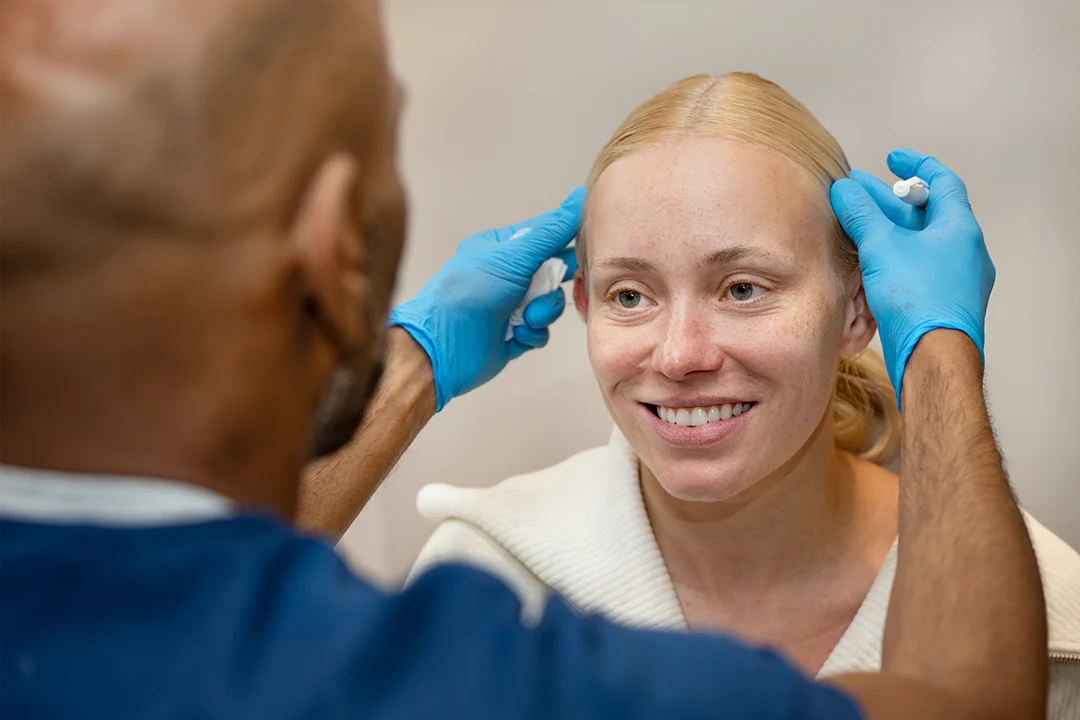
I’ll assess the area carefully and talk through your medical history, previous treatments and the kind of improvement you would value. I can explain which of my treatments may be relevant, whether another option is more appropriate and what I would recommend avoiding.
My initial consultations are free, and there is no obligation to proceed with treatment.
You can learn more about what happens at your first aesthetic consultation in Wimbledon. If you choose to have treatment, I carry it out personally and explain aftercare and follow-up clearly.
Frequently Asked Questions About Dark Circles
Here are seven questions worth answering before deciding whether an eye cream or professional treatment is likely to help.
1. Why do I have dark circles when I get enough sleep?
Because under-eye darkness is not always related to tiredness. Your natural pigmentation, visible vessels, tear-trough anatomy or puffiness may make the area look darker even when you feel well rested.
If the appearance has been stable for years, it may simply be part of your natural face. I can help you understand which features contribute during a free consultation.
2. Can allergies or rubbing my eyes make dark circles worse?
Allergies and irritated skin can cause itching and rubbing, which may make pigmentation or puffiness more noticeable. Some people see changes around their eyes during particular seasons.
If itching and irritation are part of your concern, addressing those factors is a sensible first step. An aesthetic treatment should not be the first answer to ongoing skin irritation.
3. What vitamin deficiency causes dark circles?
Dark circles by themselves are not a reliable way to identify a vitamin or iron deficiency. Many people with noticeable under-eye darkness are otherwise perfectly well and have inherited pigmentation or natural shadows.
If you also have broader symptoms that concern you, your GP can decide whether a general health assessment is appropriate. I would not suggest supplements or blood tests solely on the basis of a photograph of dark circles.
4. What is the best eye cream for dark circles?
The best product depends on what you are hoping to improve. A gentle moisturiser supports dry skin, sun protection helps prevent additional pigmentation and selected ingredients may improve particular surface concerns over time.
If your darkness is mainly caused by a hollow, an eye cream will not change the underlying contour. I would rather help you recognise that difference than encourage you to keep buying products unlikely to address it.
5. Can polynucleotides improve dark circles?
For suitable patients, polynucleotides under the eyes may help when the concern is delicate, thin or crepey skin and a generally tired-looking appearance. The aim is gradual skin-quality improvement.
They are not a replacement for volume in a pronounced hollow, nor are they a guaranteed treatment for strong pigmentation or true eye bags. My under-eye skin texture guide explores that distinction in more detail.
6. Is tear-trough filler better than polynucleotides?
These treatments serve different purposes. Tear-trough filler may be appropriate for carefully selected hollows that cast shadows. Polynucleotides are more focused on the condition of the skin itself.
Neither is automatically better for everyone. The most useful question is whether your main concern is a change in contour or a change in skin quality, and that is something we can discuss during an individual assessment.
7. How much does dark circle treatment cost, and do I need to book treatment straight away?
The published price for polynucleotides starts at £350 per area/session, while tear-trough filler is listed at £400 for 1ml. Your total cost depends on the approach and plan that is actually suitable for you.
You can check the Wimbledon aesthetic clinic price list before visiting. My initial consultation is free and without obligation, so you can ask questions and decide in your own time.
Looking Rested Is Not the Same as Having No Dark Circles
There is no single shade or shape that the area beneath our eyes ought to have. Some people have naturally darker under-eyes for their whole lives; others notice changes in skin texture or facial volume as they get older.
If a simple skincare routine is enough for you, that is completely reasonable. If the darkness bothers you and you would like to explore treatment, my role is to listen, look carefully and explain what might give you a worthwhile, natural-looking improvement.
You should leave a consultation feeling more informed and supported, not under pressure to change your face.
Talk to Me About Dark Circles in Wimbledon
I offer free, no-obligation aesthetic consultations at my Wimbledon cosmetic skin clinic, 51 Spencer Road, West Wimbledon, London SW20 0QN, near Raynes Park. Whether your main concern is under-eye skin quality, hollows or simply understanding the cause, you are very welcome to come and discuss it.
We’ll talk through the options together, including the expected result, cost and aftercare for any treatment you are considering. You can take time to decide or choose not to proceed.
Warm regards,
Dr Suresh Mohan

If you would prefer to ask a question first, please call 07702 389 636 or email info@drmohanclinic.co.uk. You can also read my patient reviews to learn more about people’s experiences of the clinic.
Ask Dr Mohan a Question
Tell me briefly what you have noticed beneath your eyes and what you would like to understand. You can ask about arranging a consultation without choosing a treatment in advance.
Please avoid including sensitive medical details in this general website form; we can discuss relevant information privately.
By clicking Send enquiry you agree to Dr Mohan Clinic’s Privacy Notice.
Evidence and Further Reading
For readers who would like to explore the medical background, these resources explain why dark circles have different causes and why assessment matters: