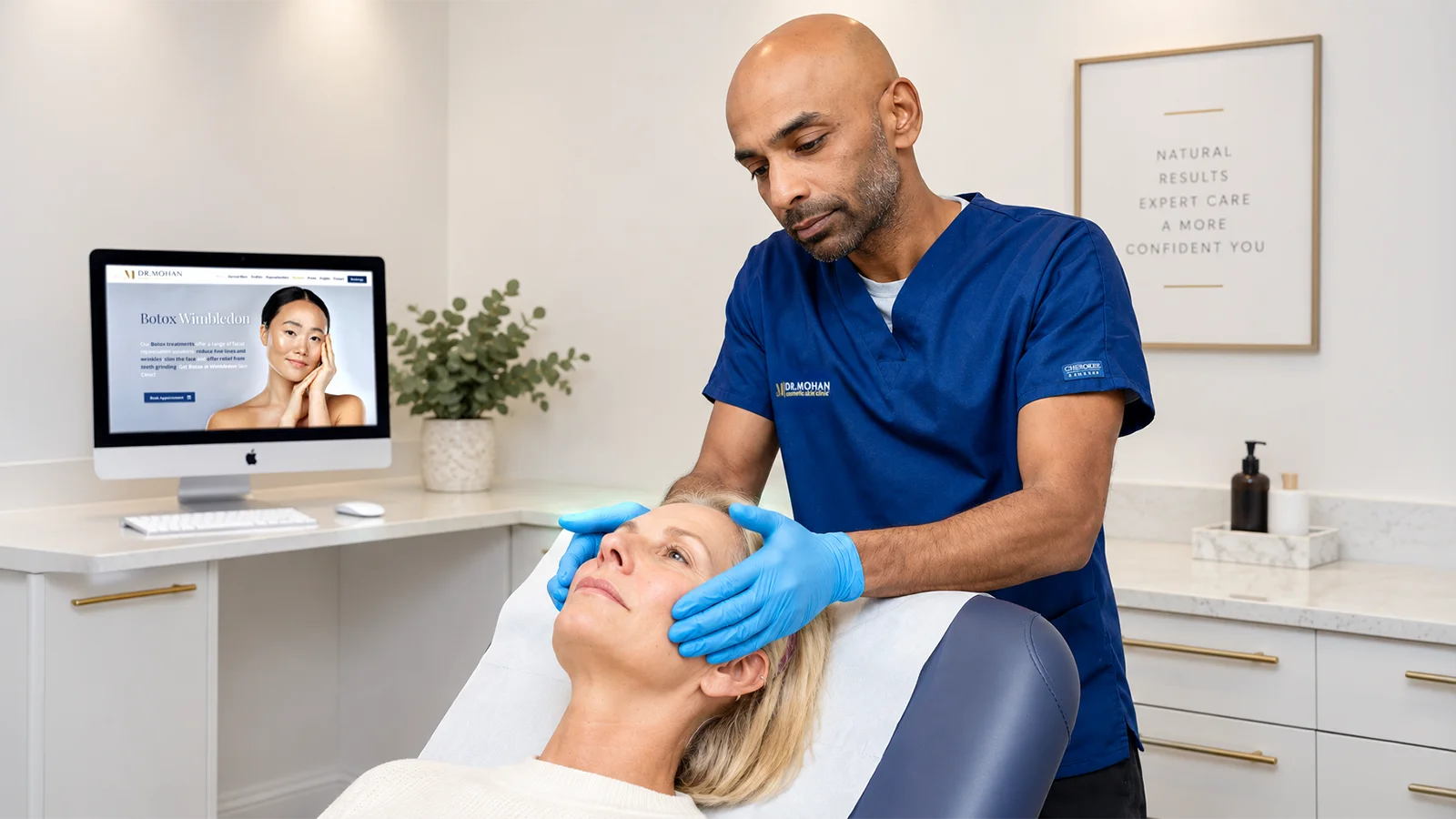
Masseter Muscle Treatment: Start With the Jaw, Not the Trend
People come to see me about their masseter muscles for very different reasons. Some wake with a tight, tired or aching jaw. Some have been told by a dentist that they show signs of clenching or teeth grinding. Others notice headaches or facial tension when their jaw has been working hard. And some feel perfectly comfortable but have noticed that the lower face looks wider, squarer or less balanced than it used to.
Quite often they arrive with the phrase “masseter Botox” saved on their phone and one straightforward question: could this actually help me?
The honest answer is that it may – when the masseter is genuinely an important part of the problem. A prescription muscle-relaxing treatment can temporarily reduce activity in selected parts of this powerful chewing muscle. For some people the goal is functional: less excessive clenching force, muscle fatigue or tension. For others the goal is appearance: gradually softening a lower face that is broad because the masseter itself is enlarged. Some people care about both.
The important question is not simply whether Masseter Botox works. It is whether the masseter is actually driving the symptom or facial change that brought you here.
That is why I start with you rather than the treatment name. I look at what you feel, when it happens, how your jaw moves, the size and strength of the masseter, facial balance, and any relevant medical or dental history. Sometimes a masseter-focused treatment fits the problem very well. Sometimes a dentist, physiotherapist, GP, maxillofacial team or simply conservative care makes more sense.
This guide explains the questions I think matter most if you are searching for Masseter Botox for jaw clenching, teeth grinding, TMJ symptoms or jaw slimming – including what the treatment may help, what it cannot change, what the evidence can and cannot tell us, and what a proper assessment should involve.
I’m Dr Suresh Mohan, a GMC-registered medical doctor offering doctor-led consultations and aesthetic treatments at my private clinic in Wimbledon. People often use the brand name “Botox” when searching for this subject. Botulinum toxin medicines are prescription-only treatments, and suitability, prescribing, consent and aftercare must follow an individual assessment. This guide is general information and is not a diagnosis or personal treatment recommendation.
Quick answer
The masseter is the powerful chewing muscle at each side of your jaw. When it is particularly strong, enlarged or overactive, it may contribute to jaw tightness, clenching force, chewing-muscle fatigue and a wide or square-looking lower face.
What people commonly call Masseter Botox uses a prescription botulinum toxin medicine to temporarily reduce activity in selected parts of this muscle. A suitable patient may notice less force or tension first; visible jaw slimming, where the muscle is genuinely enlarged, develops more gradually.
It cannot change the jawbone, correct the dental bite, repair a damaged jaw joint or cure every cause of bruxism, headaches or facial pain. Clicking, locking, tooth damage, swelling, trauma or unexplained pain may point towards a different problem and a different type of help.
The best first step is therefore not choosing a number of units online. It is working out what is actually causing your concern and whether reducing masseter activity is likely to make a worthwhile difference.

Jaw tension, clenching, teeth grinding, TMJ symptoms and a broad lower face can overlap while having different causes. A calm assessment helps identify what is really going on before treatment is discussed.
What Is the Masseter Muscle – and Why Might It Feel Overworked?
Place your fingertips just in front of the back corners of your jaw and clench gently. The firm muscle that rises under your fingers is the masseter. You have one on each side. Together with the temporalis and other chewing muscles, it closes the jaw and helps create the force needed to bite and chew.
The masseter is meant to be strong. A prominent muscle is not automatically a problem, and plenty of people have powerful masseters without pain, tooth damage or any wish to change their facial shape. In others, the muscle may be particularly bulky, stay tense for long periods or work harder on one side than the other.
Genetics, habitual jaw use, repeated clenching, awake or sleep bruxism and asymmetrical chewing can all contribute. Stress can influence clenching in some people, but it is rarely useful to dismiss persistent jaw symptoms as “just stress” without looking at the wider picture.
What does masseter hypertrophy mean?
Masseter hypertrophy simply means that the muscle has increased in size. Enlarged masseters can create a broader, squarer or heavier-looking lower face, especially around the back angles of the jaw. One side may also look stronger than the other.
This does not mean every wide jaw is caused by muscle. Jawbone shape, fat, skin, salivary glands and other soft tissues also contribute to facial width. Most faces are a combination. That is why Masseter Botox can only soften muscle-related width; it cannot recreate a different skeleton.
Can the masseter cause jaw pain or tightness?
It can contribute. People with an overworked chewing muscle may describe morning jaw tightness, aching near the jaw angle, tenderness, fatigue with chewing, a sense of clenching all day or discomfort that travels towards the temples.
But the same area can hurt for other reasons. Jaw-joint disorders, dental problems, infection, trauma and other causes of facial pain need different thinking. The useful next step is therefore to listen to the pattern and examine the jaw rather than blaming one muscle automatically.
Dr Mo’s view
“When somebody says, ‘I need Masseter Botox,’ I usually ask a different question first: what are you actually trying to improve? Is it morning tightness, tooth wear, headaches, joint symptoms, facial width – or a mixture? Once we understand that, the treatment conversation becomes much more useful.”

The masseter is only one part of the chewing system. Muscle discomfort, jaw-joint symptoms and dental problems can feel similar while needing different kinds of help.
Could the Masseter Be Causing Your Jaw Symptoms?
Patients rarely arrive using anatomical language. They say, “My jaw is always tired,” “I wake up clenching,” “My dentist says I’m grinding my teeth,” “My jaw clicks,” or “Why has the bottom of my face become so wide?” Those descriptions are a much better starting point than trying to diagnose yourself.
These are the main situations in which the masseter may be part of the picture.
Jaw clenching, tightness or muscle fatigue
The masseter may be involved when tightness sits over the chewing muscle, appears after a night of clenching, worsens with heavy chewing or accompanies a very powerful bite. We also think about the temporalis and other muscles, stress and sleep patterns, medicines, dental factors and how the jaw is being used.
Teeth grinding or bruxism
Bruxism includes clenching or grinding while awake or asleep. Reducing masseter activity may reduce some of the force generated by the chewing muscles in selected adults, but this is not the same as switching off the underlying tendency to clench or grind. Dental assessment may still be important to look for tooth wear and decide whether the teeth need protection.
TMJ pain, clicking or locking
People often search for “TMJ Botox” when pain sits around the jaw joint. The masseter can contribute to muscular pain around this area, but clicking, locking and restricted movement may involve structures inside the joint. A muscle treatment cannot repair arthritis, reposition a disc or correct the bite, so some symptoms need dental, medical or maxillofacial assessment.
A wide, square or uneven lower face
If the back of the jaw becomes noticeably fuller when you clench, the masseter may contribute to the width. This is where people often search for “Masseter Botox for jaw slimming” or treatment for a square jaw. Bone, fat, skin and other tissues still matter, so the realistic goal is usually a natural softening of muscle-related width rather than a completely different jawline.
Headaches can also accompany jaw clenching, particularly when the chewing muscles are tense, but headaches have many possible causes. If headache is new, severe, changing or unexplained, it should not automatically be labelled a masseter problem.
Bruxism, TMJ and TMD in Plain English
These terms are mixed together constantly online, but they do not mean the same thing.
Bruxism describes an activity
Bruxism means clenching or grinding. It can happen while awake or during sleep and can be influenced by habits, sleep, stress, medicines and other factors. Some people with bruxism develop strong or enlarged masseters; others do not.
TMJ is the joint
TMJ stands for temporomandibular joint – the joint connecting the lower jaw to the skull. Everyone has two TMJs. When people say “I have TMJ”, they usually mean they have pain or another problem around the jaw joint.
TMD is the wider group of disorders
TMD means temporomandibular disorders. This group includes problems involving the jaw joint, the chewing muscles or both. Muscle-driven pain, inflammation, internal joint changes and dental problems are not interchangeable diagnoses.
The Royal Free London patient guide describes neurotoxin as a possible option for selected people with jaw pain, clenching or grinding, including some whose symptoms have not improved with measures such as physiotherapy or a mouthguard. That is a more helpful way to think about it than saying one injection simply “fixes TMJ”.
What if I already wear a mouthguard but still clench?
A mouthguard and a masseter treatment do different jobs. A professionally advised night guard can help protect the teeth from grinding or clenching damage. Reducing activity in a powerful masseter may, in a suitable patient, aim to reduce some of the force generated by that muscle.
Neither automatically replaces the other. Physiotherapy, habit work, sleep assessment, medicine review or specialist care may address yet another part of the problem. It is quite normal for a sensible plan to involve more than one route.
Can Masseter Botox Help Jaw Clenching, Teeth Grinding or a Wide Jaw?
It can have a role for selected people, but the expected benefit depends on the goal. The practical science is fairly simple.
- The nerve-to-muscle message is temporarily reduced. The treated part of the masseter receives less of the chemical signal that drives contraction.
- The muscle contracts less forcefully. Depending on the person and treatment plan, this can reduce some bite or clenching force.
- Muscle bulk may reduce gradually. If an enlarged masseter contributes to a broad lower face, the contour can soften as the muscle adapts to reduced activity.
The effect is temporary because nerve signalling gradually recovers. Muscle activity does not switch back on overnight, and changes in tension, strength and visible contour do not necessarily follow exactly the same timeline.
For a more detailed explanation of the biology behind this, read what Masseter Botox does to the muscle, including how nerve signalling, muscle activity, strength and muscle size change over time.
One action, two possible goals
Functional goal: less excessive muscle force, tightness or fatigue where a powerful masseter is an important contributor.
Appearance goal: gradual jaw slimming or softening of lower-face width where the masseter itself is genuinely enlarged.
Some patients care mainly about one goal. Others care about both. Naming the priority gives us a much better way to decide whether treatment is worthwhile and how to review the result.

Functional changes in jaw force or tension may be noticed before visible jaw-slimming changes. The result should be judged against the goal agreed at the consultation.
What Improvements Might a Suitable Patient Notice?
A good result does not need to be dramatic. It should connect to the reason the person came in and feel proportionate to their anatomy.
Less jaw tension or clenching force
A suitable patient may notice that the jaw feels less tightly clenched, morning muscle fatigue becomes easier, or prolonged chewing feels different because the treated muscle is generating less force. If headaches or temple discomfort are strongly linked to muscular clenching, those symptoms may improve in some people too – but headache should never be assumed to have one cause.
A softer or slimmer lower face
Where the masseter is genuinely enlarged, reduced muscle thickness may gradually soften the back of the lower face. One side may also look better balanced where asymmetrical muscle activity contributes to the starting shape.
The aim is not to chase the smallest possible jaw. A natural result respects the jawbone, surrounding tissues, sex, age, facial support and personal preference. You should still look like yourself.
Why results differ
Starting muscle size, muscle strength, jawbone shape, soft-tissue support, asymmetry, the treatment goal, placement and individual response all influence what somebody notices. One person may feel a useful functional difference with very little visible change. Another may see a clear contour change but have had no significant pain to begin with.
What does the evidence actually say?
Research is encouraging for some uses of botulinum toxin in the masseter, but it is not one simple body of evidence because researchers are studying different problems.
Recent controlled studies of masseter hypertrophy support a short-term reduction in muscle prominence and thickness. Research into bruxism suggests possible reductions in muscle activity, bite force or pain in some patients, although reviews also highlight differences between studies and limitations in the quality of the evidence. Studies of muscular TMD have likewise reported benefits in selected groups, while other reviews reach more cautious conclusions.
For me, that supports careful assessment rather than promises. Published research can tell us what has happened in groups of patients. It cannot decide from a webpage whether your pain, clenching or facial width is actually being driven by the masseter.
What this treatment does not directly change
- the width, angle or alignment of the jawbone;
- the dental bite or existing tooth damage;
- arthritis, disc position or other jaw-joint structure;
- fat, salivary glands or unrelated soft tissue;
- or every driver of grinding, headaches or facial pain.
Less clenching force is not the same as curing bruxism. A slimmer muscle-related jaw is not the same as changing the skeleton. Clear expectations protect a good result.
Who May Be Worth Assessing for Masseter Treatment?
I prefer “worth assessing” to an online checklist declaring somebody suitable. Suitability depends on the person, the anatomy, the goal, medical and dental history, and the specific prescription medicine being considered.
Your jaw feels persistently tight, tired or overworked
If examination suggests that a powerful or overactive masseter is an important contributor, it may be useful to discuss ways of reducing the load. Conservative and dental options still belong in the conversation.
You have bruxism-related symptoms and strong clenching force
Some adults continue to experience uncomfortable or damaging clenching despite sensible first steps. A masseter-focused prescription treatment may form one part of management after assessment. It does not replace tooth protection or investigation where those are needed.
Your wide or square jaw is substantially muscular
If an enlarged masseter genuinely contributes to lower-face width, reducing its activity may soften the contour over time. Baseline photographs and a clear description of the desired change help keep the goal realistic.
You want to understand why your jaw is bothering you
A consultation should have room to conclude that treatment is unnecessary, poorly timed or unlikely to produce the change you want. Sometimes the most valuable outcome is simply understanding which part of the problem needs attention next.
What Happens at a Proper Jaw and Masseter Consultation?
A good consultation should feel like a conversation, not a sales funnel. You do not need to arrive knowing which treatment you want. Start with what has brought you in and what would make the appointment worthwhile.
- We begin with your story. When does the jaw feel tight? Do you wake with discomfort? Has a dentist mentioned tooth wear? Is there clicking, locking, headache or reduced movement? Do symptoms change with sleep, stress or demanding chewing?
- We review medical and dental context. Your health, medicines, previous reactions and treatment history matter. Dental history and any mouthguard, physiotherapy or other care you have tried are useful too.
- We examine the muscle and jaw movement. I may ask you to clench gently while I assess each masseter. I look at size, strength, symmetry, tenderness, movement and how the surrounding tissues support the lower face.
- We separate function from appearance. Less morning tightness and a slimmer jaw are different outcomes. Naming the priority helps us plan and review properly.
- We discuss the simplest sensible options. That may include conservative care, dental or specialist input, a prescription treatment after assessment, waiting, or doing nothing.
You can ask questions, consider the information and take time to decide. Read my guide to what happens at your first aesthetic consultation in Wimbledon if you would like to know more before visiting.
Dr Mo’s view
“I do not want somebody to feel they have to decide on the spot. My job is to make the anatomy and the choices understandable, answer the awkward questions and give the person room to think. If the masseter is not the main problem, that is useful information too.”
“Dr Mo goes above and beyond in ensuring he gives you all the relevant information needed for your treatment.” – Stephanie S.
Read more Dr Mohan Clinic patient reviews about the consultation, treatment and follow-up experience.

A useful assessment considers the story, muscle strength, symmetry, jaw movement, dental context, lower-face support and the result that actually matters to the patient.
What Is the Masseter Botox Treatment Experience Like?
If a prescription treatment is considered appropriate after assessment and consent, the injection appointment itself is usually brief. The important work – history, examination, prescribing decision, planning and consent – should never feel rushed.
Before treatment
We confirm the goal, medical suitability and plan. The masseter is examined at rest and during a gentle clench. Baseline photographs may be helpful for the medical record and later review, particularly when jaw slimming or asymmetry is part of the concern.
During treatment
The masseter is identified and the planned areas are treated with several small injections. Most patients describe a short series of pinches or pressure. Product and dosing decisions are individual; units differ between botulinum toxin medicines and should not be copied from another person’s treatment or a social-media formula.
After treatment
You receive personalised written aftercare and contact advice. Mild injection-point redness, tenderness, swelling or a small bruise can occur. Some people notice that tough or prolonged chewing feels more tiring as the muscle effect develops.
Use the clinic’s complete Botox aftercare guide and downloadable Botox Aftercare Instructions 2026 PDF as supporting resources. Your individual advice from the treating clinician takes priority.
The injection appointment may be short; the care journey is longer
A well-planned journey includes:
- assessment and prescribing;
- a clear functional or appearance goal;
- treatment tailored to anatomy rather than a fixed template;
- written aftercare and safety-net advice;
- and a review timed for the result we are actually judging.

Safe, reassuring care includes more than the injection appointment: assessment, prescribing, consent, aftercare and a review with the original goal in mind.
How Quickly Does Masseter Botox Work – and How Long Can It Last?
This is one of the most common questions people ask online. There are two overlapping timelines: the change in muscle activity and the slower change in muscle thickness and lower-face contour.
First days to around two weeks
The nerve-to-muscle effect begins developing. Reduced contraction, force or a different feeling in the jaw may become clearer. This is usually too early to judge the final jaw-slimming result.
Following weeks
If the masseter was enlarged, its thickness may gradually reduce. This is when the back of the jaw can start to look softer or narrower. The change is progressive rather than immediate.
Following months
Nerve signalling and muscle activity gradually recover. Function, symptoms and contour may not return at exactly the same time. How long the benefit feels worthwhile varies with the person, starting muscle, treatment plan and outcome being measured.
A broad estimate of around three to six months is commonly discussed, but it should not be treated as a promise or an automatic repeat-treatment date. Some movement may return before every visible contour change has disappeared. The right time to reassess depends on the original goal and how you are doing.
For a general explanation of early treatment timing, see when Botox starts to work. For a detailed week-by-week explanation, read my guide to how long Masseter Botox lasts, including when jaw-slimming changes become visible and what wearing off can feel like.
Can Masseter Botox Affect Chewing, Your Smile or Lower-Face Shape?
These are sensible questions and they belong in consent before treatment, not after it.
I cover these issues in more detail in my guide to Masseter Botox side effects, risks and downsides, including chewing changes, smile asymmetry and changes in lower-face support.
Chewing strength and fatigue
The masseter is a major chewing muscle, so reducing its activity can make tough food, gum or prolonged chewing feel more tiring. The aim is to preserve comfortable everyday function while reducing excessive force where that is the agreed goal.
Smile or facial asymmetry
Nearby muscles help control the smile and lower-face movement. Unwanted weakness or asymmetry can occur if neighbouring movement is affected. This is one reason anatomy, placement, product choice and individual dosing matter.
Jowls, hollows and lower-face support
Reducing a large masseter changes volume as well as force. In someone who already has skin laxity, limited soft-tissue support or a naturally narrow lower face, reducing muscle bulk can sometimes make a pre-existing jowl or hollow more noticeable. That does not mean it will happen to everyone. It means jaw slimming should be planned in the context of the whole lower face rather than treating one muscle in isolation.
Short-lived injection-point redness, tenderness, swelling or bruising can also occur. Your full consent discussion should be individual and product-specific, taking into account your health, medicines, anatomy, intended outcome, alternatives and current prescribing information.
Tell the clinic promptly if something concerns you
Contact the clinic if pain, swelling, weakness, asymmetry or another effect feels unexpected, significant or is getting worse. You will receive product-specific advice explaining what is expected and when to seek help.
Difficulty swallowing, speaking or breathing, marked generalised weakness, severe eyelid drooping or double vision after a botulinum toxin treatment need urgent medical advice. These effects are uncommon, but current MHRA patient-safety guidance says symptoms suggesting toxin spread should be acted on immediately.
Why you will not find a universal number of units here
Botulinum toxin medicines use product-specific units that are not directly interchangeable. A plan also depends on the muscle, anatomy, intended outcome and medical suitability. A public number copied from another person’s Masseter Botox treatment cannot replace assessment and prescribing.
When Might Another Route Be More Helpful Than Masseter Botox?
Finding that the masseter is not the main problem is not a failed consultation. It can save time, expense and frustration by pointing you towards the right kind of help.
Dental assessment
Dental input may be important when there is tooth wear, sensitivity, suspected grinding damage, infection, bite concerns or a need for a professionally advised mouthguard. Reducing muscle force does not repair existing dental damage.
Physiotherapy or conservative TMD care
Jaw movement, muscular habits, posture and rehabilitation may respond to conservative management. This can be useful on its own or as part of a wider plan.
Medical or specialist assessment
New or severe pain, swelling, trauma, neurological symptoms, significant restriction of movement, persistent locking or an unexplained change needs appropriate investigation. Depending on the story, that may mean a dentist, GP, maxillofacial team or another specialist.
Time, observation or no treatment
If the concern is mainly skeletal, the likely change is too small, facial support would not benefit from losing muscle volume, or the timing is not right, choosing not to treat is entirely reasonable.
The simplest sensible plan is often the best one
The useful question is not, “Which jaw treatment is best?” It is: “Which part of this concern are we actually trying to improve, and what is the least complicated sensible way to do it?”
Frequently Asked Questions About Masseter Botox, Bruxism and TMJ Symptoms
These are some of the practical questions patients most often ask about Masseter Botox, bruxism, jaw symptoms and jaw slimming.
Is Masseter Botox only for jaw slimming?
No. People usually discuss it for one or both of two reasons:
- Function: to reduce excessive activity or force in a suitably selected masseter.
- Contour: to soften a wide or square lower face where an enlarged masseter is a genuine contributor.
The goals overlap, but they are not interchangeable. Somebody may feel a useful reduction in tension with little visible change, or see gradual jaw slimming without the masseter having been the cause of every symptom.
Can Masseter Botox help jaw clenching or teeth grinding?
It may reduce the force generated by the treated chewing muscle and may improve some bruxism-related symptoms in selected adults. It does not necessarily stop the brain or behaviour from initiating clenching or grinding, and it does not remove every possible driver.
Dental care may still be needed to assess tooth wear and protect the teeth. A useful way to think about it is: a mouthguard can protect; a masseter treatment may reduce force; other care may address contributing habits, sleep or conditions.
I already wear a mouthguard. Could Masseter Botox still help?
Possibly, because the two approaches do different jobs. A professionally advised mouthguard mainly protects the teeth and may improve symptoms for some people. If you continue to generate very strong clenching force and examination suggests an overactive masseter is important, reducing muscle activity may be worth discussing.
That does not mean everybody who still clenches in a mouthguard needs injections. It means persistent symptoms deserve another look at the diagnosis and the options.
Can Masseter Botox help TMJ pain or clicking?
It may be considered when excessive chewing-muscle activity is an important contributor to muscular TMD pain. But “TMJ pain” is not one diagnosis. Clicking or locking may involve structures inside the joint, and a masseter treatment cannot repair arthritis, reposition a joint disc or correct the bite.
Persistent locking, trauma, swelling, significant restriction of movement or unexplained pain may need dental, medical or maxillofacial assessment first.
Can jaw clenching cause headaches, and can treating the masseter help?
Clenching can contribute to headaches or temple discomfort in some people because the masseter, temporalis and other chewing muscles may stay tense or overworked. If the headache pattern is genuinely muscular, reducing excessive jaw-muscle activity may help some patients.
However, headache has many causes. New, severe, changing or unexplained headache should not be self-diagnosed as a jaw problem simply because you also clench your teeth.
How do I know whether my wide jaw is muscle or bone?
A visible bulge near the back of the jaw when you clench suggests that the masseter contributes, but a mirror or photograph cannot provide the whole answer. During consultation I can assess muscle size and strength, compare the sides and consider the jawbone, fat, skin and lower-face support.
Many people have a combination. The expected result is therefore often a natural shift in proportion rather than a completely different jawline.
How quickly does Masseter Botox work and how long does it last?
The muscle-relaxing effect begins developing over the first days and may take around two weeks to become clear. Visible reduction of an enlarged masseter usually takes longer – often several weeks – because muscle thickness changes gradually.
A broad duration of around three to six months is often discussed, but strength, symptoms and facial contour do not necessarily return together. Repeat treatment should follow reassessment rather than an automatic diary date.
Will my jaw or face go back to how it was when the treatment wears off?
Muscle activity gradually returns as nerve signalling recovers. With continued use, the masseter can regain strength and bulk over time; the face does not normally snap back overnight.
After repeated treatment, reduced muscle thickness may remain noticeable for longer in some people, but this should not be presented as a guaranteed permanent result. Consistent baseline photographs make change easier to judge fairly.
Can I still chew normally, and can Masseter Botox affect my smile or jowls?
The plan should preserve useful everyday chewing, but some people notice temporary fatigue with tough food, gum or prolonged chewing because reducing muscle force is part of the intended action. Unwanted smile weakness or asymmetry can occur if nearby facial movement is affected.
Jaw slimming also reduces muscle volume. If somebody already has lower-face laxity or limited soft-tissue support, a pre-existing jowl or hollow can sometimes become more noticeable. This is why I assess the whole lower face rather than treating the masseter as an isolated block of muscle.
When should I see a dentist, GP or specialist instead?
Dental assessment is important if you have tooth wear, broken teeth, sensitivity, suspected infection or bite concerns. Medical or specialist assessment is more appropriate for new or severe pain, swelling, trauma, neurological symptoms, persistent locking, marked restriction of movement or another unexplained change.
You do not have to work this out alone. If something in the history suggests another route is more appropriate, a good consultation should tell you that clearly.
The Bottom Line
Masseter Botox sits at the meeting point between function and facial shape. For a suitable patient, reducing activity in a powerful or enlarged masseter may make the jaw feel less overworked, reduce some excessive clenching force or gradually soften muscle-related lower-face width.
The best results begin with the right question. Is the problem mainly muscle tension, bruxism-related force, a jaw-joint disorder, dental damage, bone structure, lower-face support – or a mixture?
The consultation is not a commitment to treatment. It is a chance to have the jaw assessed, understand what may genuinely improve, discuss the alternatives and decide whether the likely benefit fits your priorities.
If the masseter is central to the concern, we can build a careful plan around it. If another route is more likely to help, I would much rather explain that and point you in a useful direction.

A good plan begins with an agreed goal and a reliable baseline, then ends with an honest review of what has changed and whether the result feels worthwhile.
Would You Like Your Jaw or Masseter Concern Assessed?
If you are searching for help with jaw clenching, teeth grinding, TMJ-type symptoms, a tight masseter or a wide lower face, you are welcome to book a consultation with me at my doctor-led aesthetic clinic in Wimbledon.
Tell me what you have noticed and what you would like to improve. I will assess the masseter and wider jaw picture, explain the options in plain English and tell you if dental, medical, physiotherapy or specialist input is likely to be more useful. If a prescription muscle-relaxing treatment such as the treatment commonly searched for as Masseter Botox could have a sensible role, we can discuss expected improvement, limitations, timing, alternatives and personalised consent information.
There is no production line and no pressure to decide on the spot. The aim is for you to leave with a clearer understanding of the problem and the next step that makes sense for you.
Prefer to speak first? Call 07702 389 636 or use the enquiry form below.
Warm regards,
Dr Suresh Mohan
Find Dr Mohan’s medical-aesthetics articles more easily
If you find these guides useful, you can add Dr Mohan Clinic as a preferred source in Google Search. Google may then highlight our articles for you when they’re relevant in Search, AI Overviews and AI Mode.
Ask Dr Mohan a Question
If you would like help deciding whether a jaw and masseter consultation is worthwhile, send a short message. Please do not include sensitive medical information in the website form; relevant details can be discussed privately.
By clicking ‘Send enquiry‘ you agree to Dr Mohan Clinic’s Privacy Notice.
Evidence and Further Reading
This guide combines Dr Mohan’s clinical experience with published research and independent UK patient-safety information. The evidence is continuing to develop, and studies do not all examine the same patients, diagnoses, outcomes or treatment protocols. Useful starting points include:
- Royal Free London: neurotoxin for temporomandibular joint dysfunction
- 2026 systematic review and meta-analysis of botulinum toxin for masseter muscle hypertrophy
- 2025 systematic review of botulinum toxin for bruxism management
- 2025 overview of systematic reviews on botulinum toxin for bruxism
- Systematic review and meta-analysis of botulinum toxin for muscular temporomandibular disorder
- Systematic review of masticatory botulinum toxin and mandibular bone outcomes
- MHRA: updated botulinum toxin patient-safety warning, July 2026
Medical note: This article provides general educational information and does not diagnose a jaw condition or replace an individual medical or dental consultation. Treatment suitability, medicine choice, intended outcome, consent, contraindications, alternatives, aftercare and review timing must be decided after an appropriate assessment. Seek prompt dental or medical advice for severe or changing pain, swelling, trauma, locking, marked restriction of movement, neurological symptoms or another urgent concern.