Polynucleotides before and after results are usually subtle, natural and progressive rather than dramatic or instant.
If you are searching for polynucleotides before and after photos, you are probably trying to answer a very sensible question:
“What does polynucleotides treatment actually do — and is it worth it?”
Updated: April 2026 — Doctor-led guide from Dr Suresh Mohan (GMC-registered), Wimbledon.
A practical guide to realistic polynucleotides before and after results, including timing, expectations and what photos can and cannot tell you.
At my Wimbledon aesthetic clinic, polynucleotides are best understood as a skin-quality treatment designed to improve the condition of the skin over time. They are used to support the skin itself, helping the skin look smoother, fresher and healthier with gradual, natural-looking improvement. The best current reviews describe polynucleotides as promising regenerative injectables for wrinkle reduction, texture and elasticity.
If you are expecting an instant filler-style transformation, polynucleotides may not be the right treatment for you. But if you want a natural improvement in skin quality — especially in delicate areas such as the under-eyes — the before and after changes thanks to polynucleotides can be very rewarding.
The next step is a proper consultation and realistic, personalised advice.
What Realistic Results Look Like
Polynucleotides before and after results usually show smoother texture, better hydration, softer fine lines and a fresher overall appearance.
The changes are often most noticeable in areas where the skin is thin, crepey, dull or tired-looking.
The best results usually appear gradually over a course of treatment, not the next day.

Polynucleotides before and after results are usually subtle, fresh and natural-looking.
What do polynucleotides before and after results usually show?
In real life, the most attractive polynucleotides results are usually not dramatic. They tend to show up as improvement in skin quality rather than a major change in shape.
Common improvements patients may notice:
- smoother skin texture
- softer fine lines
- better hydration
- brighter, healthier-looking skin
- less crepey or fragile-looking skin
- a fresher, more rested appearance
Polynucleotides are worth judging by skin quality, not by dramatic structural change.
Think smoother, fresher, healthier skin — not instant reshaping.
Polynucleotides before and after: what is realistic?
A good polynucleotides result usually looks like:
- better skin
- not a different face
In other words, most patients are looking for:
- smoother under-eyes
- softer crepey skin
- improved glow
- healthier texture
- subtle rejuvenation
What you should not expect:
- an instant “wow” transformation on day one
- filler-like correction of deep hollows
- major lifting from one session
- complete removal of every line, fold or dark circle
This matters because “before and after” photos can sometimes make a subtle treatment sound more dramatic than it really is. The best polynucleotide results usually look refreshed, not obviously treated.
Before and after photos are most helpful when paired with context — which area was treated, how many sessions were needed, and how long after treatment the “after” image was taken.
To understand why the changes are gradual, it helps to first understand what polynucleotides do to the skin.

Before and after photos are most useful when they are taken carefully and shown with proper context.
How long does it take to see polynucleotides before and after results?
Polynucleotides work gradually over time.
That means the “after” picture you see online is rarely what the skin looked like the next day. In most cases, visible improvement develops as the skin settles, responds and gradually starts to look smoother, fresher and healthier.
At my clinic, I always explain that this is a treatment best judged over time rather than straight after injections. The most meaningful change is usually seen after the skin has had time to recover and, in many cases, after more than one session.
| Stage | What you may notice |
|---|---|
| Immediately after | Small bumps, mild redness, swelling, sometimes bruising |
| First few days | Early settling phase |
| Following weeks | Skin begins to look smoother, more hydrated and fresher |
| After a course | Best point to judge overall change |
What do polynucleotides look like immediately after treatment?
Immediately after treatment, it is common to see:
- small raised bumps at injection points
- mild puffiness or swelling
- redness
- occasional bruising
This early appearance does not usually mean anything is wrong. In most cases, it is simply part of the normal settling phase, especially in delicate areas such as the under-eyes, where even mild swelling can look more noticeable at first.
What to expect immediately after
Immediately after treatment is the recovery stage, not the final result.
Small bumps, puffiness, mild redness and occasional bruising can all be part of the normal early settling phase.
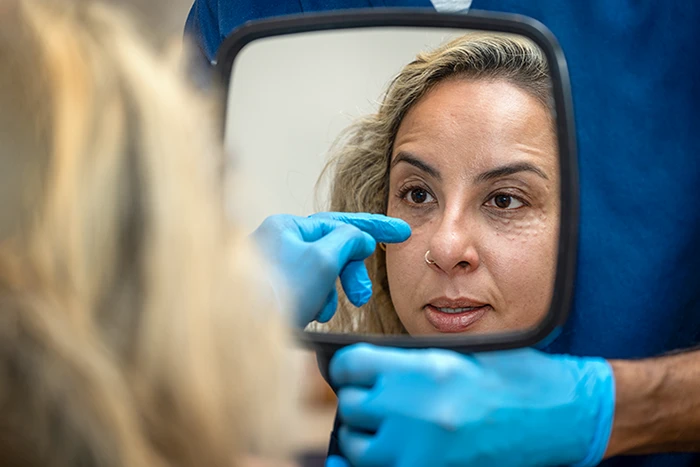
A patient checks the treated under-eye area in a mirror immediately after polynucleotide treatment at Dr Mohan Clinic. Small post-treatment marks are normal and usually settle quickly.
Polynucleotides under-eyes before and after
Under-eye polynucleotides are usually chosen when the skin looks:
- thin
- crepey
- finely lined
- slightly dark because of translucency
- tired rather than deeply hollow
The best under-eye changes are usually:
- smoother texture
- softer crepiness
- fresher-looking skin
- improved hydration
- a less tired overall look
Current reviews and clinical use patterns support polynucleotides as a promising option for delicate, skin-quality-led concerns, especially where patients want a non-filler approach. But they are not primarily a treatment for replacing volume.
What under-eye photos do not always show
- how much swelling there was at first
- how many sessions were needed
- whether lighting is flattering
- whether the main issue was skin quality or hollowness
That is one reason I think consultation matters so much. Not every “dark circle” or tired-looking eye is caused by the same thing.
Learn more in my post: “Polynucleotides Under Eyes for Dark Circles and Crepey Skin“
Polynucleotides before and after for the face and neck
Face
For the face, before and after changes are usually judged by:
- smoother texture
- better hydration
- softer fine lines
- improved glow
- healthier-looking skin quality
Neck
For the neck, patients often look for improvement in:
- crepey texture
- fine horizontal lines
- dullness
- loss of elasticity
- overall skin quality

Polynucleotides can help the face and neck look smoother, fresher and more refined over time.
How many sessions of polynucleotides are usually needed?
Most patients should think in terms of a course of treatment rather than a one-off session.
That matters because many of the before and after photos you see online are taken weeks later, often after more than one appointment, and after the early swelling has fully settled. In other words, the “after” image is rarely the day-after result.
Some patients do notice early improvement after the first session, especially in hydration, skin texture or a fresher overall look. However, one session is not usually where the treatment shows its full value. Polynucleotides tend to work best when they are given time and repeated properly as part of a planned course.
One session may give an early improvement, but the best polynucleotides results are usually seen after a course of treatment.
In practical terms, most patients should expect:
- an initial course of treatment
- time between sessions for the skin to respond
- gradual change rather than instant transformation
- maintenance later if they want to keep the improvement going
So, if you are wondering whether one session of polynucleotides is enough, the most honest answer is this: it may give you an early sense of improvement, but the best results are usually seen after a course rather than after a single treatment.
Are polynucleotides worth it?
For the right patient, yes — especially if your goal is better skin quality rather than dramatic reshaping.
Polynucleotides tend to feel most worthwhile when you understand what they are designed to do well. They are usually chosen by patients who want healthier, smoother, fresher-looking skin and who are happy with a result that develops gradually. If you like the idea of subtle improvement that still looks natural, they can be a very satisfying treatment.
They can be worth it if you want:
- under-eye rejuvenation without looking filled
- softer crepey skin
- more hydrated, resilient-looking skin
- gradual, natural improvement
- a treatment that focuses on skin quality rather than volume
For many patients, that is exactly the appeal. The best results often look like better skin, not an obviously treated face, which is why polynucleotides are especially attractive in delicate areas such as the under-eyes.
If you are comparing options more broadly, you may also find my guide on which injectable treatment is right for you helpful.
They may feel less worthwhile if you are mainly hoping for:
- instant results
- big lifting
- correction of deep hollows
- a dramatic one-session transformation
- a filler-style change in shape or structure
That is where expectations matter. If the main concern is volume loss, strong hollowness or a need for immediate structural correction, another treatment may be more suitable. Polynucleotides are usually at their best when the real problem is thin, crepey, ageing or tired-looking skin.
In simple terms, polynucleotides are usually worth it when your priority is skin quality, subtle improvement and a natural-looking result.

Polynucleotides tend to feel most worthwhile when the goal is subtle, natural-looking skin improvement.
Polynucleotides Before and After: Frequently Asked Questions
These are some of the most common follow-up questions patients ask after looking at polynucleotides before and after photos, especially around timing, visible changes, downtime and whether the treatment is worth it.
What will I look like immediately after polynucleotides?
Straight after treatment, it is common to see small bumps, mild swelling, redness and sometimes bruising at the injection points. The treated area can look temporarily worse before it looks better, especially in delicate areas such as the under-eyes. This early appearance is part of the normal settling phase rather than the final result.
How long after polynucleotides do you see results?
Polynucleotides usually improve the skin gradually rather than instantly. Some people notice early changes in hydration or texture first, but the best “before and after” improvement is usually judged over the following weeks and often after a course of treatment rather than one session alone. Current reviews consistently describe the results as progressive rather than immediate.
Will one session of polynucleotides do anything?
One session may give you an early sense of improvement, especially in hydration, smoothness or overall skin freshness. However, most patients should think in terms of a course, because that is usually when the results start to look more worthwhile. One treatment can be a start, but it is rarely the full story.
How many sessions of polynucleotides are usually needed?
Most patients are advised to have a course of treatment rather than a one-off session. That matters because many of the before and after images you see online are taken after more than one appointment and after the early swelling has settled.
The number of sessions matters because results usually build gradually. You can read more in my guide to how many polynucleotide sessions are usually needed.
Do polynucleotides tighten skin under the eyes?
They can help improve the look of thin, crepey or finely lined under-eye skin, which is why many patients describe the area as looking smoother or firmer afterwards. The effect is usually subtle and related to better skin quality, rather than the kind of instant structural change you might associate with filler or surgery.
Can polynucleotides make you look older?
They are not designed to make you look older, but they can feel disappointing if they are used for the wrong concern or judged too early. If someone is hoping for instant volume, dramatic lifting or correction of deep hollows, a subtle skin-quality treatment may feel underwhelming at first. The best results usually come when the goal is healthier, smoother, fresher-looking skin rather than dramatic reshaping.
Are polynucleotides good for older skin?
They can be a very good option for older skin when the main concern is crepey texture, fine lines, dullness or a loss of skin quality. Older patients often appreciate that the results are usually subtle and natural-looking, rather than obviously “done”. As always, the key question is whether the problem is mainly skin quality, volume loss, or a mixture of both.
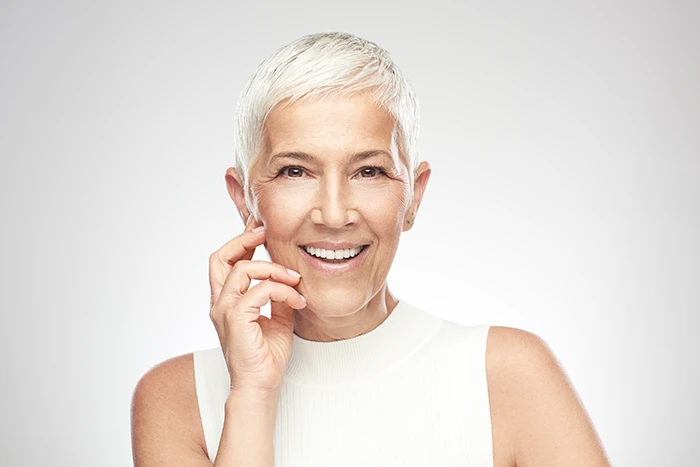
Polynucleotides can be a very good option for older skin when the goal is subtle, natural-looking improvement.
How long do polynucleotide results last?
Results vary depending on the area treated, the number of sessions, the product used and the starting condition of the skin. Most patients should think in terms of an initial course followed by maintenance, rather than one fixed duration that applies to everyone.
If you are wondering how long those improvements may last, I explain this separately in my guide to polynucleotide treatment longevity.
How do I get the best results from polynucleotides?
The best results usually come from three things: choosing the right indication, completing the recommended treatment plan, and following aftercare properly. This is especially important in before-and-after discussions, because the most impressive improvements usually reflect a full course, good timing and realistic expectations rather than one quick appointment.
Learn more in my Complete Guide to Polynucleotides Aftercare.
How much is a full course of polynucleotide treatments in London?
The total cost of a full course of polynucleotide treatments in London depends on the treatment area, the product selected, and the number of sessions needed to achieve a worthwhile result. As polynucleotides are usually most effective when carried out as a planned course, the most helpful way to think about cost is in terms of an overall treatment plan rather than one appointment alone.
You can also view current polynucleotides prices online before booking a consultation.
Are polynucleotides worth it before and after?
They are usually worth it when your goal is better skin quality, a fresher appearance and a natural-looking result. They may feel less worthwhile if you are hoping for instant volume, dramatic lifting or a one-session transformation.

A proper consultation helps match the treatment to the skin and the result you want.
Polynucleotides before and after in Wimbledon
If you are looking for polynucleotides in Wimbledon, the most important step is not chasing the most dramatic photo online.
It is understanding:
- what is bothering you most
- whether the issue is mainly skin quality, hollowness or both
- what kind of result is realistic
- and whether polynucleotides are the right treatment for that concern
At my clinic, I take a conservative, doctor-led approach because the best aesthetic results usually come from careful patient selection and realistic expectations, not from overpromising. The NHS advice before having a cosmetic procedure explains why it is important to choose a qualified practitioner, understand the procedure properly, and know what aftercare and risks to expect before proceeding.
If you would like to check current treatment fees before booking, you can also view polynucleotides prices online.
If you are based in Wimbledon, Raynes Park, Kingston, Richmond, Putney, Surbiton or nearby South-West London, you are very welcome to book a consultation to talk things through in person.
Book your free consultation here →
Or call me directly: 07702 389 636
Warm regards,
Dr Suresh Mohan
Contact Dr Suresh Mohan
Considering polynucleotides in Wimbledon?
For questions, free consultations or call back requests, please fill in the form below and I will get back to you as soon as possible.
By clicking ‘Send enquiry‘ you agree to Dr Mohan Clinic’s Privacy Notice.