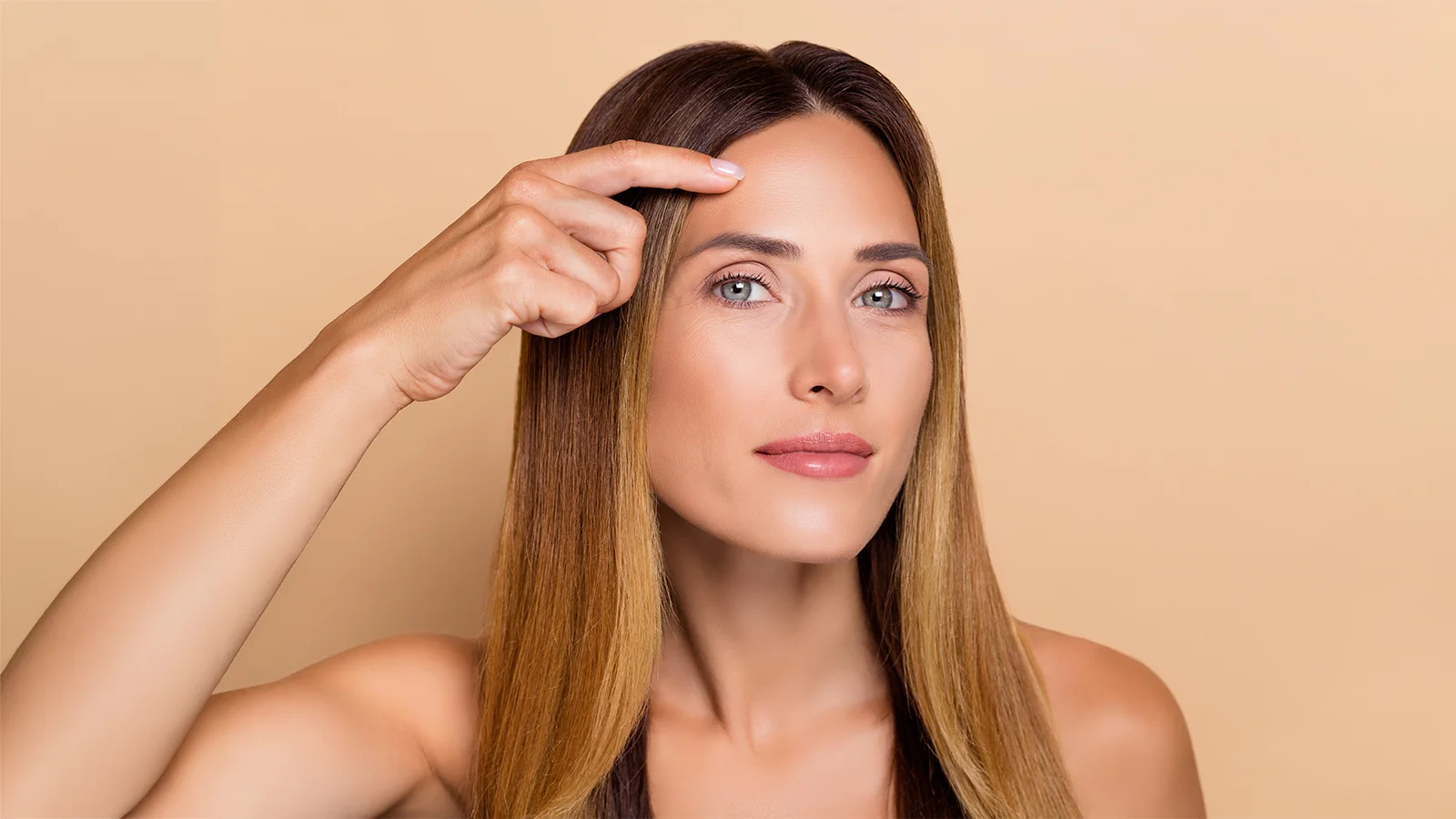
How to Get Rid of Frown Lines Between the Eyebrows
How to get rid of frown lines is one of the most common questions I hear from people who notice the vertical “11” lines between their eyebrows. At first, these creases may appear only when you frown, concentrate or squint. Over time, some can remain visible even when your face is relaxed.
Frown lines are also called glabellar lines, 11 lines or “elevens”. They are a normal result of facial movement and changes in the skin over time. You do not need to treat them simply because they are there.
The useful first question is not “Which treatment should I have?” It is “Is this line mainly caused by movement, an established crease in the skin, or a mixture of both?”
That distinction changes what can realistically help. Skin care can support skin quality. Botox can temporarily reduce the muscle activity that creates movement-related frown lines. A deeper crease that is already visible at rest may soften, but it may not disappear completely.
This guide explains what causes frown lines, what can help naturally, how Botox for frown lines works, why some deep 11 lines remain after treatment, what I look for during assessment, and how we decide whether any treatment is worthwhile.
I’m Dr Suresh Mohan, a GMC-registered medical doctor with advanced Level 7 training in non-surgical facial aesthetics. I personally carry out consultations and treatments at my private clinic in West Wimbledon, close to Raynes Park.
When I assess frown lines, I look at the lines at rest and during maximum frowning, but also at brow position, eyelid position, facial asymmetry and forehead movement. The aim is to understand your upper face as a whole and agree how much movement you actually want to keep.
Frown lines at a glance
- Where they appear: usually vertically or diagonally between the eyebrows.
- Other names: glabellar lines, “11 lines” or “elevens”.
- Movement matters: lines that appear mainly when you frown are different from creases that remain visible at rest.
- Skin matters too: ageing, UV exposure and smoking can make established lines more persistent.
- Botox has a specific job: it temporarily reduces selected muscle activity; it does not instantly erase every deep skin crease.
- Natural options have limits: SPF, moisturiser and retinoid skin care can support skin quality, while massage, face yoga or patches do not reproduce the action of a prescription muscle-relaxing medicine.
- Movement is personal: some people want a little movement to remain; others prefer much less.
- Filler is not part of my glabellar treatment plan: I do not offer dermal filler between the brows because, in my clinical judgement, the vascular-occlusion risk outweighs the potential benefit.

Frown lines are part of normal facial expression. A useful assessment starts with what you notice at rest, what appears with movement and what you would like to change.
In this guide
- What causes frown lines?
- Lines with movement and lines at rest
- How I assess frown lines, brows and eyelids
- What can help frown lines?
- Can you get rid of frown lines naturally or without Botox?
- Botox for frown lines: what it can and cannot do
- Deep 11 lines, filler and skin-focused options
- Appointment, results and review
- Risks and possible unwanted changes
- Before-and-after results: what to judge
- Frequently asked questions
- Visiting the clinic in Wimbledon
What Causes Frown Lines Between the Eyebrows?
Frown lines form in the glabella, the area between the eyebrows. The main muscles involved include the corrugator supercilii and procerus. When they contract, they pull the brows inwards and downwards and fold the skin between them.
At first, the crease may appear only while you frown, concentrate or squint. As the same skin is folded repeatedly and the skin itself changes with time, a line can become more persistent.
Repeated facial movement
Some people naturally use the muscles between their brows more strongly than others. That does not mean they are angry or stressed; it is simply part of individual facial movement.
Skin ageing and sun exposure
Collagen and elasticity change with age, while ultraviolet exposure contributes to photoageing. That can make repeated folds more likely to remain visible when the muscles relax.
Smoking, genetics and anatomy
Smoking accelerates visible skin ageing. Genetics, skin thickness, brow shape and muscle strength also help explain why two people of the same age can have very different 11 lines.
A frown line does not tell you anything reliable about someone’s personality or mood. It tells us about anatomy, movement and the skin.
Why Do Some Frown Lines Show Only When You Frown?
Lines that appear mainly with facial movement are often described as dynamic or movement-related lines. If you look in a mirror with your face relaxed, then frown gently, you may see vertical lines appear and disappear again.
A crease that remains visible while the face is relaxed is often described as a static or resting line. Many people have a mixture of both.
Reducing the movement that creates a fold and improving an established crease in the skin are not always the same job.
That is one reason a deep line can remain visible even after the frowning movement has become much softer.

Frown lines may appear mainly with movement, remain visible at rest, or show a mixture of both.
Are frown lines the same as forehead lines?
No. Frown lines are usually vertical or angled between the eyebrows and become stronger when you frown or concentrate. Forehead lines are usually horizontal and become stronger when the frontalis muscle raises the eyebrows.
The muscle groups have different actions, but they influence the same upper-face balance. That is why I assess the brows, eyelids, glabella and forehead together.
If horizontal lines are also part of your concern, read my guide to forehead lines, treatment options and natural expression. For expression lines at the outer corners of the eyes, see my guide to crow’s feet.

Frown movement is part of an upper-face balance: treatment planning should consider brow position, forehead movement and the amount of expression you want to keep.
How I Assess Frown Lines Before Discussing Treatment
First, tell me what you have noticed
Your concern may be that the lines only appear when you frown, or that one crease now stays visible even when your face is relaxed. You might feel that your expression looks sterner in photographs than you intend, or you may simply be worried that treatment could make you look frozen.
Those are different starting points. I want to know what you would like to change and what you would like to keep.
Then I look at the face at rest and in movement
I assess the glabella with the face relaxed and during maximum frowning. I also look at:
- brow position and eyebrow shape;
- eyelid position and upper-eyelid heaviness;
- natural facial asymmetry;
- how strongly each side of the glabella contracts;
- forehead or frontalis movement;
- and how the upper face behaves during normal conversation.
Natural asymmetry is useful baseline information. It should not be mistaken for a new treatment effect afterwards.
Your medical history matters
Please tell me about allergies, previous Botox or other botulinum toxin treatment, previous reactions, eyelid or brow surgery, a history of eyelid drooping, facial weakness, relevant neurological conditions, medicines, pregnancy or breastfeeding where applicable, and important upcoming events.
You can read more about what happens at your first aesthetic consultation in Wimbledon.

Assessment includes the lines at rest and during frowning, together with brow position, eyelids, forehead movement and natural asymmetry.
Dr Mo’s view: there is no single “right” amount of movement
Some people prefer to retain a little frown movement. Others prefer a much stronger reduction. I do not assume one endpoint for everybody.
The useful goal is the amount of softening and movement that suits your anatomy, your brow position and your own preference.
What Can You Do About Frown Lines?
The best option depends on what you can see when the face moves, what remains at rest and what change would actually feel worthwhile.
Start with what you notice
| What you notice | What that tells us to assess |
|---|---|
| Lines mainly when frowning | Glabellar muscle activity and how much movement you want to keep. |
| A faint crease remains at rest | Muscle movement plus early change in the skin. |
| A deeper established 11 line | How much is movement-related and how much is now an established skin crease. |
| One side pulls more strongly | Natural muscular asymmetry, brow shape and baseline movement. |
| Low brows or upper-eyelid heaviness | Wider upper-face balance before any muscle-relaxing treatment is planned. |
| Fine superficial skin lines | Whether skin quality needs more attention than stronger muscle reduction. |
The same phrase — “frown line” — can describe different combinations of movement and skin change. The treatment conversation should begin with the cause and your goal, not a product name.
Can You Get Rid of Frown Lines Naturally or Without Botox?
Yes, you can support the skin without injections — but it helps to be clear about what each option can realistically do.
Sun protection and moisturiser
Broad-spectrum SPF 30 or higher helps reduce further UV-related skin ageing. Moisturiser can improve hydration and make some superficial fine lines look less noticeable. Neither stops the glabellar muscles from contracting.
Retinol and retinoids
Retinol and other retinoids can improve fine lines and skin texture over time in suitable patients. They can irritate the skin and are not appropriate for everyone. Retinoids should not be used during pregnancy.
Massage, face yoga and gua sha
Massage may feel pleasant and can make you more aware of tension in the area. Face yoga and gua sha are popular online, but evidence that they can reliably remove an established frown line is limited.
Frownies, facial tape and patches
Adhesive patches may temporarily hold the skin in a different position or remind you not to frown. They do not permanently switch off the underlying muscles or reverse an established crease.
Skin care can improve the skin. Botox can reduce selected muscle activity. They are different tools with different jobs.
What I would not promise
I would be cautious about claims that a cream, massage device, facial exercise or patch can permanently “erase” deep 11 lines. If the line remains visible when your face is relaxed, there is usually more than one contributor to discuss.
How Does Botox Work for Frown Lines?
People often search for Botox for frown lines, and it is useful to explain exactly what that means. Botox is a brand name for a botulinum toxin medicine. These medicines are prescription-only treatments, and different products and units are not interchangeable.
For suitable movement-related frown lines, Botox temporarily reduces the nerve signal to selected glabellar muscles. The muscles contract less strongly, so the skin folds less forcefully when you frown.
For someone whose line is mainly visible during expression, that may address the main driver of the concern.
For someone with a deeper line already present at rest, reducing movement can still help — but it does not guarantee that the skin crease will disappear completely.
What Botox can do
- reduce selected frown-muscle activity for a temporary period;
- soften movement-related lines between the eyebrows;
- allow the skin to fold less strongly while the effect is active;
- be planned around the amount of movement you prefer to keep.
What Botox cannot promise
- permanent removal of frown lines;
- instant erasure of a deep resting crease;
- perfect facial symmetry;
- the same result or duration for every person.
For the wider consultation pathway, see Botox in Wimbledon. If timing is your main question, read when Botox starts to work.
“The frown lines between my eyebrows made me look cross all the time. After Botox with Dr. Mohan, I look fresher and people comment that I seem more relaxed.” — Lauren C, Raynes Park
What If the 11 Line Is Already Deep?
A deep frown line can have two contributors at the same time: ongoing muscle movement and an established crease in the skin.
Reducing the movement may soften the fold and stop it being recreated as strongly for a period of time. The existing skin crease may improve more gradually, remain partly visible, or need a separate skin-quality discussion.
A line that remains at rest after movement has reduced is not automatically evidence that Botox “did not work”.
What about microneedling, peels or laser treatment?
Skin-focused treatments may be relevant when texture, photoageing or an established resting crease contributes to the concern. These treatments have a different purpose from Botox. A skin procedure does not reduce glabellar muscle activity, while Botox does not resurface sun-damaged skin.
What about filler for deep frown lines?
Some clinicians use dermal filler for established glabellar creases. I do not offer dermal filler in the glabella.
Dr Mo’s view on filler between the brows
There are important blood vessels in the glabellar area. In my clinical judgement, the risk of vascular occlusion outweighs the potential benefit of filler here.
That does not mean no clinician uses filler in this area. It means it is not a treatment I personally consider appropriate to offer for frown lines. If a deep crease remains, I would rather reassess what is contributing to it and discuss other reasonable options and their limitations.
Five useful questions before you decide
- Are my frown lines mainly visible with movement, at rest, or both?
- How much movement would I like to keep?
- How are my brows, eyelids and forehead contributing to the upper-face balance?
- What improvement is realistic — and what may remain?
- What are the risks, alternatives and review arrangements?
A good consultation should leave you able to answer those questions in your own words.
What Happens at an Appointment, and When Does Botox Start to Work?
Before treatment
We should have agreed what bothers you, what change you want, how much movement you would prefer to keep, the alternatives, important risks and how review works. Tell me if you have an important wedding, holiday, work event or photographs coming up.
During the appointment
The area is assessed again and cleaned. If Botox or another prescribed botulinum toxin treatment is appropriate, small injections are placed according to the individual plan.
There is no useful universal injection map or number of units for a reader to copy. Anatomy varies, products differ and units are not interchangeable.
The first few days
The effect is not immediate. You may see small injection marks, redness or occasionally a bruise. Some people begin to notice that frowning feels less strong over the following days.
Around two weeks
Around two weeks is normally a useful point for review when a review is needed. We can assess how movement has changed, whether the two sides are balanced, how much movement remains and whether a resting crease is still visible.
If you have been offered a review, my guide to what happens at a two-week Botox review explains what is assessed and why an adjustment is not automatic.
The following months
Botox and other botulinum toxin treatments are temporary. One UK-licensed preparation describes the effect on glabellar frown lines as lasting up to four months. Individual response, product and treatment plan all matter.
Read the clinic’s Botox aftercare guide for practical post-treatment information. If you are wondering what happens when treatment is not repeated, see what happens if you stop Botox.
Why might a frown line still be visible at review?
It may have been etched into the skin before treatment. It may still be early. Some movement may have been deliberately retained. Natural asymmetry may remain. Individual response also varies.
The answer is assessment, not automatically adding more treatment.

A useful result is judged in movement as well as at rest. The amount of frown movement left should match the treatment plan and your preference.
What Are the Risks and Possible Unwanted Changes?
Most people researching Botox want to know not only what could improve, but what could go wrong. It is better to discuss that calmly before treatment.
Redness, tenderness, bruising or headache
Small injection-site reactions can happen. Headache is also listed among recognised adverse effects for some licensed botulinum toxin treatments of the glabellar area.
Eyelid or brow drooping
Eyelid ptosis and brow ptosis are recognised possible adverse effects. That is one reason I assess brow position, eyelids, muscle activity and the wider upper face before treatment.
Asymmetry or an unfamiliar eyebrow shape
No face is perfectly symmetrical before treatment. Occasionally a change in muscular balance can make asymmetry more noticeable or create a new imbalance that needs assessment.
Too much or too little movement for your preference
A result can be technically effective and still feel too strong for someone who wanted more expression. Equally, someone who wanted very little frowning may feel that too much movement remains.
When should you seek urgent medical help?
Botulism after botulinum toxin treatment is rare, but UK warnings advise urgent assessment for certain symptoms.
Seek immediate medical attention if you develop difficulty swallowing, slurred speech or difficulty speaking, breathing difficulty, or marked muscle weakness after treatment.
These symptoms should not wait for a routine cosmetic review.
Real Results: What Should You Look For?
Before-and-after photographs can be useful when they are taken in comparable lighting, camera position and facial expression.
For frown lines, I find it useful to look at both rest and maximum frown. A still photograph of a relaxed face cannot tell you how much movement has changed, and a photograph taken while frowning cannot show whether an established crease remains at rest.
The aim is not simply “fewer lines”. It is whether the result matches the plan: the amount of movement you wanted, the balance of the brows, and the degree of softening that was realistically achievable.


Before-and-after photographs of a client treated for frown lines at Dr Mohan Clinic. Results vary, and photographs should be compared with similar expression and lighting.
How Much Does Botox for Frown Lines Cost?
The clinic currently offers a free initial consultation. You can use it to discuss your frown lines, expression and whether treatment would be appropriate; there is no obligation to proceed.
For current fees, use the clinic’s price information.
When comparing treatment, ask who carries out the consultation, who prescribes, who performs the treatment, what medicine is being used, what aftercare is included and how review is arranged.
Price matters, but it should not be the only part of the decision.
Frequently Asked Questions About Frown Lines
These questions add to the main guide rather than repeating every section above.
Can frown lines be removed permanently?
I would be cautious about anyone promising permanent removal. Facial muscles continue to move and skin continues to age. Botox is temporary, while skin-focused treatments also have limitations.
A movement-related line may soften considerably when muscle activity is reduced, but an established crease can remain. The more useful goal is to understand which part of the line can realistically improve and what maintenance, if any, would be required.
At what age do people get frown lines?
There is no correct age. Movement-related frown lines can be visible in younger adults, while resting creases may develop earlier or later depending on anatomy, expression patterns, skin characteristics, sun exposure and smoking.
There is also no medical requirement to begin cosmetic treatment at a particular age. The useful questions are whether the lines bother you, what is causing them, and whether the likely benefit justifies the risks and maintenance.
Why do I frown without realising it?
Frowning, concentrating and squinting are normal facial movements. Many people only become aware of how often they use the glabellar muscles after noticing the lines in a mirror or photograph.
That does not mean you are doing anything wrong. It is simply useful information when deciding whether you want to change the movement, support the skin, or leave the expression exactly as it is.
Do frown lines mean I look angry or stressed?
They can make some people feel that their resting expression looks sterner than they intend, but the presence of a frown line does not tell us anything reliable about mood or personality.
If that mismatch between how you feel and how you think your expression is being read bothers you, it is reasonable to discuss it. The goal should still be based on your own preference rather than somebody else’s idea of how an expressive face should look.
Is treatment different for men?
The principles are the same: assess movement, resting lines, brow and eyelid position, asymmetry, medical history and the result the patient wants.
Muscle strength, brow shape and preferred degree of movement can vary between individuals, so treatment should not be reduced to a fixed “male” or “female” formula. The plan should follow the face in front of us.
How do I choose a practitioner for frown-line treatment?
Look for someone appropriately qualified who takes a medical history, assesses the face at rest and in movement, explains the medicine or treatment being proposed, discusses alternatives and risks, and makes review arrangements clear.
You should feel able to ask what happens if you decide not to proceed. A consultation should help you make a decision, not pressure you into one.
Can frown-line treatment still look natural?
Yes, depending on what “natural” means to you. Some patients prefer visible movement to remain; others prefer a stronger reduction.
The important part is to agree the intended amount of movement before treatment and review the result against that plan. Complete immobility is not the only measure of success.
Visiting Dr Mohan Clinic in West Wimbledon
My clinic is at The Garden Room, 51 Spencer Road, West Wimbledon, London SW20 0QN, close to Raynes Park. Appointments are pre-booked, and I personally carry out consultations and treatments.
Free off-street parking is available on the drive. Access to The Garden Room is via the side entrance and garden path. Check the arrival information before your visit, or read about the Wimbledon clinic and Raynes Park access.
“I’m so glad I went to Dr Mohan. He is highly professional, and at the same time warm and caring.” — Claire G
This review is about the experience of care rather than a promise about frown-line treatment. You can read more patient reviews and learn about Dr Mohan’s background and approach.

The Garden Room at Dr Mohan Clinic in West Wimbledon, close to Raynes Park.
Would You Like to Understand Your Options?
If frown lines between your eyebrows bother you, you are welcome to arrange a consultation. Tell me what you have noticed, whether the line appears mainly when you frown or remains at rest, how much movement you want to keep and anything you are worried treatment might change.
We can assess the glabella, brows, eyelids and forehead together, discuss realistic possibilities and decide whether any next step makes sense. You do not need to arrive knowing whether you want Botox, and you do not need to make a decision on the day.
Prefer to speak first? Call 07702 389 636 or use the enquiry form below.
Warm regards,
Dr Suresh Mohan
Ask Dr Mohan a Question
If you would like help deciding whether a consultation about your frown lines would be useful, send a short message. Please do not include sensitive medical information in this form; relevant details can be discussed privately.
By clicking ‘Send enquiry‘ you agree to Dr Mohan Clinic’s Privacy Notice.
Evidence and Further Reading
The sources below support different parts of this guide. UK medicine information informs product-specific indications, timing and warnings; anatomy references explain the glabellar muscles; dermatology guidance covers skin care; professional guidance supports informed cosmetic decision-making. None can replace an individual assessment.
- NCBI / StatPearls: anatomy of the glabella and corrugator supercilii
- UK prescribing information for one licensed botulinum toxin preparation
- MHRA: updated botulinum toxin warnings, July 2026
- American Academy of Dermatology: wrinkle remedies
- American Academy of Dermatology: retinoid or retinol?
- NHS: before you have a cosmetic procedure
- GMC: guidance for doctors offering cosmetic interventions
Medical note: This guide provides general educational information. It does not diagnose a skin, eye or neurological condition or replace medical advice. Treatment suitability, prescribing, consent, aftercare and follow-up require an individual assessment. Seek prompt medical advice for significant or unexplained symptoms.