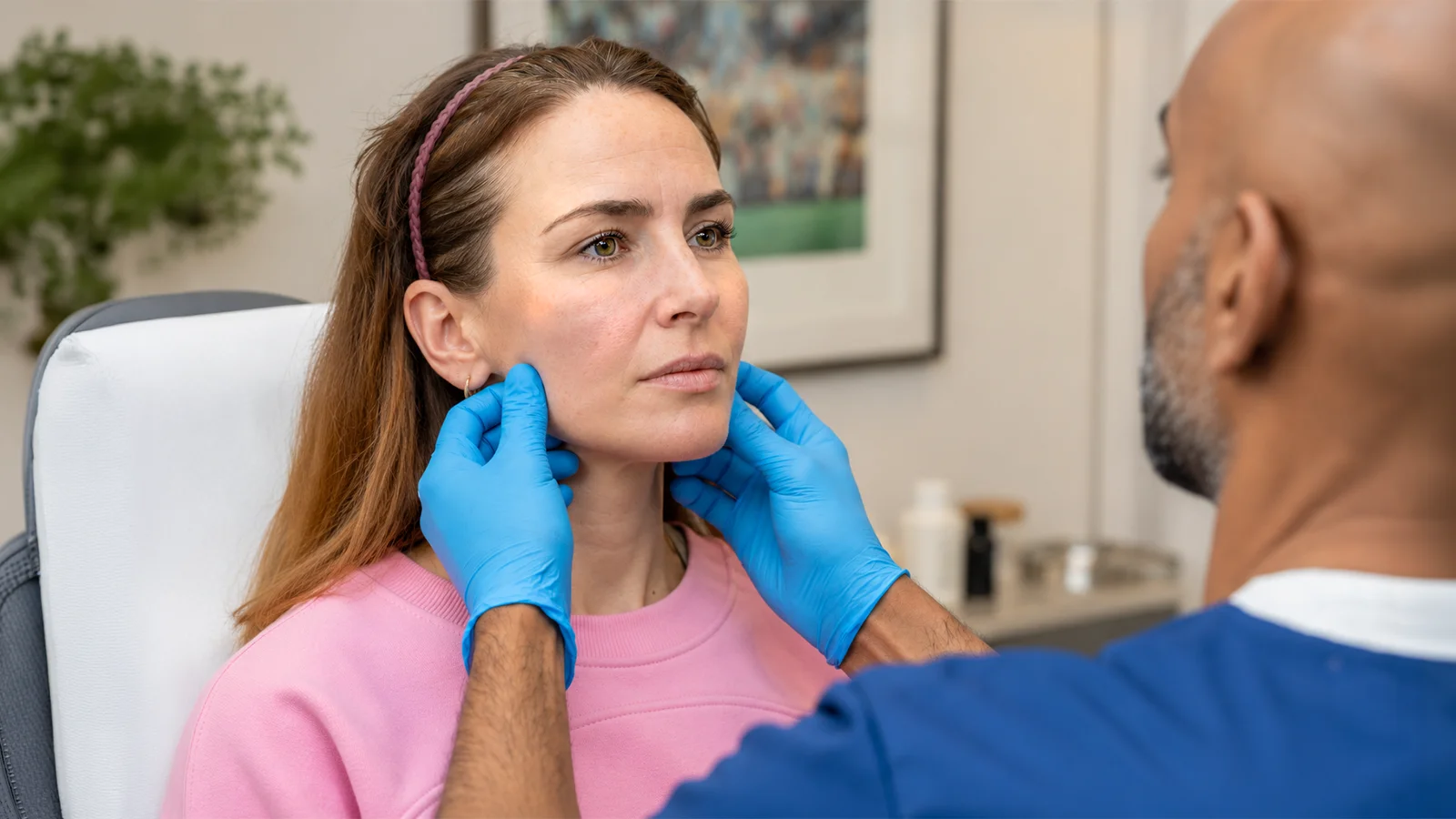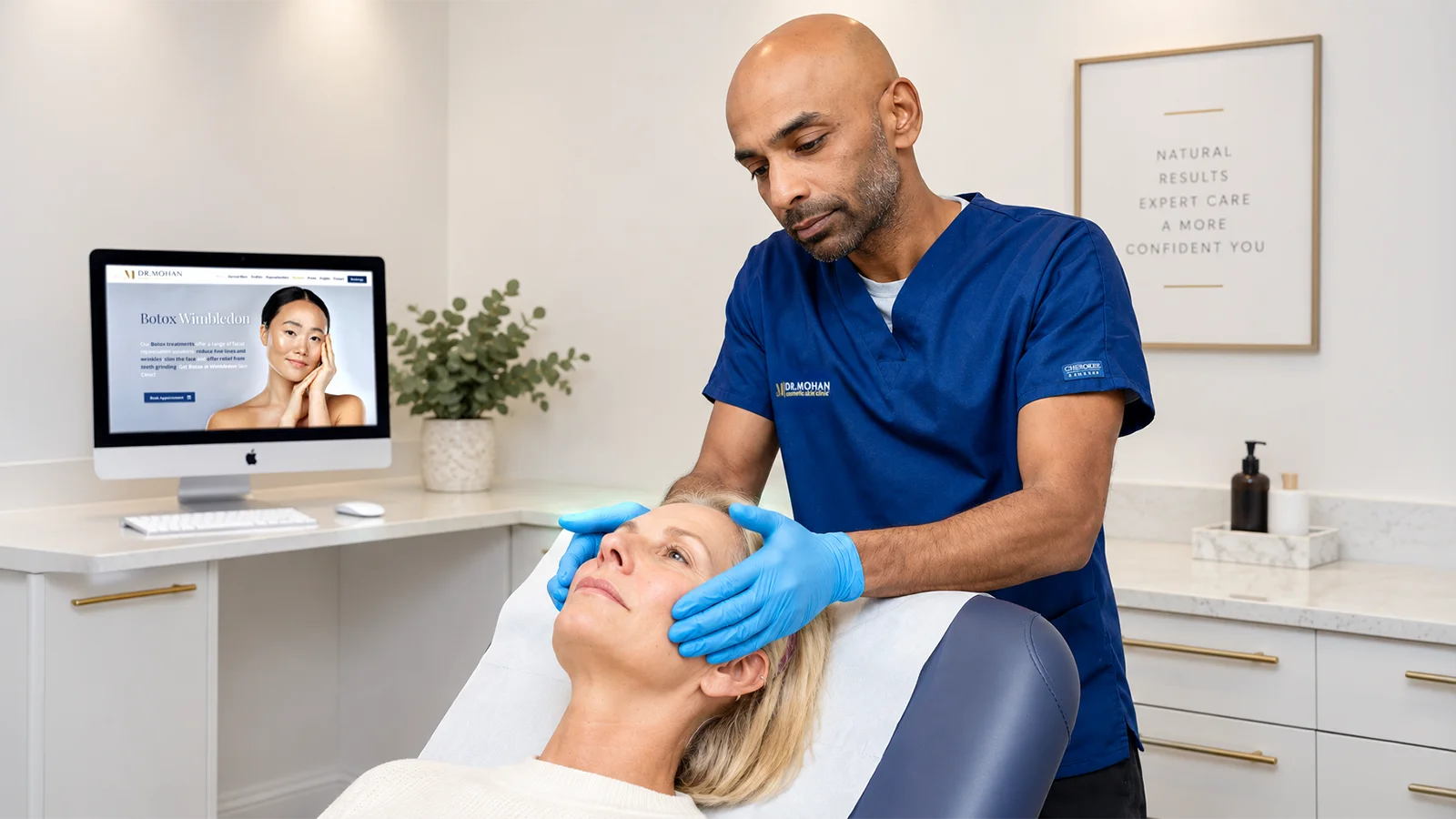
If you are trying to decide between polynucleotides and Botox, it helps to start with one simple point: they do different jobs.
Botox is generally the better option for lines such as forehead lines, frown lines, and crow’s feet, because it works by relaxing the facial muscles that cause them.
Polynucleotides work differently. Rather than targeting muscle movement, Polynucleotides are usually chosen when the main concern is skin quality. That may mean skin that looks thin, creased, tired, or less resilient, particularly around delicate areas such as the under-eyes.
In my clinic, I explain it in a very straightforward way. If the problem is mainly muscle movement – Botox is often the better tool. If the problem is mainly skin quality – polynucleotides may be more appropriate.
Very often, the best result comes not from deciding which treatment is “better” overall, but from understanding what is actually causing the concern in the first place.
Updated: April 2026 — Doctor-led guide from Dr Suresh Mohan (GMC-registered), Wimbledon.
A practical guide to how Botox and polynucleotides differ, who each treatment tends to suit best, and how to think about wrinkles, skin quality, and natural-looking results.
Quick answer:
Botox is usually better for expression lines caused by facial movement.
Polynucleotides are usually better for improving skin quality, especially in thin, delicate or crepey areas.
They are not direct substitutes, and many patients suit a thoughtful combination of both.

Botox targets movement-related lines.

Polynucleotides focus on skin quality.
At a Glance: Polynucleotides vs Botox
If you want the simplest possible way to understand the difference, think of it like this: Botox works mainly on muscle movement, while polynucleotides work mainly on skin quality.
That is why they are often compared, but not directly interchangeable. One is usually better for expression lines, while the other is usually more relevant for thin, crepey or tired-looking skin.
| Feature | Botox | Polynucleotides |
|---|---|---|
| Main purpose | Relaxes targeted facial muscles | Supports skin repair and improves skin quality |
| Best for | Dynamic wrinkles | Thin, crepey, tired-looking or fragile skin |
| Common areas | Forehead, frown lines, crow’s feet | Under-eyes, face, neck, delicate skin |
| Works on muscle movement? | Yes | No |
| Works on skin quality? | Not directly | Yes |
| Onset | Usually faster | Usually more gradual |
| Treatment style | Anti-wrinkle / muscle-relaxing | Regenerative / skin-quality focused |
| Best suited to | Expression-related lines | Early textural ageing and skin rejuvenation |
You can think of Botox as a treatment for movement-related lines, while polynucleotides are more about repair, resilience and skin rejuvenation.
What Are the Main Differences Between Polynucleotides and Botox Treatments?
The main difference is this: Botox works on muscle movement, while polynucleotides work on skin quality.
Patients often compare them because they are both injectable treatments used in aesthetic medicine. However, they are not trying to solve the same problem in the same way.
Botox works on muscle movement
Botox is an anti-wrinkle treatment used to reduce the activity of carefully selected facial muscles. It is usually chosen when lines are being caused or deepened by repeated facial expressions.
This is why Botox is commonly used for:
- forehead lines
- frown lines
- crow’s feet
- other expression-related wrinkles
In other words, Botox treats the movement that is folding the skin again and again.
Polynucleotides work on skin quality
Polynucleotides do not freeze muscles. They are used to support skin repair, hydration, elasticity and overall skin quality.
They are often considered when patients are bothered by:
- thin or crepey skin
- delicate under-eye skin
- tired-looking skin
- textural ageing
- loss of skin resilience
In other words, polynucleotides treat the quality of the skin itself, rather than the muscle activity underneath.
If you would like a clearer explanation of what that means in practice, I cover this in more detail in my guide to what polynucleotides do to your skin.
If you would like a broader overview of how these treatments sit alongside other options, you may also find this helpful: Botox, Profhilo, Fillers & Polynucleotides: Find Your Best Fit.
My rule of thumb:
If a line appears mainly because the skin keeps folding when you frown, smile or raise your brows, Botox is usually more effective.
If the skin itself looks thin, creased, dull or fragile, polynucleotides may be more relevant.

Some concerns come mainly from facial movement. Others relate more to skin quality.
Is Polynucleotide Better Than Botox?
Not in a general sense.
The better question is: better for what?
Botox is usually better for:
- forehead lines
- frown lines between the brows
- crow’s feet
- wrinkles that deepen when you smile, squint or frown
- people who want a relatively quick improvement in expression lines
Polynucleotides are usually better for:
- under-eye crepey skin
- thin, fragile or tired-looking skin
- early textural ageing
- skin rejuvenation where the goal is improvement in quality rather than muscle relaxation
- patients looking for a more regenerative and natural-looking approach
Are polynucleotides or Botox better for reducing fine lines on the face?
It depends on what kind of fine lines you mean.
If the fine lines are mainly linked to facial movement, Botox is often better. If the fine lines are linked to poor skin quality, thinning, dehydration or crepey texture, polynucleotides may be more appropriate.
This is exactly why a proper consultation matters. Two patients can use the words fine lines and mean completely different things.
Why Do Some People Call Polynucleotides “the New Botox”?
You may have seen people searching why polynucleotides are the new Botox?
I would be careful with that phrase.
Polynucleotides are not a replacement for Botox. They do not stop the muscle movement that creates dynamic wrinkles. What they do reflect is a wider move in aesthetics toward regenerative treatments, skin quality, and natural-looking results.
So when people call polynucleotides “the new Botox”, what they often mean is not that they do the same job, but that they have become one of the most talked-about injectable treatments for patients who want fresher, healthier-looking skin without looking overdone.
That can be a useful way to understand the trend, but it should not be confused with clinical equivalence.
What Does Botox Treat Better?
Forehead lines
If your forehead lines become more noticeable when you raise your eyebrows, Botox is usually the more direct treatment. Polynucleotides may improve the look and quality of the skin over time, but they do not stop the repeated muscle movement that creates the fold.
Frown lines
Frown lines are another area where Botox is usually more effective. These lines are strongly linked to repeated contraction of the muscles between the brows.
Crow’s feet
If crow’s feet appear when you smile or squint, Botox is often the more predictable option. Polynucleotides may have a role if the skin in the area also looks thin or crepey, but they are not a direct replacement for wrinkle-relaxing treatment.
If you are specifically exploring anti-wrinkle treatment in Wimbledon, you can read more here: Botox in Wimbledon.
What Do Polynucleotides Treat Better?
Under-eye crepey skin
This is one of the most common reasons people consider polynucleotides. The under-eye area is delicate, and many patients are looking for improvement in skin quality, not simply a stronger anti-wrinkle effect.
For a closer look at this area, see Polynucleotides Under Eyes.
Thin, fragile or tired-looking skin
When the skin looks weaker, less resilient, or more finely creased with age, polynucleotides may be a better fit because they focus on regeneration rather than muscle relaxation.
Early textural ageing
For patients noticing changes in texture, elasticity, and overall freshness, polynucleotides may form part of a more natural-looking skin rejuvenation plan.
You can also explore the treatment in more detail here: Polynucleotides: Revolutionary Skin Rejuvenation Treatment.

Polynucleotides have become popular for their natural-looking, skin-quality-focused approach.
Should I Get Botox or Polynucleotides?
This is one of the biggest decision-stage questions, and it deserves a simple answer.
Choose Botox if…
- your lines are mainly caused by facial movement
- you are most bothered by forehead lines, frown lines, or crow’s feet
- your goal is to soften wrinkles linked to expression
- you want a relatively quick result in the right area
Choose polynucleotides if…
- your skin looks thin, crepey, tired or fragile
- your concern is more about skin quality than strong muscle movement
- you want a regenerative treatment approach
- you are especially concerned about delicate areas such as the under-eyes
Choose both if…
- dynamic wrinkles are part of the picture, but skin quality has also started to change
- a softer look to expression lines matters, but so does fresher, healthier-looking skin
- a more complete plan appeals to you, while still keeping the result natural
Important:
Many of the best aesthetic outcomes do not come from asking which treatment is “better” in the abstract. They come from matching the right treatment to the real cause of the problem.

The right treatment depends on whether the main concern is movement lines, skin quality, or both.
Can Polynucleotides Be Combined with Botox for Enhanced Skin Rejuvenation?
Yes, in many patients they can be combined.
This is one of the most important questions people ask now:
- Can polynucleotides be combined with Botox for enhanced skin rejuvenation?
- Can you have polynucleotides and Botox together?
- Should I get Botox or polynucleotides, or both?
The reason the treatments can work well together is simple:
- Botox targets the muscle activity that causes expression lines
- Polynucleotides target skin quality, hydration, elasticity and regeneration
So, for example, a patient may have Botox to soften forehead lines or crow’s feet, while also using polynucleotides to improve under-eye skin quality or address more diffuse textural ageing.
The key is not to stack treatments for the sake of it. The aim is to create a balanced plan that still looks natural and feels right for your face.
Sometimes, Both Are the Best Answer
Many patients do not need to choose one or the other. In the right patient, Botox and polynucleotides can complement each other beautifully.
Can I have Botox and polynucleotides on the same day?
That depends on the area treated and the treatment plan. If both treatments are being carried out in the same area, Botox should be administered at least two week before or after the polynucleotide treatment to be performed safely.
They can be performed on separate areas on the same day.
Should You Get Botox or Polynucleotides First?
This depends on what you are trying to treat first.
If your main concern is dynamic wrinkles such as forehead lines, frown lines or crow’s feet, Botox is often the more logical starting point because it addresses the muscle movement causing those lines.
If your main concern is skin quality — for example thin, crepey, tired-looking or under-eye skin — polynucleotides may be the better place to start.
In some patients, both treatments can form part of the same broader plan. The exact timing depends on the treatment area, your skin, your goals, and your practitioner’s approach. I would avoid thinking about it as a rigid one-size-fits-all rule. The better question is: what is the main problem we are trying to solve first?

The right order depends on your main concern, treatment area, and overall plan.
How Long Do the Effects of Polynucleotide Injections Last Versus Botox?
This is another question patients often ask me in clinic.
Botox
Botox usually works faster. Patients often like it because the improvement in expression-related lines tends to be more predictable and easier to notice within a two weeks.
Polynucleotides
Polynucleotides usually work more gradually. They are often given as an initial course of treatments, with results developing gradually over time. Improvements often begin to become visible after four to six weeks and continue to enhance over the following months.
So rather than asking which one lasts longer in a simple head-to-head way, it is often better to ask which treatment best matches your concern.
If you are treating dynamic wrinkles, Botox is often the better benchmark. If you are treating crepey, fragile or tired-looking skin, polynucleotides may be more relevant even though the treatment journey feels different.
What Are the Side Effects of Polynucleotide Treatments Compared to Botox?
This is an important question, and it deserves a calm, honest answer.
Botox side effects
Botox is a very well-known treatment, but like any injectable procedure it can have side effects and risks. Exact risks depend on the area treated, technique, dose, and the individual patient. They are lower when carried out with a registered healthcare professional, but these should be discussed with you as it may affect your decision.
Polynucleotide side effects
Polynucleotide treatments can also cause temporary injection-related effects such as small bumps, redness, mild swelling or tenderness, depending on the area treated.
Which is safer?
It is not really accurate to say that one is simply “safer” than the other.
They are different treatments, used in different ways, with different mechanisms and different risk profiles. The more useful question is: which is appropriate for you, your anatomy, your skin, and your goals?
Is polynucleotide treatment safe for sensitive skin compared to Botox?
Some patients with delicate or sensitive-looking skin may be drawn to polynucleotides because the goal is improvement in skin quality rather than muscle relaxation. However, “sensitive skin” is a broad term, and treatment suitability should never be assumed without a proper medical assessment.
Before and After: What Kind of Change Can You Expect?
If you are considering treatment, it can be helpful to look at the kind of change each option is designed to create.
With Botox, the main aim is usually a smoother appearance in areas where expression lines are becoming more noticeable. With polynucleotides, the aim is often a fresher, healthier, more resilient look to the skin over time.
For a more detailed look at expected changes with regenerative treatment, see Polynucleotides Before and After: What Changes Can You Expect?
Aftercare Matters Too
Choosing the right treatment is important, but so is understanding what to expect afterwards.
If you are considering Botox, you can read more in my Complete Guide to Botox Aftercare.
If you are exploring polynucleotides, see my Complete Guide to Polynucleotides Aftercare.

Good aftercare helps support the best possible result.
Frequently Asked Questions
Are polynucleotides better than Botox for wrinkles?
Not usually for movement-related wrinkles such as forehead lines, frown lines and crow’s feet. Botox usually works better here because it relaxes the muscles that create the lines. Polynucleotides may help more when the main concern is skin quality, such as thin, crepey or tired-looking skin.
Do polynucleotides make you look younger?
They can help the skin look fresher, smoother and more rested. They do not freeze muscles like Botox. Instead, they focus more on skin quality, hydration and repair. That is why many patients choose them when they want a more natural-looking result.
Can you get Botox and polynucleotides the same day?
That depends on the area treated and the treatment plan. If both treatments are being carried out in the same area, Botox should be administered at least two week before or after the polynucleotide treatment to be performed safely.
They can be performed on separate areas on the same day.
How long do polynucleotides take to work?
Polynucleotides do not work instantly. Most patients notice improvement gradually as the skin starts to look healthier and more resilient. This usually takes longer than Botox, which tends to act faster on movement-related lines. Improvements often begin to become visible after four to six weeks and continue to enhance over the following months.
Because polynucleotide results develop gradually, many patients also want to understand how long the results usually last.

Polynucleotides work gradually, with results building over time.
Do polynucleotides lift the face?
They do not lift the face in the same way that surgery or structural treatments can. However, they may help the skin look firmer, fresher and better supported. In the right patient, that can create a subtle lifting effect through improved skin quality.
Will one session of polynucleotides make a difference?
One session may start the process, but most patients need a course for the best result. Polynucleotides usually work gradually, so I would not present them as a one-treatment fix. The full effect tends to build over time.
Polynucleotides are usually planned as a course rather than a one-off treatment, so I have also written a guide to how many polynucleotide sessions you may need.
Will polynucleotides help under eye bags?
They may help if the area looks thin, crepey or tired. They can improve under-eye skin quality, but they do not fix every type of eye bag. If puffiness comes from fat pads or anatomy, another approach may be more appropriate.
Which Treatment Is Right for You?
If you are deciding between Botox and polynucleotides, the most important thing to remember is that they do different jobs.
Botox usually suits patients who want to soften expression lines caused by facial movement. Polynucleotides usually suit patients whose main concern is skin quality, especially where the skin looks thin, crepey, tired or less resilient.
Neither treatment is automatically “better” in every case. The right choice depends on what is actually causing the concern.

Doctor-led assessment and realistic treatment planning are central to natural-looking aesthetic results.
In my clinic, I always aim for results that look natural, balanced, and right for the individual patient. If you are unsure which treatment may suit you best, a free consultation can be a very helpful first step.
If you are based in Wimbledon, Raynes Park, Kingston, Richmond, Putney, Surbiton or nearby South-West London, you are very welcome to book a consultation to talk things through in person.
Book your free consultation here →
Or call me directly: 07702 389 636
Warm regards,
Dr Suresh Mohan
Contact Dr Suresh Mohan
Considering Botox or Polynucleotides in Wimbledon?
For questions, free consultations or call back requests, please fill in the form below and I will get back to you as soon as possible.
By clicking ‘Send enquiry‘ you agree to Dr Mohan Clinic’s Privacy Notice.