Should I choose Profhilo or dermal fillers?
If you’re in your 40s or 50s, you may feel vibrant and energetic — but your reflection probably doesn’t quite match. Not dramatically. Just… subtly.
A little less radiance. A touch more tiredness around the eyes. A softening of the cheeks or jawline that wasn’t there a few years ago.
That’s usually when the question comes up in my Wimbledon aesthetic clinic:
“Should I choose Profhilo or dermal fillers — and which one will look most natural?”
Here’s the reassuring part: this isn’t about chasing a trend or choosing a “winner.” It’s about choosing the right tool for the specific change you’re noticing — and doing it in a way that still looks like you.
Updated: March 2026 — Doctor-led guide from Dr Suresh Mohan (GMC-registered), Wimbledon.
This regularly updated comparison is based on my clinical experience with Profhilo, Profhilo Structura and dermal fillers, plus the questions I hear most often from patients in their 40s and 50s. Where helpful, I also link to trusted patient-safety guidance such as NHS information on cosmetic procedures.
Some people are clearly ‘anti-filler’. Others think Profhilo is the answer to everything. In reality, both can be excellent — if they’re used for the right reason, in the right amount, for the right face.
If you’d like a wider overview first: read Botox, Profhilo, Fillers & Polynucleotides: Find Your Best Fit — a simple comparison of the injectable options I offer, and how they can work together in a natural-looking treatment plan.
The simplest way to think about it
Profhilo is mainly about skin quality: hydration, glow, fine lines and crepey texture.
Dermal fillers are mainly about structure: support, contour and volume.
In your 40s and 50s, many people get the most natural result from a staged plan — improving the “skin canvas” first, then adding small, targeted structure only where it’s genuinely needed.
If you only read one section, read this:
- Skin looks dull, dry, crepey, “tired” → Profhilo is often the best starting point
- Face looks deflated / shadows are deeper / contour has softened → fillers may be the better tool
- You have both → staged combination usually looks the most natural
Free consultation (no pressure, just clarity)
If you’re unsure which route fits you best, you can book a free consultation. I’ll assess skin quality, facial structure and your goals — then explain a conservative plan (including what I wouldn’t recommend for your face).
Already read my general comparison page?
This is the age-specific 40s/50s version. For the broader guide based on skin goals, read: Profhilo vs. Dermal Fillers: Which is Right for Your Skin Goals?
Quick answer (10-second decision)
Start with Profhilo if your main issue is:
- dryness, dullness, “tired” texture
- fine lines that feel more visible than before
- early crepiness or thinner-looking skin quality
Consider dermal fillers if your main issue is:
- cheek or temple deflation
- shadowing caused by support loss
- contour that has softened (midface/jawline balance)
Consider a staged combination if you notice both
That’s extremely common in your 40s and 50s — and it’s often the most natural-looking way to refresh the face without looking “done”.
Profhilo
Hydration & Glow + Fine lines & Texture
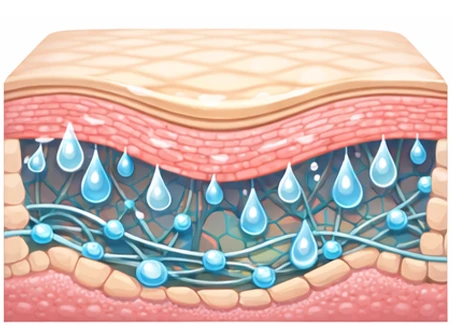
Profhilo improves the “fabric” (skin quality).
Dermal Fillers
Volume & Contour + Cheek & Temples
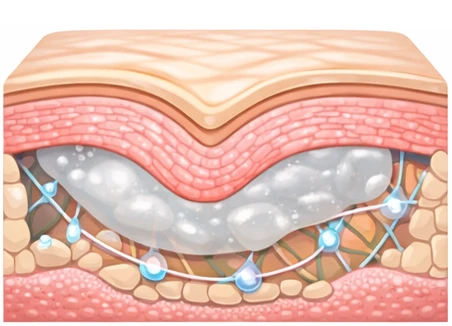
Fillers adjust the “architecture” (structure & support).
Profhilo vs dermal fillers: key differences
If you’re short on time, this is the section I’d start with. Most confusion comes from assuming Profhilo and fillers do the same job — they don’t.
Quick overview
- Profhilo improves skin quality (hydration, glow, fine lines, early crepiness).
- Dermal fillers restore structure (support, contour, volume).
Key differences table
| Category | Profhilo | Dermal fillers |
|---|---|---|
| What it’s for | Skin quality: hydration, radiance, texture, fine lines | Structure: volume, contour, support, definition |
| Best for in your 40s & 50s | Dullness, dehydration lines, early crepiness, mild laxity | Cheek/temple deflation, shadowing from support loss, contour softening |
| How it changes your face | Doesn’t aim to reshape; it improves the “skin canvas” | Can subtly reshape/support (when placed precisely) |
| How natural it looks | Very natural and subtle | Natural when conservative; can look obvious if overdone |
| When you’ll notice results | Gradual improvement over weeks (often best after the second session) | Often visible straight away, then settles over ~1–2 weeks |
| Typical starting plan | Often 2 sessions around 4 weeks apart (then maintenance) | Tailored to area + tissue + goal (often staged) |
| Downtime | Usually minimal; small bumps can settle quickly | Swelling/bruising possible (varies by person and area) |
| Best “role” in a plan | Improves the base: glow + hydration + texture | Adds targeted support where structure is missing |
| What it won’t do | It won’t replace volume or create contour | It won’t improve crepey texture if the main issue is skin quality |
| Most common mistake | Expecting a dramatic “lift” | Using too much filler to fix a skin-quality problem |
How to choose the right option
Choose Profhilo first if you’re mainly thinking:
- “My skin looks tired and dull.”
- “I want glow and hydration.”
- “I don’t want to look different — just healthier.”
Consider dermal fillers if you’re mainly thinking:
- “I look a bit deflated.”
- “My cheeks/temples have hollowed.”
- “My face has lost some structure and definition.”
Choose a staged combination if you feel both:
- “My skin quality has changed and my structure has softened.”
That’s very common in your 40s and 50s — and it’s often the most natural approach.
My “less is more” rule (why it works)
The most natural results rarely come from doing more — they come from doing the right thing first.
If skin quality is the main issue, I usually start there. If support loss is the main issue, we address structure carefully. And if you have both, we stage it so each step looks believable.

Profhilo supports skin quality; fillers support structure. Many people in their 40s–50s benefit from a staged plan.
If you’re unsure which category you fall into, book a free consultation and I’ll tell you honestly what I think will work best — including what I would avoid for your face.
What changes in your 40s and 50s (and why the “right treatment” shifts)
One thing I hear often from patients in their 40s and 50s is:
“I feel the same — I just don’t look as refreshed as I used to.”
And it’s rarely about one wrinkle.
Midlife ageing tends to be a quiet combination of changes: skin quality gradually shifts, the face can lose a little structural support, and shadows become more noticeable. That’s why the best treatment choice is often less about “what’s popular” and more about what’s actually changed for you.
What you might notice (common midlife patterns)
In clinic, these are the patterns I see most often:
- Dullness and dehydration (even when you’re using good skincare)
- Fine lines that look more “etched” — especially around the mouth and eyes
- Crepey texture on cheeks, neck or under-eyes
- A softer jawline or less definition through the lower face
- Under-eye tiredness that looks like shadowing rather than just lines
- A slightly “deflated” midface (cheeks not as supported as they were)
The two drivers behind most of these changes
You don’t need to memorise the biology — but it helps to understand the logic of treatment choice.
1) Skin quality changes
Over time, skin tends to hold less water and behaves differently. It can look thinner, drier, and less reflective (less “glow”). That’s where treatments aimed at skin quality (like Profhilo, and sometimes polynucleotides) can make a visible difference without changing your face.
2) Structural support changes
As support gradually reduces, the face can look slightly more tired or shadowed. This is where conservative structure (small, targeted filler — or in selected cases a discussion about Profhilo Structura) can restore balance.
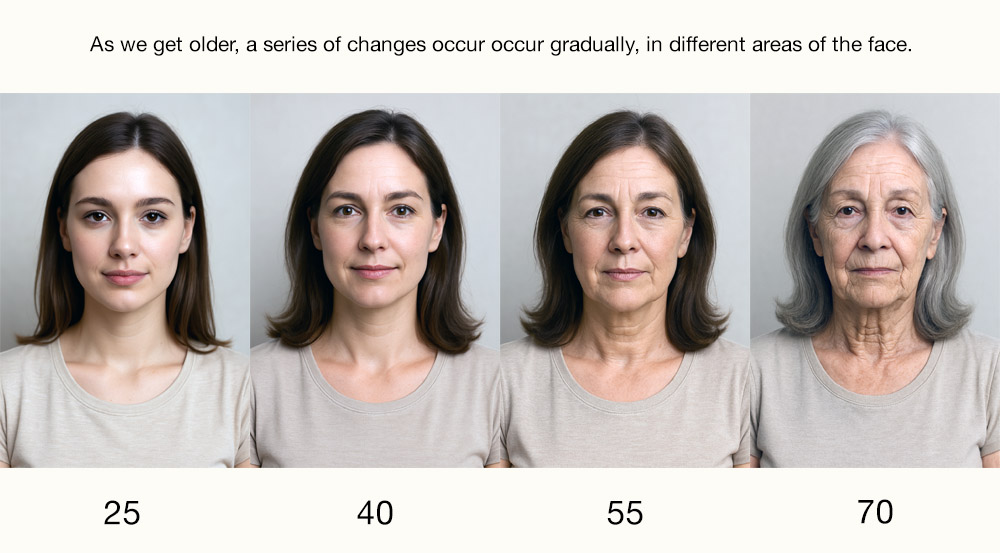
In your 40s–50s, most people experience a mix of skin-quality changes and subtle support loss — which is why treatment choice needs to be personalised.
A common mistake (and how we avoid it)
A very common mistake is trying to treat skin quality with filler.
If the main problem is dullness, dehydration or crepey texture, adding volume can sometimes make the face look heavier — not fresher.
A natural refresh usually comes from this sequence:
- Improve the skin canvas, then
- Restore structure only where needed, in small amounts.
Mini self-check: which problem sounds most like you?
If you mainly see texture changes (dullness, dryness, crepey skin, fine lines): you’re usually in the Profhilo-first group.
If you mainly see shadowing/support loss (deflation, hollowing, softer contours): you may benefit more from structure-first.
A mix of both: that is very common, and a staged combination often gives the best result.
“What I notice” → “What usually helps first” (a practical guide)
If you’re not sure what category you’re in, use this like a quick map. It’s not a diagnosis — but it’s a helpful way to understand why Profhilo and fillers aren’t interchangeable.
Quick guide table
| What you notice in the mirror | Best first step (often) | Why this usually works |
|---|---|---|
| Dullness / dryness / skin just looks “tired” | Profhilo | Supports hydration and overall skin quality for a fresher look |
| Fine lines that feel more visible than before | Profhilo (± targeted Botox if expression lines) | Skin-quality improvement helps fine dehydration lines; Botox targets movement lines |
| Early crepiness (cheeks / neck / hands) | Profhilo or polynucleotides (if suitable) | Tissue-quality treatments help texture more naturally than adding bulk |
| “I look deflated” (cheeks/temples) | Conservative dermal fillers | Restores structural support more effectively than skin boosters |
| Under-eye tiredness that looks like shadowing | Careful assessment (often tissue-quality first) | Under-eyes need a cautious, personalised approach |
| Softening jawline / less definition | Structure-first (fillers in selected areas) | Definition usually comes from support rather than surface hydration |
| You have both texture + support loss | Staged combination | Most natural results often come from improving canvas first, then small structure |
Two real-world examples (so it feels less abstract)
Example 1: “I look tired, but I don’t want to look filled.”
This is usually a skin-quality first situation. We improve hydration/texture, then reassess. Often, that alone creates the “fresh” look people want.
Example 2: “My face has lost support — I look a bit deflated.”
This is usually a structure-first situation. If the midface/temples have softened, small, strategic support can bring back balance — and it can still look very natural when done conservatively.
In your 40s and 50s, the best results are rarely one big change.
They’re usually a few small improvements layered over time:
- improve skin quality
- reassess
- add structure only where needed

Do you need skin-quality support, structural support, or a staged plan?
Profhilo in your 40s and 50s (the “skin quality” treatment)
If your main goal is a natural refresh — brighter skin, better hydration, softer fine lines, and a healthier texture — Profhilo is often the most sensible place to start.
I sometimes describe it to patients as an “injectable moisturiser” — not because it sits on top like a cream, but because the intention is similar: deep hydration and improved skin quality, without changing your face shape.
What Profhilo is best for
Profhilo tends to suit you well if you’ve been thinking things like:
- “My skin looks dull even when I’m sleeping well.”
- “My fine lines look more noticeable lately.”
- “Makeup sits differently now.”
- “I want to look fresher, but still completely like me.”
It’s especially popular for people who want visible improvement but are cautious about anything that might look “filled.”
If you’d like a deeper dive into how Profhilo works, who it suits, and what to expect, read Profhilo: The Ultimate Guide to Skin Rejuvenation.
What Profhilo won’t do (honest limitations)
This is important, because it prevents disappointment and stops people wasting time and money.
Profhilo is not designed to:
- rebuild lost cheek volume
- reshape contours
- create definition in the jawline
- replace surgical lifting for significant laxity
If you still have questions, I’ve answered the most common ones here: Frequently Asked Questions About Profhilo: Expert Answers.
In one line: Profhilo improves the canvas. It doesn’t rebuild the scaffolding.
How Profhilo works (simple explanation)
Profhilo is a high concentration hyaluronic-acid treatment designed to support:
- hydration (skin looks more luminous and “rested”)
- skin quality over time (texture can look smoother; fine lines can soften)
The key difference from fillers is that Profhilo is not trying to sit in one precise spot to create shape — it’s designed for a more diffuse, skin-quality effect.

Profhilo is mainly a skin-quality treatment — subtle, diffuse improvement rather than contour change.
What a typical Profhilo plan looks like
Most patients start with:
- 2 sessions, usually around 4 weeks apart, then
- maintenance depending on your skin and goals
I’ll always tailor this to your face, your timeline, and how your skin responds.
Profhilo timeline (what people often notice)
| Timeframe | What you may notice |
|---|---|
| First few days | Injection points settle; skin may feel slightly more hydrated |
| Weeks 2–4 | Texture and glow gradually improve |
| After the course | The “freshness” becomes more noticeable, without looking obvious |
For practical aftercare and what to do (and avoid) as your skin settles, see Complete Guide to Profhilo Aftercare.
You might also find this useful: Profhilo dos and don’ts – coffee, alcohol and more…
Who tends to like Profhilo most
Profhilo is often ideal if you:
- want a natural refresh (not a reshaped face)
- prefer subtle results that build over time
- are more concerned about texture and glow than volume
- want something that looks good in real life, not just in photos
Dermal fillers in your 40s and 50s (restoring structure — not “filling”)
In your 40s and 50s, a lot of what people describe as “looking older” isn’t actually a new wrinkle — it’s a subtle change in support.
Cheeks soften. Temples hollow slightly. Shadows deepen. The face can look a bit more tired, even when you’re feeling great.
That’s the job dermal fillers do best: restoring structure and balance.
What fillers are best for (in a natural plan)
Dermal fillers are most helpful when your main concern is:
- Deflation (cheeks/temples look less supported)
- Shadowing caused by support loss (a tired look that isn’t just skin texture)
- Contour softening (midface, jawline balance, chin support in selected cases)
- Deeper folds where the underlying issue is structural (not just surface lines)
If you’re also weighing up Botox vs filler for lines or facial balance, this guide helps: Dermal Fillers vs Botox: Key Differences and Which is Right for You?
In one line: fillers are about support, not “making you bigger.”
The big fear: “Will fillers make me look puffy or overdone?”
This is probably the most common worry I hear — and it’s a fair one.
The good news is: fillers don’t have to look obvious. The overdone look almost always comes from one of these mistakes:
- treating the wrong problem (using filler to fix skin texture/dullness)
- using too much
- placing it in a way that doesn’t respect natural facial proportions
- trying to “fill” lines instead of restoring support more strategically
My natural filler rule
If someone can tell you’ve had filler, it’s usually too much.
The goal is for people to say: “You look well… have you been sleeping better?” — not “Have you had something done?”

Fillers work best when used conservatively to restore support, not to chase individual lines.
What a conservative filler plan looks like
A “natural” filler plan is usually:
- targeted (specific areas, not everywhere)
- staged (we can build gradually)
- balanced (we treat the face as a whole, not one crease)
And most importantly: it’s based on what’s actually changed for you — not a template.
Filler timeline (what people often notice)
| Timeframe | What you may notice |
|---|---|
| Immediately after | Shape change may be visible, but swelling can blur the true result |
| Days 2–7 | Swelling/bruising settles (if present) |
| Around 2 weeks | More reliable “final look” and facial balance |
Who tends to enjoy fillers most
Fillers are often a great fit if you’re thinking:
- “I look a bit deflated.”
- “My face has lost structure.”
- “I want subtle support, not a dramatic change.”
- “I want to look fresher in photos and real life.”
What looks most natural (my approach in your 40s and 50s)
If there’s one theme that comes up again and again in consultations, it’s this:
“I want to look better — but I don’t want to look like I’ve had work done.”
That’s exactly the mindset I work with.
A natural result in your 40s and 50s usually comes from doing the right thing first, in the right order, in the right amount — not from chasing the latest trend.
My “natural refresh” philosophy
Improve the skin canvas first, then restore structure only where it’s genuinely needed.
That simple sequencing is what keeps results believable.
The three things that make results look natural (even in photos)
1) Treat the cause, not just the line
A crease can be caused by:
- skin quality (dehydration, thin texture), or
- support loss (volume and contour changes)
Treating a support problem as if it’s a surface problem is one of the fastest ways to end up looking “filled.”
2) Keep the plan conservative and staged
Most natural results are built, not “done” in one sitting.
A staged approach means:
- you can stop at the point you look refreshed
- you don’t accidentally go past your natural “sweet spot”
- each step has time to settle before deciding the next
3) Respect your anatomy and your expression
Your face is dynamic — it moves, smiles, laughs, talks.
A natural plan considers how results will look in motion, not only in a still photo.
The “less is more” rule (why it works)
If you’re aiming for a natural refresh, the goal is subtle change with high impact.
That usually means:
- improving skin quality first
- adding small structural support only where needed
- avoiding “filling” in areas where skin quality is the real issue
A simple “natural refresh” plan
Here’s a typical staging approach for patients in their 40s and 50s:
Step 1: Improve the canvas (skin quality)
Often with Profhilo (and sometimes with other regenerative options depending on the tissue).
Step 2: Reassess after it settles
This is where many people realise they needed less than they thought.
Step 3: Add tiny, strategic structure if needed
If there’s true support loss (cheeks/temples/contour), small conservative filler can restore balance.
Step 4: Maintain lightly
Most people don’t need constant treatment — they need a plan.
Where Profhilo Structura and polynucleotides can fit
Sometimes the best option isn’t a straight choice between Profhilo and filler.
Profhilo Structura (structural support focus)
If someone is noticing more midface support loss and wants a structural option to discuss, Profhilo Structura can be part of that conversation.
Polynucleotides (delicate areas / tissue quality)
For fragile skin — especially around the eyes — polynucleotides can be a helpful option to improve texture and quality where we want to be extremely conservative.
If you’re curious where Structura fits (especially for support changes in the midface), see Profhilo vs Profhilo Structura: Which Treatment Is Right for You?
For delicate under-eye skin, I have written a separate guide to polynucleotides under eyes.
If you want an honest recommendation — and a plan that stays natural — book a free consultation. I’ll talk you through the options, what I’d start with, and what I would avoid for your face.

The most natural results are often staged: skin quality first, structure second, then light maintenance.
Can you combine Profhilo and fillers?
Yes. In fact, for many people in their 40s and 50s, combining Profhilo and fillers in a staged way is the approach that looks the most natural.
Why? Because you’re usually dealing with two different issues at the same time:
- a change in skin quality (hydration, glow, fine lines), and
- a change in support (volume, contour, shadowing)
Trying to solve both with one product often leads to compromises — or to doing too much.
The “natural refresh” sequencing I use most often
This is a common, sensible framework:
Step 1 — Improve the canvas (Profhilo)
We start by improving hydration and skin quality so the face looks fresher overall.
Step 2 — Let it settle, then reassess
This is crucial. Once skin quality improves, many people realise they need less structure work than they expected.
Step 3 — Add small, strategic structure (fillers only if needed)
If there is genuine support loss (for example cheeks/temples), I may recommend conservative filler in targeted areas.
Step 4 — Maintain lightly
The goal isn’t constant treatment — it’s a steady, natural look with minimal intervention.
What this might look like in real life
| Stage | Treatment focus | Why it’s done in this order |
|---|---|---|
| 1 | Profhilo course | Improves skin quality without altering shape |
| 2 | Review appointment | Prevents overtreatment; we decide what’s actually needed |
| 3 | Small, targeted filler (if needed) | Restores structure only where support loss is real |
| 4 | Maintenance plan | Keeps results natural and consistent |
Safety, side effects, and choosing the right practitioner
Both Profhilo and dermal fillers are medical treatments. Most people do very well — but like any procedure involving injections, there are potential side effects and rare risks. The best way to stay safe (and get a natural result) is to choose the right practitioner and follow good aftercare.
What’s normal after treatment (common side effects)
It’s very common to experience some of the following, especially in the first few days:
- Mild redness or warmth at injection sites
- Tenderness or a “bruised” feeling
- Small bumps at injection points (more common with Profhilo) that settle
- Bruising (more common with fillers, and varies person to person)
Most of this is temporary and improves quickly.
How to choose the right practitioner
When someone tells me they’re shopping around, this is what I suggest they look for:
- Strong medical credentials and clear accountability
- A thoughtful approach to facial anatomy and balance, not just “lines”
- Natural movement and subtlety built into the treatment plan
- Straightforward explanations of safety protocols
- The confidence to say: “I don’t think you need that.”
“Dr Mo goes above and beyond in ensuring he gives you all the relevant information needed for your treatment. I had multiple consultations to ensure I was happy and I never felt at any point pressure to even proceed with the treatment. I’m incredibly pleased that I did as I couldn’t be happier with the results. Dr Mo is fantastic and I couldn’t recommend him enough.”
StephanieWimbledon

A good consultation should cover benefits, limitations, safety, and aftercare — then build a staged plan if needed.
“I have been a client of Dr Mo for several years now, and consistently receive a brilliant service. Firstly, the treatment rooms are private and faultless. Dr Mo fully understands any health/medical implications, and guides you through the pre/post care needs. His medical background is so valuable when considering different treatments. Dr Mo is honest, friendly, efficient and trustworthy. I would highly recommend him as a great cosmetic practitioner!”
SueRaynes Park
If you’re deciding between Profhilo and fillers and want a safe, conservative plan, book a free consultation. I’ll explain what fits your face, what to expect, and what I would avoid.
Where can I get Profhilo or dermal fillers near Wimbledon?
If you’re searching for Profhilo or dermal fillers, you’ll see a lot of clinics — and a lot of marketing. What most people actually want is simpler:
A doctor-led plan, a natural result, and the confidence that you’ll still look like you.
My clinic is based in West Wimbledon (SW20), and I regularly see patients travelling in from Raynes Park, Kingston and Surbiton (as well as across South West London). Many people choose us because they want a conservative approach, clear explanations, and treatments that prioritise skin health and facial balance.
Quick local links – use these as a shortcut for local searches and directions:
If you already know what you’re exploring, these pages may help:
What happens at a free consultation?
A free consultation should never feel like pressure. In my clinic it’s simply a chance to:
- understand what’s actually changed (skin quality vs structure vs both)
- discuss options — including doing nothing for now
- get realistic expectations (what each treatment can and can’t do)
- receive a clear plan with transparent pricing and aftercare

Doctor-led aesthetic consultations in Wimbledon with a focus on natural-looking results.
FAQs – Profhilo or filler?
Which is better, Profhilo or filler?
It depends on what you’re trying to improve. Profhilo is usually better when the main concern is skin quality — hydration, glow, fine lines and crepey texture. It’s subtle and doesn’t aim to change the shape of your face, which is why it often looks very natural.
Dermal fillers tend to be better when the main concern is structure — loss of cheek/temple support, deeper shadowing, or softened contours. Many people in their 40s and 50s actually benefit from a staged combination: improve the skin canvas first, then add small, targeted support only where needed.
What is the difference between Profhilo and fillers?
The easiest way to think about it is this: Profhilo improves the “fabric” of your skin, while fillers improve the “framework” underneath. Profhilo is designed to spread more diffusely and support hydration and overall skin quality over time, rather than sitting in one spot to create volume.
Fillers are placed more precisely and typically deeper, to restore volume and contour in specific areas. They can look extremely natural when used conservatively — but if filler is used to treat a problem that’s really about skin texture, it can sometimes look heavier rather than fresher.
What are the disadvantages of Profhilo?
The main “disadvantage” is also the reason people love it: Profhilo is subtle. If you’re hoping for obvious contour change or a strong lifting effect, Profhilo can feel underwhelming — because that isn’t what it’s designed to do.
Profhilo also won’t replace lost structural volume (for example, if cheeks have deflated significantly). In those cases, it can still be an excellent part of your plan — but you may need a structural option as well, such as conservative filler support or a discussion about other treatments depending on your anatomy.
Is Profhilo a skin booster or filler?
Profhilo is commonly described as a skin booster-style or bio-remodelling treatment rather than a traditional volumising filler. In practical terms, it’s chosen for improving hydration and skin quality, not for building cheekbones or reshaping the face.
That said, people use terms differently online. What matters most is the effect you want: if you want better skin quality and glow, Profhilo is often a strong option; if you want structural support and contour, fillers are usually the better tool.
If your main concern is thinner, crepey or tired-looking skin, you may also want to read what polynucleotides do to your skin.
Can Profhilo replace fillers in my 40s/50s?
Sometimes, yes — especially if your main concern is skin texture, dullness, dehydration, and fine lines. In those cases, improving skin quality can make you look refreshed without needing any structural work at all.
If your main concern is support loss (deflation, hollowing, deeper shadowing), Profhilo can improve the skin canvas but may not fully address the structural change. That’s where conservative fillers — or in selected cases a discussion about alternatives — can be more appropriate.
How long do Profhilo results last compared to fillers?
Both vary depending on the person, treatment area, product choice, and your skin’s baseline. Profhilo is typically assessed over weeks to months after an initial course, and many people choose periodic maintenance to keep the skin looking its best.
Fillers can last longer or shorter depending on the product and where it’s placed — but longevity should never be the only goal. A natural plan focuses on the right amount and right placement, then reviews and maintains as needed rather than chasing maximum duration.
What looks most natural in photos and real life?
In most cases, the most natural look comes from improving skin quality first (if that’s part of the problem), and then adding small, strategic structure only where necessary. That approach tends to look balanced in motion, in daylight, and in photos.
Overly dramatic results are more likely when everything is done in one go or when volume is used to treat texture. A staged plan gives you time to see how you feel after each step — which is one of the simplest ways to stay within that natural “sweet spot.”

Clear answers to the most common questions people ask before booking Profhilo or dermal fillers.
Deciding between between Profhilo and Dermal fillers
If you’re in your 40s or 50s and you’re deciding between Profhilo, dermal fillers, or a staged combination, the fastest way to get clarity is a proper, doctor-led assessment.
If you are comparing several treatment options, you may also find my wider guide to Botox, Profhilo, fillers and polynucleotides helpful.
During your free consultation at my Wimbledon clinic, I’ll look at:
- what’s changed most for you (skin quality vs structure vs both)
- what would genuinely make you look fresher — and what would be unnecessary
- what results are realistic, how we’d stage them, and what aftercare looks like
There’s no pressure to “do something today.” The goal is simply to leave with a plan that feels sensible, conservative, and tailored to you.
If you are based in Wimbledon, Raynes Park, Kingston, Richmond, Putney, Surbiton or nearby South-West London, you are very welcome to book a consultation to talk things through in person.
Book your free consultation here →
Or call me directly: 07702 389 636
Warm regards,
Dr Suresh Mohan
Contact Dr Suresh Mohan
Considering Profhilo or Dermal fillers treatment in Wimbledon? My clinic is dedicated to providing this advanced skin rejuvenation technique, ensuring top-notch care in the heart of London.
If you have a specific question, want to book a free consultation or request a call back, please fill in the form below, and I will get back to you as soon as possible.
By clicking ‘Send enquiry‘ you agree to Dr Mohan Clinic’s Privacy Notice.